
Rod End - Female Force and Load Sensors
Last Updated: April 1, 2025
Description
Rod End - Female Force and Load Sensors are specialized devices designed to measure force and load. These sensors are integrated into systems to provide precise measurements of the force exerted on them. They are typically used in applications where accurate force measurement is critical.
Working Principle
The working principle of Rod End - Female Force and Load Sensors is based on the deformation of strain gauges. When a force is applied, the sensor deforms slightly, causing a change in resistance in the strain gauges. This change is then converted into an electrical signal, which can be measured and calibrated to determine the exact force or load applied. This principle allows for high precision and accuracy, making these sensors invaluable in applications where precise force measurement is necessary.
Applications
Rod End - Female Force and Load Sensors are used in a variety of applications. For example, they are commonly found in automotive systems, particularly in suspension and stability systems, where they help in measuring forces to ensure vehicle safety and performance. They are also used in industrial machinery to monitor and control forces applied during manufacturing processes.
Advantages over other Force and Load Sensors
One of the main advantages of Rod End - Female Force and Load Sensors is their precision and accuracy. They offer unparalleled accuracy in measuring force and weight, which is crucial in critical applications. Additionally, their robust construction makes them highly reliable and capable of withstanding harsh environmental conditions. Their versatility in design allows them to be used in a wide range of applications and load capacities.
Limitations
Despite their advantages, Rod End - Female Force and Load Sensors have limitations. For instance, they may not be suitable for applications requiring extremely high-frequency response or dynamic measurements, as their performance can be limited by the stiffness of the carrier material. Additionally, they may face challenges in environments with significant temperature fluctuations, which can affect measurement accuracy.
Considerations
When considering the use of Rod End - Female Force and Load Sensors, several factors should be taken into account. Initial costs can vary depending on the specific design and application requirements. Operating expenses are generally low due to their durability and reliability. However, maintenance and replacement costs should be considered, especially in environments where the sensors are exposed to harsh conditions. Accuracy is a significant advantage, but it is essential to ensure that the sensor is suitable for the specific application to achieve the desired performance.

from NOSHOK, Inc.
Features & Benefits. Thin film sensor is laser welded to the deformation body for superior strength and performance. Extremely accurate - with the help of Finite Element Method Analysis, this sensor is able to reach accuracies from 0.2% to 1% Full Scale. Custom-designed to customer... [See More]
- Package: S-beam; Pancake; Donut / Washer; Plate / Platform; Bolt; Link; Miniature; Cantilever; Canister; Load Pin; Rod End - Male; Rod End - Female; Tank Weighing
- Accuracy: 0.20 to 1.00
- Force Rating: 1000 to 100000
- Force Measured: Tension; Compression; Shear
from Sensor Developments, Inc.
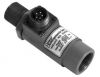
This sensor incorporates a welded diaphragm system that isolates the sensor from extraneous forces and bending moments. The 10254 may be used in tension or compression and is fatigue resistant. [See More]
- Package: Rod End - Male; Rod End - Female
- Output: Analog Voltage
- Force Rating: 1000 to 25000
- Device: Sensor / Transducer

from Andantex USA, Inc.
Andantex ’s Cantilevered Full Bridge transducer idlers are designed for accurate, repeatable tension measurement of paper, film, foil and other narrow web materials. Every transducer incorporates four semi-conductor strain sensing gauges – two at each end of the roller. The gauges... [See More]
- Package: Rod End - Female
- Output: M12
- Force Measured: Tension; Compression
- Device: Sensor / Transducer

from Interface, Inc. - AZ
Why the Interface series 2100 High Capacity Column Load Cell (U.S. & Metric) is the best in class: Capacities to 1million lbf (4,450kN). Performance to +/-0.15% FS. Compact size. Metric & English models. More Information. The 2100 is a column load cell typically used in higher force... [See More]
- Package: Rod End - Female
- Device: Sensor / Transducer
- Output: Analog Voltage; 2.0 mV/V
- Features: Temperature Compensated

from OMEGA Engineering, Inc.
The LCM701 models have a 2 m cable with stripped end terminations. The LCM711 models have an integral connector on the body. These stainless steel load cells are ideal for measuring in-line tension forces. Applications include cables, cranes, support rods, engine test beds and industrial weighing. [See More]
- Package: Rod End - Female
- Accuracy: 0.15
- Force Rating: 100 to 2000
- Force Measured: Tension

from Stellar Technology
• Ultra Low Profile. • Tension / Compression. • High Accuracy 0.10%. • Stainless Steel. • -40 °F to 250 °F Operation. • Environmentally Protected. • mV/V Operation [See More]
- Package: Rod End - Female
- Accuracy: 0.10
- Force Rating: 500 to 5000
- Force Measured: Tension; Compression

from tecsis LP
Custom designed compression load cell to monitor the polished rod forces of oilfield pump off control systems. Model XLDR is fatigue rated to 50,000,000 cycles and available in ranges from 30,000 to 50,000 lbs. Engineered for rugged outdoor use with hermetic construction and shock and vibrations... [See More]
- Package: Rod End - Female
- Output: Analog Current
- Force Rating: 30000 to 50000
- Device: Sensor / Transducer