
Magnetoelastic Force and Load Sensors
Last Updated: April 1, 2025
Description
Magnetoelastic force and load sensors are devices that detect changes in magnetic permeability by measuring variations in their own magnetic field. These sensors are sometimes referred to as pressductor load cells.
Working Principle
Magnetoelastic sensors operate based on the principle of magnetostriction, where applying stress to a magnetostrictive material alters its magnetic properties, such as magnetic permeability. This change in magnetic properties is used to detect force or load. The sensors generate an ultrasonic strain wave from the location of an external marker magnet and detect its passage by a fixed reference point in a waveguide. By knowing the speed of sound in the material, the position of the marker magnet can be determined using a time-of-flight measurement technique. This principle makes magnetoelastic sensors useful for precise force and load measurements.
Applications
Unfortunately, specific applications for magnetoelastic force and load sensors are not detailed in the provided documents. However, similar technologies are often used in industries requiring precise force measurement and control.
Advantages over other Force and Load Sensors
Magnetoelastic sensors offer unique advantages due to their ability to measure changes in magnetic permeability, which can provide more accurate and reliable measurements in certain conditions compared to other types of load cells, such as piezoelectric or capacitive load cells. However, specific examples of these advantages are not detailed in the provided documents.
Limitations
The documents do not provide specific limitations for magnetoelastic force and load sensors. Generally, limitations could include sensitivity to external magnetic fields or environmental conditions that could affect the magnetic properties of the sensor.
Considerations
The documents do not provide detailed considerations for magnetoelastic force and load sensors. However, general considerations for sensors of this type might include initial costs, operating expenses, durability, accuracy, and replacement and maintenance costs. These factors can vary significantly depending on the specific application and environmental conditions in which the sensors are used.

from ABB Measurement & Analytics
The PillowBlock comes in three versions: The standard version, PFTL 101A/B, is often used for accurate measurement in the paper industry, for instance paper machines, calenders, coaters and winders. For web tension measurement in dryer sections in paper machines, the mill duty version, PFTL... [See More]
- Technology: Magnetoelastic
- Package: Plate / Platform
- Force Rating: 112 to 4496
- Device: Sensor / Transducer

from ABB Measurement & Analytics
Using this horizontal force component to measure strip tension can be highly advantageous. The load cell can be sized to measure just the strip tension, excluding the tare weight of the roll. The result is optimized measurement accuracy. Another advantage is that ABB ’s unique horizontal load... [See More]
- Technology: Magnetoelastic
- Package: Plate / Platform
- Force Rating: 2248 to 22480
- Device: Sensor / Transducer

from ABB Measurement & Analytics
The Millmate Looper Tensiometer load cells are made in a mill proof version. The load cells are available in two sizes covering the typical measuring ranges in hot rolling mills.The Pressductor force transducers inside the load cell housing are well suited for harsh mill conditions such as dirt,... [See More]
- Technology: Magnetoelastic
- Package: Plate / Platform
- Force Rating: 4496 to 11240
- Device: Sensor / Transducer

from ABB Measurement & Analytics
Unlike load cells that measure along the vertical axis, they are not forced to sense the roll weight along with the web tension. So these load cells can be sized to the tension level alone, and function at the high end of their measuring range, where load cells perform best. The result: always... [See More]
- Technology: Magnetoelastic
- Package: Plate / Platform
- Force Rating: 22.48 to 225
- Device: Sensor / Transducer

from ABB Measurement & Analytics
Machined from a single block of stainless steel, they have exceptionally high tolerance for overloads, shock and impact, in addition to high immunity to dust and corrosion. The standard construction is of high resistant stainless steel with potted internal components. Mill-duty versions are... [See More]
- Technology: Magnetoelastic
- Package: Plate / Platform
- Force Rating: 1124 to 11240
- Device: Sensor / Transducer

from ABB Measurement & Analytics
The load cell is a solid tensiometer made from stainless steel with exceptional ruggedness and high spring constant in line with other Pressductor PillowBlock load cells. It can be installed under the bearing housing and senses the vertical force, measuring in both directions. PFCL241-SE is... [See More]
- Technology: Magnetoelastic
- Package: Plate / Platform
- Force Rating: 44960
- Device: Sensor / Transducer

from ABB Measurement & Analytics
The load cell is designed to measure vertical forces in both directions in most types of web processing machinery used in the converting, plastic film, printing, textiles, and other industries. Quality load cells that eliminates drift and recalibration. Wide operating range. Easy to apply [See More]
- Technology: Magnetoelastic
- Package: Plate / Platform
- Force Rating: 44.96 to 225
- Device: Sensor / Transducer

from ABB Measurement & Analytics
The Pressductor Radial Load Cells are ideal for applications on a wide range of web processing machinery in the converting, plastic film, printing, textiles, and other industries. [See More]
- Technology: Magnetoelastic
- Force Measured: Tension
- Force Rating: 112 to 1124
- Output: Analog Current; Analog Voltage
from ABB Measurement & Analytics
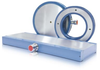
Due to its low impedance and high output signal power the Millmate Roll Force load cells has an extremely low sensitivity to insulation defects and maintains its measuring accuracy down to a 10 Ωk insulation level. The load cell output signal is calibrated for full interchangeability between... [See More]
- Technology: Magnetoelastic
- Accuracy: 0.50
- Force Rating: 141624 to 1.35E7
- Package: Pancake; Donut / Washer; Plate / Platform