
Biaxial Measurement Force and Load Sensors
Last Updated: April 1, 2025
Description
Biaxial Measurement Force and Load Sensors are specialized devices designed to measure force and load in two perpendicular directions. These sensors provide critical data by capturing the magnitude of forces applied along two axes, which is essential for applications requiring precise force measurement in multiple dimensions.
Working Principle
Biaxial Measurement Force and Load Sensors operate by detecting changes in physical parameters such as capacitance or electric charge in response to applied forces. For example, capacitive load cells measure force by detecting changes in capacitance between two parallel plates, while piezoelectric load cells generate an electrical signal proportional to the applied force through the piezoelectric effect. These sensors are useful because they provide accurate and real-time data on force distribution, which is crucial for ensuring the structural integrity and performance of various systems.
Applications
Biaxial Measurement Force and Load Sensors are used in a variety of specific applications. They are essential in the automotive industry for testing the durability and performance of vehicle components under different load conditions. In the aerospace sector, these sensors help in assessing the structural integrity of aircraft parts by measuring forces during flight simulations. Additionally, they are used in robotics to ensure precise control and movement by monitoring the forces exerted by robotic arms.
Advantages over other Force and Load Sensors
Biaxial Measurement Force and Load Sensors offer distinct advantages over uniaxial sensors by providing comprehensive data on force distribution across two axes. This capability allows for more detailed analysis and control in applications where multi-directional force measurement is critical. For instance, in robotic applications, biaxial sensors enable more precise manipulation and interaction with objects by providing feedback on forces in multiple directions.
Limitations
One limitation of Biaxial Measurement Force and Load Sensors is their complexity compared to uniaxial sensors, which can lead to higher initial costs and more intricate installation processes. Additionally, these sensors may require more frequent calibration to maintain accuracy, especially in environments with varying temperature and humidity conditions.
Considerations
When selecting Biaxial Measurement Force and Load Sensors, it is important to consider factors such as initial costs, which can be higher due to their complexity and advanced capabilities. Operating expenses may also be elevated due to the need for regular calibration and maintenance to ensure accuracy. Durability is a key consideration, as these sensors must withstand environmental factors and mechanical stress. Accuracy is paramount, and potential users should evaluate the sensor's specifications to ensure it meets the required precision for their application. Replacement and maintenance costs should also be factored into the decision-making process, as these can impact the overall cost of ownership over the sensor's lifespan.
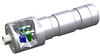
from Strainsert
The Strainsert 2-wire Loop Powered 4 to 20 mA Strain Gage Modules are specially designed compact, high performance strain gage analog signal conditioner modules. They are aimed at 350 Ohm sensor applications which require high measurement accuracy, resolution, and stability. The internal signal... [See More]
- Technology: Strain Gauge
- Operating Temperature: -40 to 185
- Features: Biaxial Measurement
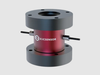
from XJCSENSOR Technology Co., Ltd.
High precision with the principle of resistance strain type. Two-direction force structure. Good temperature characteristics with self-compensated strain gauge. Tiny crosstalk error, strong long-term stability. Overload protection. Stable structure and high rigidity. [See More]
- Output: Analog Voltage
- Technology: Strain Gauge
- Device: Sensor Element / Chip
- Features: Biaxial Measurement; Switch / Alarm; Temperature Compensated
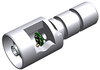
from Strainsert
Digital Strain Gage Modules (DCell) are compact, high performance strain gage digital signal conditioner modules. They are aimed at applications which require high measurement accuracy, resolution, and stability. The internal signal conditioner reduces interference in noisy environments and allows... [See More]
- Technology: Strain Gauge
- Operating Temperature: -40 to 185
- Features: Biaxial Measurement
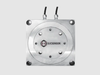
from XJCSENSOR Technology Co., Ltd.
High precision with the principle of resistance strain type. Crosstalk error, strong long-term stability. Good temperature characteristics with self-compensated strain gauge. Upper and lower flange surfaces, stable structure, high rigidity. Large range of measurement. Two-direction force structure. [See More]
- Device: Sensor Element / Chip
- Features: Biaxial Measurement; Temperature Compensated
- Technology: Strain Gauge
- Operating Temperature: -4 to 176
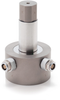
from FUTEK Advanced Sensor Technology, Inc.
MBA400 , Ch Fx: 200 lb; Ch Fy: 200 lb; , Bi-Axial Load Arm , Standard , Material - 17-4 PH S.S. , 4 Pin Lemo Receptacle, EGG.0B.304.CLL [See More]
- Force Rating: 200
- Output: Analog Voltage
- Accuracy: -0.10 to 0.10
- Device: Sensor / Transducer
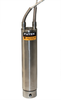
from FUTEK Advanced Sensor Technology, Inc.
QMA101 , Ch Fx: 200 lb; Ch Fy: 200 lb , Bi-Axial Handle Load Cell , Material - 17-4 PH S.S. , 28 Awg 4 Conductor Braided Shielded Clear PVC , 10 ft Long [See More]
- Force Rating: 200
- Output: Analog Voltage
- Accuracy: -1.00 to 1.00
- Device: Sensor / Transducer