
Arc Segment Industrial Magnets
Description
Arc Segment Industrial Magnets are specialized magnets shaped in a curved or arc form. These magnets are designed to fit specific geometries and are often used in applications where a curved magnetic field is required. Their unique shape allows them to be integrated into systems that require a non-linear magnetic field distribution.
Working Principle
Arc Segment Industrial Magnets operate based on the principles of magnetism, where they generate a magnetic field due to the alignment of their internal magnetic domains. The arc shape of these magnets allows for a more focused and directed magnetic field, which can be crucial in applications requiring precise magnetic field control. This shape can help reduce magnetic flux leakage and improve the efficiency of the magnetic circuit by ensuring that the magnetic field is concentrated where it is most needed.
Applications
Arc Segment Industrial Magnets are commonly used in electric motors, particularly in brushless DC motors, where their shape allows for efficient interaction with the motor's rotor. They are also used in magnetic sensors and actuators, where the curved magnetic field can enhance the performance of the device. Additionally, these magnets are employed in magnetic resonance imaging (MRI) machines, where their shape helps in creating a uniform magnetic field necessary for accurate imaging.
Advantages over other Industrial Magnets
One of the primary advantages of Arc Segment Industrial Magnets is their ability to provide a more concentrated and directed magnetic field compared to traditional block or bar magnets. This can lead to improved efficiency and performance in applications such as electric motors, where the precise control of the magnetic field is crucial. The arc shape also allows for better integration into curved surfaces, reducing the need for additional components to achieve the desired magnetic field configuration.
Limitations
A limitation of Arc Segment Industrial Magnets is that their specialized shape can make them more challenging to manufacture and integrate into systems compared to standard-shaped magnets. This can lead to higher initial costs and complexity in design. Additionally, the performance of these magnets can be affected by factors such as temperature and environmental conditions, which need to be carefully managed to maintain their effectiveness.
Considerations
When considering the use of Arc Segment Industrial Magnets, it is important to evaluate the initial costs, which can be higher due to their specialized shape and manufacturing requirements. Operating expenses may also be influenced by the need for precise control and maintenance of the magnetic field. Durability is another factor, as these magnets must withstand the operational conditions of their specific applications. Accuracy in the magnetic field distribution is crucial, particularly in applications like MRI machines, where any deviation can affect performance. Replacement and maintenance costs should also be considered, as the unique shape of these magnets may require specialized handling and installation procedures.
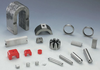
from Essen Magnetics Pty Ltd
Alnico Magnets can be made by both cast and sintered processes. Alnico Magnets have distinct advantages over other varieties of permanent magnets in terms of moderate prices & widest temperature stability. Alnico is very hard and brittle. Machining or drilling can not therefore be accomplished... [See More]
- Geometry: Block / Bar; Rod; Horseshoe / U-shape; Round / Ring / Disc; Arc Segment; Rotor / Poles
- Material: Aluminum-Nickel-Cobalt
- Industrial Magnets: Bulk Magnet Materials; Rare-Earth Magnet
- Manufacturing Method: Sintered or Cast

from Essen Magnetics Pty Ltd
The Iron-Chromium-Cobalt alloys (FeCrCo)are formed either by casting to size or by casting in the form of an ingot which is then rolled and/or drawn either to final shape or to form which can then be cut. Heat treatment is essential to develop the magnetic properties. The magnetic properties can be... [See More]
- Geometry: Block / Bar; Rod; Horseshoe / U-shape; Button / Pot; Round / Ring / Disc; Arc Segment
- Material: Iron-Chromium-Cobalt
- Industrial Magnets: Bulk Magnet Materials
- Manufacturing Method: Cast

from Essen Magnetics Pty Ltd
Hard Ferrite (Ceramic) magnet is manufactured from oxide materials using powder metallurgical process. Hard ferrite magnet is most widely used because of its low cost, high-energy, good electric insulation and excellent resistance to demagnetization. The most common type of hard ferrite magnet is... [See More]
- Geometry: Block / Bar; Horseshoe / U-shape; Button / Pot; Round / Ring / Disc; Arc Segment
- Material: Ferrite
- Industrial Magnets: Bulk Magnet Materials
- Manufacturing Method: Sintered

from Essen Magnetics Pty Ltd
A neodymium magnet (also known as NdFeB, NIB or Neo magnet) is the most widely used type of rare-earth magnet. It is a permanent magnet made from an alloy of neodymium, iron, and boron to form the Nd2Fe14B tetragonal crystalline structure. neodymium magnets are the strongest type of permanent magnet... [See More]
- Geometry: Block / Bar; Rod; Button / Pot; Round / Ring / Disc; Sphere / Bead; Arc Segment; Holding Pots
- Material: Neodymium Iron Boron
- Industrial Magnets: Bulk Magnet Materials; Rare-Earth Magnet
- Manufacturing Method: Sintering or Bonding

from Essen Magnetics Pty Ltd
Samarium Cobalt magnets are high-performance energy products ranging to 32MGOe. SmCo magnets are better able to withstand higher temperatures than other rare earth magnets. SmCo magnet is a high performance, low-temperature coefficient permanent magnet made of samarium and cobalt and other... [See More]
- Geometry: Block / Bar; Rod; Button / Pot; Round / Ring / Disc; Arc Segment
- Material: Samarium Cobalt
- Industrial Magnets: Bulk Magnet Materials; Rare-Earth Magnet
- Manufacturing Method: Sintered

from Hangzhou X-mag Inc.
First used in the 1930 ’s, Alnico is the oldest family of permanent magnets. With energy products ranging from 1.3 to 10.1 MGOe, Alnico can be produced in both cast and sintered forms. The most common grades are cast Alnico 5 and 8 with Alnico 5-7 and 9 being premium grades. Sintered Alnico... [See More]
- Geometry: Block / Bar; Rod; Round / Ring / Disc; Arc Segment; Customized
- Magnet Grade: LN10-LNGT80, FLNG10-FLNGT48
- Material: Aluminum-Nickel-Cobalt; Cast AlNiCo, Sintered Alnico
- BHmax: 1.25 to 10

from Hangzhou X-mag Inc.
Bonded Magnets. Plastic Bonded Magnets are manufactured by compounding magnetic ferrite or rare-earth powders with a thermoplastic binder. They can then be made by compression or injection molding and can be isotropic or anisotropic. They have the advantages of precise dimensions, consistent... [See More]
- Geometry: Block / Bar; Rod; Round / Ring / Disc; Arc Segment; Customized
- Material: Neodymium Iron Boron; Ferrite; Compression molding NdFeB magnets, Injection molding NdFeB magnets, Injection molding ferrite magnets.
- Industrial Magnets: Rare-Earth Magnet
- Magnet Grade: KBM-2~KBM-12L, KBI-3~KBI-8, KBI-F1.5~KBI-F2.1

from Hangzhou X-mag Inc.
FeCrCo magnets were developed in the 1970 ’s. The FeCrCo permanent magnet alloy is known for its ductility and machinability prior to the final heat treatment. At this point in the process, the low cobalt material can be machined as if it was soft steel. It can be bent and heat-treated with a... [See More]
- Geometry: Block / Bar; Rod; Round / Ring / Disc; Arc Segment; Customized
- Magnet Grade: FeCrCo10/3-FeCrCo52/5
- Material: FeCrCo
- BHmax: 1.25 to 6.5

from Hangzhou X-mag Inc.
Sumitomo Special Metals, the Nd2Fe14B magnet is the most widely used rare-earth magnet due to its superior magnetic properties. Neodymium magnet is today ’s super-strong permanent magnet, and its properties continue to improve. Neodymium magnets are used in a wide variety of applications from... [See More]
- Geometry: Block / Bar; Rod; Round / Ring / Disc; Arc Segment; Customized
- Material: Neodymium Iron Boron; Sintered NdFeB
- Industrial Magnets: Rare-Earth Magnet
- Magnet Grade: N35-N42AH; G48SH-G50EH
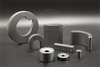
from Hangzhou X-mag Inc.
Ferrite lodestones were discovered millennia ago when stones were found that would magically exhibit invisible forces. Today ’s ferrite magnets are an improvement on that basic material. These can be “soft ” or “hard ” types that exhibit different magnetic coercivities. [See More]
- Geometry: Block / Bar; Rod; Round / Ring / Disc; Arc Segment; Customized
- Magnet Grade: XM10T-XM4748
- Material: Ferrite; Sintered Ferrite
- BHmax: 0.8000 to 5.6