
λ/8 Optical Prisms
Description
?/8 Optical Prisms are precision optical components designed to manipulate light with high accuracy. These prisms are crafted with surfaces polished to a precision of ?/8 of the sodium wavelength, allowing them to effectively redirect, invert, or rotate beams of light. They are typically made from high-quality optical glass and are used in various optical systems to achieve precise light manipulation.
Working Principle
The working principle of ?/8 Optical Prisms is based on the refraction and total internal reflection of light. When light enters the prism, it is bent at the interface between air and the prism material due to the difference in refractive indices. This bending of light allows the prism to change the direction of the light beam. Total internal reflection occurs when light hits the prism's internal surfaces at certain angles, causing it to reflect entirely within the prism without loss. This principle is crucial for applications requiring precise control over light paths, such as in spectrometers and imaging systems.
Applications
?/8 Optical Prisms are used in a variety of specialized applications. They are integral components in spectrometers for dispersing light into its component wavelengths. In imaging systems, they are used to invert or rotate images, which is essential in devices like periscopes and binoculars. Additionally, they are employed in laser systems to correct beam paths and in optical instruments to separate states of polarization.
Advantages over other Optical Prisms
One of the primary advantages of ?/8 Optical Prisms over other types is their high precision in light manipulation due to the ?/8 surface accuracy. This precision allows for minimal light loss and distortion, making them ideal for applications requiring high optical performance. Their ability to maintain beam quality and direction with high accuracy sets them apart from prisms with lower surface precision.
Limitations
Despite their advantages, ?/8 Optical Prisms have limitations. They can be more expensive to produce due to the high precision required in their manufacturing process. Additionally, their performance is highly dependent on the quality of the optical glass used, and any imperfections can significantly affect their effectiveness.
Considerations
When considering ?/8 Optical Prisms, several factors should be taken into account. The initial cost can be high due to the precision manufacturing required. However, their durability and accuracy can justify the investment for applications demanding high optical performance. Operating expenses are generally low, but maintenance costs can arise if the prisms are used in environments where they are exposed to contaminants or physical damage. Regular inspection and cleaning are recommended to maintain their performance and extend their lifespan.
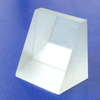
from CeNing Optics Co., Ltd.
The Anamorphic prisms are used in pairs to magnify input beam size along one axis while leaving the other axis unchanged. The elliptical laser diode beams can be transferred into nearly circular beams. By adjusting the orientation of the prisms( α1 and α2), the magnification can range... [See More]
- Surface Flatness: λ/8
- Largest Dimension: 12
- Prism Type: Anamorphic
- Prism Material: SF-11

from CASTECH, Inc.
Note: • Coatings: optional. • Other sizes and magnify are available upon request. [See More]
- Surface Flatness: λ/8
- Prism Material: N-SF11
- Prism Type: Anamorphic
- Surface Quality: 40-20 Scratch / Dig

from Newport MKS
The BRAP13-A High Tolerance Right-Angle Prism is precision polished to tight tolerances for more demanding applications. This protective aluminum coated hypotenuse, N-BK7 prism dimension is 0.39 x 0.39 x 0.39 inch (10.0 x 10.0 x 10.0 mm). It has a λ/8 surface flatness and a 40-20 surface... [See More]
- Surface Flatness: λ/8
- Prism Material: BK7 Glass
- Prism Type: Right Angle
- Surface Quality: 40-20 Scratch / Dig; 40-20 scratch-dig
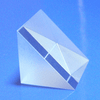
from CeNing Optics Co., Ltd.
Right angle prisms are the most popular of all prisms. Right angle prisms are used to deviate a beam through a 90 ° angle, when a beam enters normal to right sides, and can also be a retroreflector to deviate a beam through a 180 ° angle when the beam enters normal to hypotenuse. [See More]
- Surface Flatness: λ/4; λ/8
- Largest Dimension: 50.8
- Prism Type: Right Angle
- Prism Material: BK7 Glass; SF10 Glass; UV Grade Fused Silica

from CASTECH, Inc.
Note: • Coatings: optional. • Other sizes and material are available upon request. [See More]
- Surface Flatness: λ/8
- Largest Dimension: 15
- Prism Type: Equilateral
- Prism Material: BK7 Glass

from Newport MKS
The BRAP13 High Tolerance Right-Angle Prism is precision polished to tight tolerances for more demanding applications. This uncoated, N-BK7 prism dimension is 0.39 x 0.39 x 0.39 inch (10.0 x 10.0 x 10.0 mm). It has a λ/8 surface flatness and a 40-20 surface quality. This prism is recommended... [See More]
- Surface Flatness: λ/8
- Prism Material: BK7 Glass
- Prism Type: Right Angle
- Surface Quality: 40-20 Scratch / Dig; 40-20 scratch-dig

from CASTECH, Inc.
Note: Other sizes and material are available upon requests. [See More]
- Surface Flatness: λ/8
- Largest Dimension: 12.7
- Prism Type: Corner Cube Retroreflector
- Prism Material: BK7 Glass

from Changchun Sunday Optics Co., Ltd.
Neutral density filter is also called medium gray density lens, referred to as ND lens, its role is to filter light.This filter effect is non-selective, that is to say, ND mirror on a variety of different wavelengths of light reduction ability is the same, uniform, only play the role of weak light,... [See More]
- Surface Flatness: λ/4; λ/8
- Prism Material: BK7 Glass; H-K9L N-BK7 UV Fused silica,Germanium
- Prism Type: Corner Cube Retroreflector
- Coating Options: Antireflection Coating

from Zygo Corporation
A corner cube retroreflector, also known as a CCR or trihedral prism, is an optical structure that consists of three adjacent, mutually-orthogonal plane-reflecting surfaces which form the corner of a cube. The corner cube reflects an incident ray at a specific angle, independent of the prism and... [See More]
- Surface Flatness: λ/8; λ/10; λ/20; Lambda /40
- Largest Dimension: 10 to 100
- Prism Type: Corner Cube Retroreflector
- Prism Material: BK7 Glass; UV Grade Fused Silica; BK7, Fused Silica, Germanium, Silicon and more
from Rainbow Research Optics, Inc.
Custom Optics. Here at Rainbow Research Optics, Inc. (RROI) we focus on a more targeted wavelength ranges, from about 190 nm to 16 um. Our manufacturing capabilities include a wide range of optical components, including lenses, mirrors, windows, prisms, beamsplitters, filters, coatings, and more. [See More]
- Surface Flatness: λ/4; λ/8; λ/10
- Prism Material: BK7 Glass; F2 Glass; SF10 Glass; UV Grade Fused Silica; SUPRASIL 1
- Prism Type: Corner Cube Retroreflector; Dove; Equilateral; Penta; Rhomboid; Right Angle
- Surface Quality: 10-5 Scratch / Dig; 20-10 Scratch / Dig; 40-20 Scratch / Dig

from Foctek Photonics, Inc.
here are many types of prism, each having a particular geometry to achieve the reflections necessary to perform a specific imaging task. Reflecting prisms may invert, rotate, deviate or displace a beam. Dispersing prisms produce spectral separation for spectroscopic online_orderings or for tuning a... [See More]
- Surface Flatness: λ/8
- Largest Dimension: 12
- Prism Type: Anamorphic
- Prism Material: N-SF11 Grade A

from ECOPTIK (CHANGCHUN) LTD
An anamorphic prism pair is a pair of prisms which is usually used for reshaping the profile of a laser beam. For example, the elliptical beam from a laser diode can be transformed into a beam with circular cross-section, as is needed for many applications, by using a prism pair as a beam expander... [See More]
- Surface Flatness: λ/8
- Prism Material: SF11
- Prism Type: Anamorphic
- Surface Quality: 60-40 Scratch / Dig
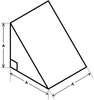
from Spectral Optics
Material: UV fused silica, BK7. Clear Aperture: larger than 85%. Surface Quality (Scratch-Dig): 10-5 for UV fused silica, 20-10 for BK7. Surface Flatness: λ/10 for UV fused silica, λ/8 for BK7 @633nm. Angular Deviation: ±3 arc min. Bevel: <0.5mm @45 ˚ typical. Right... [See More]
- Surface Flatness: λ/8; λ/10
- Largest Dimension: 12.7 to 25.4
- Prism Type: Right Angle
- Prism Material: BK7 Glass; UV Grade Fused Silica

from Fairfield Crystal Technology, LLC.
Fairfield Crystal provides component manufacturing for your most challenging designs and applications. Combined with our expertise in crystal growth our component fabrication team is able to manufacture highly polished single crystal lenses, prisms, wedges, waveplates and other optical components to... [See More]
- Surface Flatness: λ/2; λ/4; λ/5; λ/8; λ/10; λ/20
- Surface Quality: 10-5 Scratch / Dig; 20-10 Scratch / Dig; 40-20 Scratch / Dig; 60-40 Scratch / Dig; 80-50 Scratch / Dig
- Prism Type: Wedge

from UNI OPTICS(Fujian) Co., Ltd
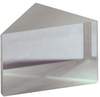
The Anamorphic prisms are used in pairs to magnify input beam size along one axis while leaving the other axis unchanged. The elliptical laser diode beams can be transferred into nearly circular. [See More]
- Surface Flatness: λ/8
- Prism Material: N-SF11
- Prism Type: Anamorphic
- Surface Quality: 60-40 Scratch / Dig
from Thorlabs, Inc.
At Thorlabs, we constantly reinforce our desire to serve at the pleasure of our customers. From this comes our desire to be connected to our industry in a way that far exceeds what would typically be expected of a vendor. Thorlabs lives this core principle by seeking to enhance, at every turn, the... [See More]
- Surface Flatness: λ/4; λ/8
- Largest Dimension: 6
- Prism Type: Right Angle; Coupling
- Prism Material: TiO2, Gadolinium Gallium Garnet

from HG Optronics, Inc.
The Anamorphic prisms are used in pairs to magnify input beam size along one axis while leaving the other axis unchanged. The elliptical laser diode beams can be transferred into nearly circular. 8.1. What it anamorphic prism?. Anamorphic prisms are used to correct the asymmetric, elliptical beams... [See More]
- Surface Flatness: λ/8; λ/8@632.8nm
- Prism Material: N-SF11 Grade A optical glass
- Prism Type: Anamorphic
- Surface Quality: 40-20 Scratch / Dig
from Edmund Optics Inc.
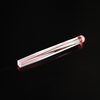
Image Rotation of 180 °. Left Handed Image. Ideal for Rotation or Displaced Retroreflection. Dove prisms have an unusual and very interesting characteristic " if you look through the prism and rotate it around a longitudinal axis, the image rotates through twice the angle through which the dove... [See More]
- Surface Flatness: λ/8
- Prism Material: BK7 Glass
- Prism Type: Dove
- Surface Quality: 40-20 Scratch / Dig
from ECOPTIK (CHANGCHUN) LTD
Prisms: Right angle prism, Dove prism, Beam splitter, Penta Prism, Corner prism, Trapezium Prism, Rhomboid Prism, Roof Prism, Cube prism, customized prisms, etc. [See More]
- Surface Flatness: λ/2; λ/4; λ/5; λ/8; λ/10
- Surface Quality: 10-5 Scratch / Dig; 20-10 Scratch / Dig; 40-20 Scratch / Dig; 60-40 Scratch / Dig; 80-50 Scratch / Dig
- Prism Type: Dove; Penta; Right Angle; Roof; Beam splitter, Corner prism, Trapezium Prism, Rhomboid Prism, Cube prism, customized prisms, etc..
from UNI OPTICS(Fujian) Co., Ltd
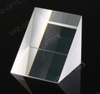
Prisms are transparent optical devices which refract or reflect light. They have manifold applications in laser technology. [See More]
- Surface Flatness: λ/8
- Largest Dimension: 80
- Prism Type: Right Angle
- Prism Material: BK7 Glass; UV Grade Fused Silica

from Thorlabs, Inc.
At Thorlabs, we constantly reinforce our desire to serve at the pleasure of our customers. From this comes our desire to be connected to our industry in a way that far exceeds what would typically be expected of a vendor. Thorlabs lives this core principle by seeking to enhance, at every turn, the... [See More]
- Surface Flatness: λ/8
- Largest Dimension: 33 to 66
- Prism Type: Pelin Broca
- Prism Material: BK7 Glass; UV Grade Fused Silica; CaF2

from HG Optronics, Inc.
In optics, a prism is a transparent optical element with flat, polished surfaces that refract light. At least two of the flat surfaces must have an angle between them. The exact angles between the surfaces depend on the application. The traditional geometrical shape is that of a triangular prism... [See More]
- Surface Flatness: λ/4; λ/8; ?/4@632.8nm - ?/8@632.8nm
- Largest Dimension: 70
- Prism Type: Right Angle
- Prism Material: BK7 Glass; UV Grade Fused Silica; N-BK7 glass , UV Fused silica, other optical glass

from ECOPTIK (CHANGCHUN) LTD
Prism, a transparent object surrounded by two planes that intersect but are not parallel to each other, used to split light or disperse light beams. A prism is a polyhedron made of transparent materials (such as glass, crystal, etc.). It is widely used in optical instruments. Prisms can be divided... [See More]
- Surface Flatness: λ/2; λ/4; λ/5; λ/8; λ/10
- Surface Quality: 10-5 Scratch / Dig; 20-10 Scratch / Dig; 40-20 Scratch / Dig; 60-40 Scratch / Dig; 80-50 Scratch / Dig
- Prism Type: Dove; Penta; Right Angle; Roof; Beam splitter, Corner prism, Trapezium Prism, Rhomboid Prism, Cube prism, customized prisms, etc..
from HG Optronics, Inc.
Prisms are transparent optical devices which refract or reflect light. They have manifold applications in laser technology. 2.1 What is the Laser Prisms?. Laser Prismsare used to redirect laser beams in a number of beam steering or beam manipulation applications. Laser Prisms use a variety of... [See More]
- Surface Flatness: λ/8; Lambda/8@632.8nm
- Largest Dimension: 4 to 120
- Prism Type: Right Angle
- Prism Material: BK7 Glass; UV Grade Fused Silica; BK7 or Fused Silica(Or Custom Design)

from ECOPTIK (CHANGCHUN) LTD
Right angle prisms are extremely versatile optical components, commonly used as individual prisms and components of optical assemblies. A beam of light entering the leg of a right angle prism will deviate by a nominal value of 90 °, while precise rotation of the prism controls beam alignment. [See More]
- Surface Flatness: λ/2; λ/4; λ/5; λ/8; λ/10; λ/20
- Largest Dimension: 200
- Prism Type: Right Angle
- Prism Material: BK7 Glass; UV Grade Fused Silica

from HG Optronics, Inc.
Corner Cube Prism also called Retroreflector.It has three mutually perpendicular surfaces and a hypotenuse face. Light entering through the hypotenuse is reflected by each of the three surfaces in turn and will emerge through the hypotenuse face parallel to the entering beam regardless of the... [See More]
- Surface Flatness: λ/4; λ/8; ?/4@632.8nm, ?/8@632.8nm
- Largest Dimension: 72.52
- Prism Type: Corner Cube Retroreflector
- Prism Material: BK7 Glass; UV Grade Fused Silica; N-BK7 glass , UV Fused silica or other optical glasses.

from ECOPTIK (CHANGCHUN) LTD
BRD Optical offers wedge prism: Right angle prism, Dove prism, Beam splitter, Penta Prism, Corner prism, Trapezium Prism, Rhomboid Prism, Roof Prism, Cube prism, customized prisms, etc. [See More]
- Surface Flatness: λ/8
- Prism Material: BK7 Glass; UV Grade Fused Silica
- Prism Type: Wedge
- Surface Quality: 20-10 Scratch / Dig; 40-20 Scratch / Dig; 60-40 Scratch / Dig