
Laboratory Controller Universal Process Controllers
Description
Laboratory Controller Universal Process Controllers are devices designed to manage and regulate various process variables in laboratory settings. They are capable of receiving a wide range of input signals, including direct current (DC) voltage, current loops, and analog signals from sensors like thermocouples and thermistors. These controllers can output signals in various forms, such as analog voltage, current loops, and digital formats, to indicate process variables.
Working Principle
Universal process controllers operate by receiving input signals that represent different process variables. These inputs are processed to maintain the desired set points through control algorithms. The controllers can be equipped with features like self-tuning, programmable set points, and built-in alarms, which enhance their functionality and adaptability. They are useful because they provide precise control over multiple variables, ensuring stable and consistent laboratory conditions.
Applications
Laboratory Controller Universal Process Controllers are used in various specific applications, such as controlling temperature, pressure, and humidity in environmental chambers. They are also employed in processes that require precise regulation of chemical reactions or in the calibration of laboratory instruments.
Advantages over other Universal Process Controllers
One advantage of laboratory controllers is their ability to handle a wide range of input and output types, including digital formats and industrial fieldbus protocols like CANbus and PROFIBUS. This versatility allows them to integrate seamlessly into complex laboratory systems. Additionally, their compliance with standards such as the Restriction of Hazardous Substances (RoHS) and Waste Electrical and Electronics Equipment (WEEE) directives makes them suitable for use in regulated environments.
Limitations
A limitation of laboratory controllers is that they may require specialized knowledge for setup and programming, especially when dealing with complex systems or protocols. Additionally, their performance can be affected by electrical noise or interference in harsh environments, which may necessitate additional protective measures.
Considerations
When selecting a laboratory controller, it is important to consider initial costs, which can vary based on the complexity and features of the device. Operating expenses may include energy consumption and the need for regular calibration to maintain accuracy. Durability is a key factor, as controllers must withstand the laboratory environment. Maintenance and replacement costs should also be considered, as these can impact the long-term cost-effectiveness of the controller.
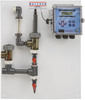
from Iwaki America and Walchem, IWAKI America Inc
Walchem's WDIS Series controller will reliably and economically control your water treatment disinfection process.The controller includes four standard sensor input options (free chlorine/bromine, chlorine dioxide, ozone and peracetic acid) or can be configured to use a variety of other types of... [See More]
- Controller Type: Environmental; Laboratory; Level
- Features: Multi-Function; Datalogger
- Control: Limit; Linear; PID; Nonlinear
- Form Factor: Chassis

from Florite International, Inc.
The 900 Series is an economic one loop microcomputer-based instrument incorporating user selectable digital and analog inputs, as well as analog and relay outputs. Other 900 Series features include .005% high accuracy PID, batch, and dose control functions. Additionally, the 900 Series encompasses... [See More]
- Controller Type: Flow; Laboratory; Level; Pressure; Temperature
- Features: PLC; Multi-Function; Datalogger; Is a Chart Recorder; Rate Indication/ Control; Totalizing (Length or Roll Diameter) Indication/ Control
- Control: Limit; Linear; Feedforward; PID
- Form Factor: Board (optional feature); Chassis; Rack; Stand-Alone; Wall Mount
from Hach
The SC200 Universal Controller is the most versatile controller on the market. It allows the use of digital and analog sensors, either alone or in combination, to provide compatibility with the broadest range of sensors. It replaces the Hach SC100 digital and GLI53 analog controllers with advanced... [See More]
- Controller Type: Environmental; Flow (optional feature); Laboratory; Conductivity, pH/DO
- Features: Multi-Function; Datalogger
- Control: Linear; PID
- Form Factor: Chassis; Wall, Pole

from Florite International, Inc.
The Florite Model 990X is an innovative, technically superior, high quality and reliable microcomputer-based controller suitable for any commercial or industrial application. The instruments user configurable screw-terminal channels enable any mix of up to eight inputs and or outputs regardless of... [See More]
- Controller Type: Flow; Laboratory; Level; Pressure; Temperature
- Features: PLC; Multi-Function; Datalogger; Is a Chart Recorder; Rate Indication/ Control; Totalizing (Length or Roll Diameter) Indication/ Control
- Control: Limit; Linear; Feedforward; PID
- Form Factor: Chassis; Rack; Stand-Alone; Table Top Mount

from Hach
The Hach SC1000 Multi-parameter Universal Controller is a state-of-the-art modular controller system. Use it directly with up to 8 sensors or network several together to accommodate many more sensors and parameters. The SC1000 consists of a Display Module and one or more Probe Modules. The SC1000... [See More]
- Controller Type: Environmental; Laboratory
- Features: Multi-Function; Datalogger
- Control: Limit; PID
- Form Factor: Chassis; Surface, Pipe
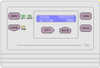
from Florite International, Inc.
The 700 Series is an economic one loop microcomputer-based instrument incorporating a digital input, as well as a relay output. Other 700 Series features include rate metering, dual totalizing, easy menu navigation, multiple audio/visual alarm functions, a serial RS-232 port, LWAN (modem)... [See More]
- Controller Type: Flow; Laboratory; Level
- Features: PLC; Multi-Function; Rate Indication/ Control; Totalizing (Length or Roll Diameter) Indication/ Control
- Control: Limit
- Form Factor: Board (optional feature); Chassis; Rack; Stand-Alone; Wall Mount
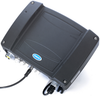
from Hach
The Hach SC1000 Multi-parameter Universal Controller is a state-of-the-art modular controller system. Use it directly with up to 8 sensors or network several together to accommodate many more sensors and parameters. The SC1000 consists of a Display Module and one or more Probe Modules. The SC1000... [See More]
- Controller Type: Environmental; Laboratory
- Features: Multi-Function; Datalogger
- Control: Limit; PID
- Form Factor: Chassis; Surface, Pipe