
Fuzzy Logic Universal Process Controllers
Description
Fuzzy Logic Universal Process Controllers are advanced control systems that utilize fuzzy logic to manage and regulate various processes. These controllers are designed to handle complex, nonlinear, or poorly defined systems by using a set of rules and linguistic variables to make decisions. They are particularly effective in situations where traditional control methods struggle due to the lack of precise mathematical models.
Working Principle
Fuzzy Logic Universal Process Controllers operate based on the principles of fuzzy logic, which allows for reasoning with imprecise information. Unlike traditional binary logic, fuzzy logic uses linguistic variables and membership functions to represent data, enabling the controller to handle uncertainty and approximate reasoning. The process involves fuzzification, where input variables are converted into linguistic terms, followed by the application of a set of rules to determine the control action. The output is then defuzzified to produce a real-world control signal. This approach is beneficial because it can incorporate human-like reasoning and adapt to changing conditions without requiring an exact mathematical model of the process.
Applications
Fuzzy Logic Universal Process Controllers are used in a variety of applications where traditional control methods may not be effective. Specific examples include:
- Electrode positioning and power control in high-power electrical arc furnaces.
- Waste incineration plants where process conditions are highly variable.
- Tension control on paper ribbons, films, or steel in rolling mills.
- Induction motor controllers that require precise speed and torque management.
Advantages over other Universal Process Controllers
Fuzzy Logic Controllers offer several advantages over traditional controllers, such as PID controllers. They excel in environments with significant disturbances or where the process model is difficult to define. For instance, in systems with minimal dead time, fuzzy logic can accelerate control speed while maintaining high-quality performance. Additionally, they can outperform other controllers in complex, nonlinear, or undefined systems by leveraging practical knowledge and handling imprecise inputs effectively.
Limitations
Despite their advantages, Fuzzy Logic Universal Process Controllers have limitations. They may not be suitable for all applications, particularly those where precise mathematical modeling is possible and beneficial. The design and tuning of fuzzy logic systems can be complex, requiring expertise in defining appropriate membership functions and rule sets. Additionally, the performance of fuzzy controllers can be sensitive to the choice of membership functions and the inference method used.
Considerations
When considering the implementation of Fuzzy Logic Universal Process Controllers, several factors should be taken into account:
- Initial Costs: The development and implementation of a fuzzy logic system can be more expensive due to the need for specialized knowledge and design efforts.
- Operating Expense: These controllers may require more computational resources, potentially increasing operating costs.
- Durability and Accuracy: While they can handle imprecise inputs, the accuracy of the control action depends on the quality of the rule set and membership functions.
- Replacement and Maintenance Costs: Maintenance may involve updating the rule set or membership functions to adapt to changing process conditions, which can incur additional costs.

from Spirax-Sarco
The SX75 controllers are panel mounted, suitable for constant set point control of systems having fixed pre-programmed set points. The controller has universal inputs, and outputs using PID with Fuzzy algorithm for close control of industrial processes. The SX75 controllers are for use in... [See More]
- Control: Limit; Linear; PID; Fuzzy Logic
- Form Factor: Chassis; DIN
- Controller Type: Flow; Temperature
- Interface: Digital Front Panel
from OMEGA Engineering, Inc.
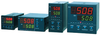
The CN4000 Series temperature/process controllers set a new standard for ease-of-use and value. Units feature dedicated input models with thermocouple and RTD inputs, and models with universal inputs for both temperature and process inputs. Standard features include autoune, fuzzy logic, fully... [See More]
- Control: Limit; PID; Fuzzy Logic
- Form Factor: Chassis
- Controller Type: Temperature
- Interface: Digital Front Panel

from CHINO Works America Inc.
The DB500 series is high-accuracy, high-speed compact controllers with digital displays and an indicating accuracy of ± 0.2% and sampling frequency of about 0.2 second, incorporating high-performance microprocessors with a front panel 48 mm width and 96 mm height. They have excellent... [See More]
- Control: Limit; PID; Fuzzy Logic
- Interface: Digital Front Panel
- Controller Type: Temperature
- Inputs: 1