
Display: None Tachometers
Description
Display: None Tachometers are devices used to measure the rotational speed of an object, typically in revolutions per minute (RPM). Unlike traditional tachometers, these devices do not have a built-in display to show the measured speed directly.
Working Principle
Display: None Tachometers operate by using various sensor technologies to detect the rotational speed of an object. Common sensor technologies include contact type, photoelectric, inductive, and Hall effect sensors. In contact type tachometers, the sensor physically touches the rotating part to measure speed. Photoelectric tachometers use light beams to detect speed, while inductive tachometers use magnetic fields. Hall effect tachometers utilize the Hall effect principle to determine rotational speed. These tachometers are useful because they can provide accurate speed measurements without the need for a visual display, making them ideal for integration into larger systems where space or visibility is limited.
Applications
Display: None Tachometers are often used in applications where the speed data needs to be fed into a control system or recorded for analysis rather than being displayed. They are commonly employed in industrial settings for monitoring the speed of engines, motors, and other rotating equipment. Specific examples include their use in feedback components for speed control circuits in conveyors, mixers, fans, and machine tools.
Advantages over other Tachometers
One advantage of Display: None Tachometers is their ability to integrate seamlessly into automated systems where the speed data is processed electronically rather than being read by an operator. This can be particularly beneficial in environments where space is limited or where the tachometer needs to be placed in a location that is not easily visible.
Limitations
A significant limitation of Display: None Tachometers is the lack of a built-in display, which means that they cannot provide immediate visual feedback to an operator. This can be a drawback in situations where real-time monitoring by a human is necessary. Additionally, the reliance on external systems to process and display the data can introduce complexity and potential points of failure.
Considerations
When considering Display: None Tachometers, it is important to evaluate the initial costs, which may be lower due to the absence of a display. However, the need for additional equipment to process and display the data can increase overall expenses. Operating expenses may also be affected by the type of sensor technology used, as some may require more maintenance or have shorter lifespans. Durability and accuracy are crucial factors, as these devices need to withstand industrial environments while providing precise measurements. Replacement and maintenance costs should also be considered, particularly if the tachometer is part of a critical system where downtime must be minimized.
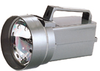
from REED-Direct
Exclusive one-chip micro-computer LSI circuit and quartz crystal control time-base assures accuracy of ±1%. 4-digit, 0.3" high LED display. Duty cycles from 5 to 30 minutes (depending on RPM range). Tripod mountable AC operated with 6-foot power cord. SPECIFICATIONS: Flash Range: 100 to... [See More]
- Display Type: None
- Tachometer Type: Instrument / Sensor Package
- Operating Speed: 100 to 100000
- Sensor Technology: Non Contact (Stroboscope)

from Gefran
Tachometer with analogue output proportional to the speed and digital output. The power supply requirements and output signal levels are compatible with all the GEFRAN instruments [See More]
- Display Type: None
- Tachometer Type: Speed Sensor Only
- Operating Speed: 5000
- Sensor Technology: Contact Type (Roller)
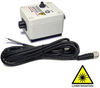
from Monarch Instrument
The sensor has both digital pulse and analog outputs to provide non-contact reference points to balancing equipment or signals to a vibration analyzer. The sensor will track surface irregularities on rotating shafts and provide pulse outputs from reflective tape, contrasting colors and keyways. The... [See More]
- Display Type: None
- Tachometer Type: Instrument / Sensor Package
- Operating Speed: 1 to 500000
- Sensor Technology: Non Contact (Photoelectric (Optical, Infrared))
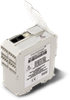
from AI-TEK Instruments, LLC
The TACHPAK 10 computing speed switch is the same as the TACHPAK 30 but excludes the solid state relays, analog output and the utility RS485 function. [See More]
- Display Type: None
- Sensor Technology: Non Contact (Magnetic)
- Tachometer Type: Speed Sensor Only
- Form Factor: DIN Rail
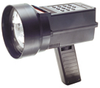
from REED-Direct
Duty cycles from 10 minutes to 2 hours depending on rpm range. Xenon white flash tube has a flash duration of 60 to 1000 µS. External trigger input. RS232 serial interface. SPECIFICATIONS: Flash Range: 10 to 10,500 rpm. Resolution: 0.1 rpm: 5 to 999.9 rpm; 1 rpm: 1,000 to 9,999 rpm; 10 rpm: ?... [See More]
- Display Type: None
- Tachometer Type: Instrument / Sensor Package
- Operating Speed: 10 to 10500
- Sensor Technology: Non Contact (Stroboscope)

from Monarch Instrument
The F2A1X Frequency to Analog module converts a frequency input signal into a proportional analog voltage (0-5Vdc) or current (4-20mA) output. The output signal is electrically isolated from input signal and input power source effectively eliminating troublesome ground loops. The input signal can be... [See More]
- Display Type: None
- Accuracy: 0.0050
- Operating Speed: 5 to 600000
- Tachometer Type: Instrument / Sensor Package
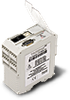
from AI-TEK Instruments, LLC
The TACHPAK 30 computing tachometer is a dual channel instrument. It measures input frequency and converts the resulting quantities to an analog output, utility RS485 communication, 2 solid state and 2 mechanical relay functions. [See More]
- Display Type: None
- Sensor Technology: Non Contact (Magnetic)
- Tachometer Type: Speed Sensor Only
- Form Factor: DIN Rail