
Switch / Relay Tachometers
Description
Switch/Relay Tachometers are devices designed to measure the rotational speed of a shaft or disk, typically in revolutions per minute (RPM). They provide a digital or analog output that can be used to monitor and control the speed of motors and other rotating equipment.
Working Principle
Switch/Relay Tachometers operate by detecting changes in a magnetic field or light beam as a rotating object passes by a sensor. For example, Hall effect sensors are commonly used in these tachometers to detect the presence of a magnetic field, which changes as the object rotates. This change is then converted into an electrical signal that corresponds to the rotational speed. These tachometers are useful because they provide precise and real-time speed measurements, which are critical for maintaining the performance and safety of mechanical systems.
Applications
Switch/Relay Tachometers are used in various applications where monitoring rotational speed is crucial. They are commonly found in automotive engines to measure engine RPM, in industrial machinery to monitor the speed of conveyors and mixers, and in HVAC systems to ensure the proper operation of fans and blowers. In motor control systems, they provide feedback for speed regulation and control.
Advantages over other Tachometers
Switch/Relay Tachometers offer several advantages over other types of tachometers. They can provide both speed and directional information, which is beneficial in applications requiring precise control. Additionally, they often have a digital output that can be easily integrated with microcontrollers and other digital systems, enhancing their versatility and ease of use.
Limitations
One limitation of Switch/Relay Tachometers is their reliance on external sensors, such as Hall effect sensors, which can be susceptible to environmental factors like temperature and magnetic interference. This can affect their accuracy and reliability in certain conditions. Additionally, they may require more complex installation and calibration compared to simpler tachometer types.
Considerations
When selecting a Switch/Relay Tachometer, it is important to consider factors such as initial costs, which can vary depending on the complexity of the system and the type of sensors used. Operating expenses may include maintenance and calibration costs to ensure accuracy over time. Durability is another consideration, as these devices must withstand the operating environment, including potential exposure to dust, moisture, and temperature fluctuations. Accuracy is critical, and potential users should evaluate the specified accuracy of the tachometer to ensure it meets their application's requirements. Replacement and maintenance costs should also be factored into the overall cost of ownership, as these can impact the long-term viability of the tachometer in a given application.
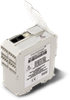
from AI-TEK Instruments, LLC
The TACHPAK 10 computing speed switch is the same as the TACHPAK 30 but excludes the solid state relays, analog output and the utility RS485 function. [See More]
- Outputs: Switched
- Sensor Technology: Non Contact (Magnetic)
- Tachometer Type: Speed Sensor Only
- Form Factor: DIN Rail
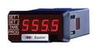
from Baumer Ltd.
Current and voltage input, Display range can be linearised [See More]
- Outputs: Switched
- Tachometer Type: Instrument / Sensor Package
- Operating Speed: 0.0955 to 66.85
- Form Factor: Panel

from Fluidwell bv
The F093 is a local indicator to monitor the tachometer engine speed with running hours simultaneously. The running hours can be reset to zero by pressing the CLEAR button twice. The eleven digit accumulated running hours however can not be reset to zero. Advantages. Robust IP66, IP67 (NEMA4X) field... [See More]
- Outputs: Switched
- Form Factor: Panel; Field Mount / Stand Alone
- Tachometer Type: Indicator Only
- Display Type: Digital Numerical Display

from Dart Controls, Inc.
An economical microprocessor-based digital tachometer system capable of measuring shaft speeds lower than 1 RPM. An on-board microcomputer coupled with sophisticated internal software, quartz crystal controlled reference frequency, and display up dating on every pulse or every .5 seconds (whichever... [See More]
- Outputs: Analog Current; Analog Voltage; Switched; Serial/Digital
- Accuracy: 0.0100
- Operating Speed: 1 to 125000
- Tachometer Type: Indicator Only
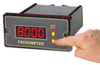
from OMEGA Engineering, Inc.
The OMDC-DM8000 is an economical microprocessor-based digital tachometer system capable of measuring shaft speeds lower than 1 RPM. With an on-board microcomputer coupled with sophisticated internal software and a quartz crystal controlled reference frequency, the OMDC-DM8000 is able to maintain... [See More]
- Outputs: Frequency; Switched
- Sensor Technology: Non Contact (Magnetic)
- Tachometer Type: Instrument / Sensor Package
- Form Factor: Benchtop
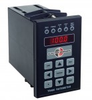
from Electro-Sensors, Inc.
Full Logic Control Process Ratemeter. Features. • Displays rate or time in process. • Easy installation and setup. • Completely field adjustable. • Single channel or quadrature decoding. • NEMA 4 faceplate. • Full diagnostic function. • Front panel reverse... [See More]
- Outputs: Analog Current (optional feature); Analog Voltage (optional feature); Switched; Serial/Digital
- Tachometer Type: Instrument / Sensor Package
- Operating Speed: 0.0 to 10000
- Sensor Technology: Contact Type (Roller); Non Contact (Photoelectric (Optical, Infrared), Magnetic)