
Analog Voltage Tachometers
Description
Analog Voltage Tachometers are devices that measure the rotational speed of an object and display this speed in terms of revolutions per minute (RPM). They provide a continuous analog voltage output that is proportional to the speed of the rotating object.
Working Principle
Analog Voltage Tachometers operate by converting the rotational speed of an object into a proportional voltage signal. This is typically achieved through the use of a tachogenerator, which generates a voltage output that varies with the speed of rotation. The analog voltage output is then used to display the RPM on a gauge. These tachometers are useful because they provide a simple and direct method of monitoring rotational speed, which is crucial for maintaining the performance and safety of various mechanical systems.
Applications
Analog Voltage Tachometers are commonly used in applications where continuous monitoring of rotational speed is necessary. For example, they are used in automotive engines to monitor engine speed, in industrial machinery to ensure optimal operating conditions, and in wind turbines to measure rotor speed. These tachometers are also employed in laboratory settings for testing and research purposes.
Advantages over other Tachometers
One of the advantages of Analog Voltage Tachometers is their simplicity and ease of integration into existing systems. Unlike digital tachometers, they do not require complex signal processing, making them more straightforward to use in applications where a simple analog output is sufficient. Additionally, they can provide real-time speed monitoring without the need for digital conversion, which can be beneficial in certain industrial environments.
Limitations
Analog Voltage Tachometers can be limited by their accuracy and sensitivity to environmental conditions. They may not be as precise as digital tachometers, especially in applications requiring high-resolution speed measurements. Additionally, their performance can be affected by temperature fluctuations and electromagnetic interference, which can lead to inaccuracies in the voltage output.
Considerations
When considering the use of Analog Voltage Tachometers, it is important to evaluate factors such as initial costs, operating expenses, and maintenance requirements. These tachometers are generally cost-effective for applications that do not require high precision. However, their durability and accuracy can vary depending on the quality of the components used. Regular maintenance may be necessary to ensure consistent performance, and replacement costs should be considered if the tachometer is subject to harsh operating conditions.
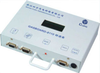
from Cubic Sensor and Instrument Co.,Ltd.
Engine RPM Sensor Based on Vibration and Noise Gasboard-8110 adopts advanced design of hardware together with integrated software analysis technology. Petrol engine or diesel engine's RPM is obtained through analysis of vibration and audio spectrum signal. It is easy to operate, accurate and... [See More]
- Outputs: Analog Voltage; Serial/Digital
- Tachometer Type: Instrument / Sensor Package
- Operating Speed: 450 to 8000
- Sensor Technology: Non Contact (Magnetic (optional feature))
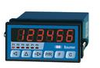
from Baumer Ltd.
Measuring and processing of quality and quantity-relevant production data are cycles repeating a thousand times at machines and production facilities. By their controllers and process displays Baumer provides the task-matching, practice-oriented equipment. Process displays and tachometers enable... [See More]
- Outputs: Analog Current; Analog Voltage; Serial/Digital
- Tachometer Type: Instrument / Sensor Package
- Operating Speed: 95.49 to 382
- Form Factor: Panel
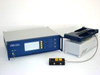
from Polytec, Inc.
The new RLV-5500 Rotational Laser Vibrometer uses a fiber-optic cable to provide laser power to the small RLV-500 Sensor Head, thus increasing mounting and positioning options without sacrificing precision. The RLV-5500 Controller comes with a 19'' industrial housing and incorporates the signal... [See More]
- Outputs: Analog Voltage
- Tachometer Type: Instrument / Sensor Package
- Operating Speed: 0.0 to 20000
- Sensor Technology: Non Contact (Photoelectric (Optical, Infrared))
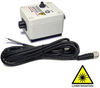
from Monarch Instrument
The sensor has both digital pulse and analog outputs to provide non-contact reference points to balancing equipment or signals to a vibration analyzer. The sensor will track surface irregularities on rotating shafts and provide pulse outputs from reflective tape, contrasting colors and keyways. The... [See More]
- Outputs: Analog Voltage
- Tachometer Type: Instrument / Sensor Package
- Operating Speed: 1 to 500000
- Sensor Technology: Non Contact (Photoelectric (Optical, Infrared))

from Gefran
Tachometer with analogue output proportional to the speed and digital output. The power supply requirements and output signal levels are compatible with all the GEFRAN instruments [See More]
- Outputs: Analog Voltage
- Tachometer Type: Speed Sensor Only
- Operating Speed: 5000
- Sensor Technology: Contact Type (Roller)

from Dart Controls, Inc.
An economical microprocessor-based digital tachometer system capable of measuring shaft speeds lower than 1 RPM. An on-board microcomputer coupled with sophisticated internal software, quartz crystal controlled reference frequency, and display up dating on every pulse or every .5 seconds (whichever... [See More]
- Outputs: Analog Current; Analog Voltage; Switched; Serial/Digital
- Accuracy: 0.0100
- Operating Speed: 1 to 125000
- Tachometer Type: Indicator Only