
Networkable Tachometers
Description
Networkable tachometers are devices designed to measure the rotational speed of a shaft or disk and transmit this data over a network. They provide real-time speed monitoring and can be integrated into larger systems for comprehensive data analysis and control.
Working Principle
Networkable tachometers operate by detecting the rotational speed of a device using various sensor technologies such as contact, photoelectric, inductive, or Hall effect sensors. These sensors convert the mechanical motion into an electrical signal, which is then processed to determine the speed. The processed data is transmitted over a network, allowing for remote monitoring and integration into control systems. This capability makes them useful for applications requiring real-time data and remote diagnostics.
Applications
Networkable tachometers are used in various industrial applications where real-time speed monitoring is crucial. For example, they are employed in manufacturing plants to monitor conveyor belt speeds, in automotive testing facilities to measure engine RPMs, and in wind turbines to track rotor speeds. Their ability to transmit data over a network makes them ideal for integration into condition monitoring and predictive maintenance systems.
Advantages over other Tachometers
Networkable tachometers offer several advantages over traditional tachometers. Their ability to transmit data over a network allows for remote monitoring and integration into larger control systems, providing a more comprehensive view of equipment performance. This feature is particularly beneficial in large-scale industrial settings where equipment is spread over vast areas. Additionally, the real-time data transmission enables quicker response times to potential issues, enhancing operational efficiency.
Limitations
One limitation of networkable tachometers is their dependency on network infrastructure. In environments with poor network connectivity, data transmission may be unreliable, potentially affecting the accuracy and timeliness of the information received. Additionally, the initial setup and integration into existing systems can be complex and may require specialized knowledge.
Considerations
When considering networkable tachometers, it is important to evaluate the initial costs, which can be higher due to the advanced technology and network integration capabilities. Operating expenses may also increase if network maintenance is required. However, the durability and accuracy of these devices can lead to long-term savings by reducing downtime and maintenance costs. Replacement and maintenance costs should also be considered, as these devices may require specialized parts and expertise for repairs.
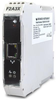
from Monarch Instrument
The F2A3X Frequency to Analog Converter is a DIN rail module that converts a frequency input signal into a proportional analog voltage (0-5Vdc) or current (4-20mA) output. The output signal is electrically isolated from the input signal and input power source effectively eliminating troublesome... [See More]
- Interface / Control: Networkable
- Accuracy: 0.0050
- Operating Speed: 5 to 999990
- Tachometer Type: Instrument / Sensor Package
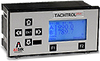
from AI-TEK Instruments, LLC
An extension of the TACHPAK and TACHTROL lines. While this device has no intrinsic tachometer function, it is used as a remote display for TP10 & 30 and TT 10 & 30. Serves as a gateway with both TT and TP instruments for secure, remote programming and alarm reset. Use as a hub for... [See More]
- Interface / Control: Digital Front Panel; Computer Programmable; Networkable
- Sensor Technology: Non Contact (Magnetic)
- Tachometer Type: Indicator Only
- Form Factor: Panel