
Milling Industrial Mixers
Description
Milling industrial mixers are specialized equipment designed to blend and process materials by applying mechanical forces. These mixers are typically used to achieve a uniform mixture of components, ensuring that the final product has consistent properties throughout. The primary function of milling mixers is to reduce particle size and distribute materials evenly within a mixture.
Working Principle
Milling industrial mixers operate by utilizing mechanical forces to break down and blend materials. The process involves the use of rotating elements, such as blades or rotors, which apply shear and impact forces to the materials being mixed. This action not only reduces particle size but also ensures thorough mixing of the components. The effectiveness of milling mixers lies in their ability to handle a wide range of viscosities and material types, making them versatile tools in various industrial processes.
Applications
Milling industrial mixers are used in a variety of applications across different industries. For example, they are employed in the processing of adhesives, where uniformity and consistency are crucial for product performance. In the food industry, milling mixers are used to blend ingredients for products like flour and other foodstuffs. They are also utilized in the production of construction materials, cosmetics, and pharmaceuticals, where precise mixing is essential for quality control.
Advantages over other Industrial Mixers
Milling industrial mixers offer several advantages over other types of mixers. They are particularly effective in handling viscous compounds, such as hot-melt adhesives and industrial sealants, which require high shear forces for proper mixing. The ability to process a wide range of viscosities makes them more versatile compared to other mixers like conical screw mixers or homogenizers. Additionally, the mechanical design of milling mixers allows for efficient energy use, reducing operational costs.
Limitations
Despite their advantages, milling industrial mixers have certain limitations. They may not be suitable for all types of materials, particularly those that are extremely hard or abrasive, which can cause wear and tear on the mixing components. Additionally, the initial cost of purchasing milling mixers can be high, and they may require significant maintenance to ensure longevity and performance.
Considerations
When selecting a milling industrial mixer, several factors should be considered. Initial costs can be substantial, so it's important to evaluate the long-term benefits and potential return on investment. Operating expenses, including energy consumption and maintenance, should also be taken into account. Durability is a key consideration, as mixers that are built to withstand heavy use will reduce the need for frequent replacements. Accuracy in mixing is crucial for ensuring product quality, so choosing a mixer that can consistently achieve the desired results is essential. Finally, replacement and maintenance costs should be factored into the decision-making process to ensure that the mixer remains a cost-effective solution over time.

from Charles Ross & Son Company
The material to be milled is placed between the feed and center rolls. Each adjacent roll rotates at progressively higher speeds. For example; the feed roll may rotate at 30 rpm, the center roll at 90 rpm and the apron roll at 270 rpm. Material is transferred from the center roll to the apron roll... [See More]
- Additional Capabilities: Milling
- Mixer Type: Three Roll Mill
- Media Type: Liquids; Liquid with Suspended Solids; Powder or Granular
- Operating Condition: Batch

from Kason Corporation
Conical milling for size reduction plays a crucial role in numerous applications. Kason's cone mills offer a flexible and cost-effective reduction of fatty, heat-sensitive, sticky, moist, or fragile materials. [See More]
- Additional Capabilities: Milling
- Mixer Type: Cone
- Media Type: Solid with Liquid Addition
- Operating Condition: Batch

from IKA Works, Inc.
It is well known that tip speed, and therefore shear rate, is one of the most important factors in achieving the finest micro-emulsions. The SUPER DISPAX REACTOR combines extremely high shear rates with a fine generator geometry to produce the ultimate in high energy dispersing. Due to the high tip... [See More]
- Additional Capabilities: Milling
- Mixer Type: Homogenizer; Rotor-Stator
- Media Type: Liquids
- Operating Condition: Batch
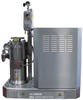
from IKA Works, Inc.
The colloid mill MK 2000 is especially designed for the production of colloidal solutions, or extremely fine emulsions and suspensions. The high tip speeds, combined with an extremely small shear gap, produces intense friction on the material being processed. The friction and shear that result is... [See More]
- Additional Capabilities: Milling
- Mixer Type: Rotor-Stator
- Media Type: Liquid with Suspended Solids
- Operating Condition: Batch; Continuous / In-Line