
Networking / Communications Automated Test Equipment
Description
Networking / Communications Automated Test Equipment (ATE) is designed to evaluate and ensure the performance, reliability, and compliance of network and communication systems. This equipment is used to test various network components and interfaces, ensuring they meet specified standards and function correctly within a network environment.
Working Principle
Networking / Communications ATE operates by simulating network conditions and measuring the performance of network components under these conditions. The equipment typically includes a master controller that synchronizes various testing instruments, which are connected to the Device Under Test (DUT) through a customized interface. This setup allows for precise testing of network protocols, data transmission rates, and signal integrity. The usefulness of this equipment lies in its ability to provide detailed insights into the performance and potential issues of network components, ensuring they meet industry standards and function reliably in real-world scenarios.
Applications
Networking / Communications ATE is used in a variety of specific applications, such as testing the performance of routers, switches, and other network infrastructure components. It is also employed in the evaluation of wireless communication devices to ensure they comply with regulatory standards like RoHS and WEEE directives, particularly for products intended for the European Union market. Additionally, this equipment is crucial in the development and testing of new communication protocols and technologies.
Advantages over other Automated Test Equipment
One of the key advantages of Networking / Communications ATE over other types of automated test equipment is its ability to handle a wide range of interface ports and form factors, including handheld, desktop, and rack-mounted units. This flexibility allows for comprehensive testing across different network environments and configurations. Furthermore, the inclusion of features such as remote control ports and customized pattern testing enhances its capability to simulate real-world network conditions more accurately than other ATE types.
Limitations
Despite its advantages, Networking / Communications ATE has limitations, such as the need for precise placement of contact pins in high-density circuit designs, which can be challenging. Additionally, as network speeds and complexities increase, some ATE may struggle to keep up, leading to potential lags in testing and evaluation processes.
Considerations
When considering Networking / Communications ATE, it is important to evaluate initial costs, which can be significant due to the complexity and precision required in the equipment. Operating expenses should also be considered, as ongoing calibration and maintenance are necessary to ensure accuracy and reliability. Durability is another factor, as the equipment must withstand frequent use in various testing environments. Lastly, replacement and maintenance costs should be factored into the decision-making process, as these can impact the long-term cost-effectiveness of the equipment.
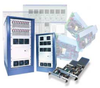
from Intepro Systems
Energy Recycling Air Cooled AC & DC Loads. Intepro's electronic loads are ideal where high power bulk loading is required for burn-in and characterisation applications within Telecommunication and Aerospace sectors, Intepro ’s environmental stress screening (ESS)/Burn-in solutions... [See More]
- Component / Product Tested: Power Supplies or Transformers; Networking or Communications Equipment
- Tester / Test Capability: Life or Endurance Test
- Type / Form: Platform or Turnkey System; Load Bank or Electronic Load; CAD Interface, Database, Test Program Generator or Other Test Software
- Features: Burn-In or Temperature Control; I-V
from Intepro Systems
For complex test requirements Intepro's Third Generation Architecture (TGA) offers the most comprehensive solution available on the market today. TGA Architecture combines high-density scanner and relay modules, multi-channel programmable loads and a comprehensive measurement subsystem. A choice of... [See More]
- Component / Product Tested: Power Supplies or Transformers; Networking or Communications Equipment
- Tester / Test Capability: Functional
- Type / Form: Platform or Turnkey System; Load Bank or Electronic Load; CAD Interface, Database, Test Program Generator or Other Test Software
- Features: I-V