
Interface / Fixture System Automated Test Equipment
Description
Interface/Fixture System Automated Test Equipment (ATE) is designed to provide repeatable connectivity between a test system and the device under test (DUT). It often involves custom-designed fixtures that facilitate the testing process by ensuring consistent and reliable connections. These systems are integral to automated testing setups, allowing for the efficient interchange of test fixtures with a common rack of instruments.
Working Principle
The working principle of Interface/Fixture System ATE revolves around the use of a mass interconnect system at the fixture's back side. This setup allows for the easy interchange of various test fixtures, making it possible to reuse the test equipment across different DUTs. This flexibility is particularly beneficial for universal or high-mix testers, where different types of devices need to be tested using the same set of instruments. The system ensures that each DUT is connected to the test system in a consistent manner, which is crucial for obtaining accurate and reliable test results.
Applications
Interface/Fixture System ATE is used in various applications, particularly in the testing of printed circuit boards (PCBs). Specific examples include:
- Manufacturing Defect Analyzers (MDAs): These are used to identify and locate defects such as shorts and missing components in analog circuits. They are particularly useful in scenarios where the unit under test is powered down, as they operate on the premise that the integrated circuit is functional .
Advantages over other Automated Test Equipment
One of the key advantages of Interface/Fixture System ATE is its ability to interchange test fixtures easily, which allows for the reuse of test equipment across different DUTs. This capability is ideal for environments where a universal tester or high-mix tester is required, as it reduces the need for multiple sets of test equipment and simplifies the testing process .
Limitations
A specific limitation of Manufacturing Defect Analyzers, a type of Interface/Fixture System ATE, is that they are not designed for testing digital integrated circuits. This is because MDAs operate on the assumption that the IC is functional, which limits their applicability to analog circuits only .
Considerations
When considering Interface/Fixture System ATE, several factors should be taken into account:
- Initial Costs: The initial investment can be significant, especially if custom-designed fixtures are required for specific DUTs.
- Operating Expense: The cost of operating these systems can vary depending on the complexity and frequency of testing.
- Durability and Accuracy: The durability of the fixtures and the accuracy of the test results are critical factors that can impact the overall effectiveness of the testing process.
- Replacement and Maintenance Costs: Regular maintenance and potential replacement of fixtures can add to the long-term costs, making it important to consider these factors during the initial planning stages.
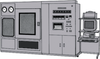
from CHINO Works America Inc.
The equipment is a full automatic compressor performance testing equipment for measurement of refrigerating capacity of compressors for vehicle-installed air-conditioners. [See More]
- Type / Form: Platform or Turnkey System; Output Measurement or Monitoring Unit; Input Stimulus or Signal Source Unit; Fixture / Interface
- Tester / Test Capability: Functional
- Component / Product Tested: Compressor
- Features: Temperature Control / Oven; OCR Measurement
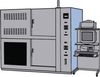
from CHINO Works America Inc.
The equipment is semiconductor aging testing equipment to full-automatically execute burn-in processing and data measurement/judgment/analytical processing and also has tester function as well as temperature accelerating testing. [See More]
- Type / Form: Platform or Turnkey System; Output Measurement or Monitoring Unit; Input Stimulus or Signal Source Unit; Fixture / Interface
- Tester / Test Capability: Life or Endurance Test; Functional
- Component / Product Tested: MEMS or Electromechanical Devices; Passive Components; Loaded PCBs; Power Supplies or Transformers; Optoelectronics; Semiconductors or Active Components
- Interface: Floating Probe