
λ/2 Optical Mirrors
Last Updated: April 1, 2025
Description
?/2 Optical Mirrors are specialized mirrors designed to reflect light with a specific wavelength, typically half the wavelength of the light they are intended to manipulate. These mirrors are used to control the phase of light waves, ensuring that the reflected light maintains a precise phase relationship with the incident light.
Working Principle
The working principle of ?/2 Optical Mirrors is based on the concept of phase control. When light waves hit the mirror, the reflective surface is designed to cause a phase shift of half a wavelength (?/2). This phase shift is crucial for applications requiring precise control over the interference patterns of light, such as in interferometry or laser systems. By maintaining a consistent phase relationship, these mirrors help in achieving high precision in optical systems.
Applications
?/2 Optical Mirrors are commonly used in laser systems where precise phase control is necessary. They are integral components in interferometers, which are used for measuring small distances or changes in distance with high accuracy. These mirrors are also used in optical communication systems to manage the phase of light signals, ensuring efficient data transmission.
Advantages over other Optical Mirrors
One of the primary advantages of ?/2 Optical Mirrors over standard optical mirrors is their ability to maintain a precise phase relationship between incident and reflected light. This capability is essential in applications requiring high precision, such as in scientific research and advanced optical systems. Additionally, their design allows for better control over interference patterns, which is not possible with regular mirrors.
Limitations
A significant limitation of ?/2 Optical Mirrors is their specificity to a particular wavelength. This means they are not suitable for applications involving broadband light sources or multiple wavelengths. Additionally, the precision required in their manufacturing can make them more expensive compared to standard optical mirrors.
Considerations
When considering ?/2 Optical Mirrors, it is important to account for the initial costs, which can be higher due to the precision required in their design and manufacturing. Operating expenses may also be elevated if the mirrors need to be used in environments requiring additional protective measures, such as controlled humidity or temperature. Durability is generally high, but the mirrors may require careful handling to maintain their precise optical properties. Replacement and maintenance costs should also be considered, as any damage to the reflective surface can significantly impact performance.
from Edmund Optics Inc.
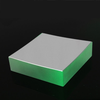
Aluminum Substrate Mirrors. Ideal for LWIR Laser Applications. Aluminum and Gold Coating Options. These aluminum substrate, diamond turned Metal Mirrors are available with either a protected aluminum or gold coating, and are ideal for LWIR (greater than 2000nm) laser applications. Due to the 17.5nm... [See More]
- Surface Flatness: λ/2
- Diameter/Width: 76.2
- Mirror Types: Flat Mirror
- Thickness: 12.7
from ECOPTIK (CHANGCHUN) LTD
BRD Optical provide the round, square and customized shape mirrors with a protected Al coating and UV Enhanced Al coating in various sizes. [See More]
- Surface Flatness: λ/2; λ/4; λ/5; λ/8; λ/10
- Mirror Shape: Round
- Thickness: 1 to 20
- Mirror Materials: BK7 Glass; Fused Silica; Silica

from Qioptiq
Standard aluminium mirrors for the spectral ranges VIS to IR up to 10 µm or UV to 3 µm, respectively. High reflection within a broad spectral and angle-of-incidence range. Protected by an SiO2 overcoating (RAL)or MgF2 protective overcoating for the UV-region (RAL UV). Low expansion... [See More]
- Surface Flatness: λ/2; λ/4; λ/10; 1, 2, 4
- Diameter/Width: 10 to 100
- Wavelength Range: 230 to 700
- Thickness: 2 to 10

from Tower Optical Corporation
Cold Mirrors are used where the requirements are to reflect visible light and remove the heat by transmission. Operation at an AOI of 45 º is preferred. The most common wavelength range for transmission through the cold mirror is 800 - 1200nm. The average transmission range is T >85%. [See More]
- Surface Flatness: λ/2
- Wavelength Range: 800 to 1200
- Mirror Types: Flat Mirror
- Diameter/Width: 15 to 300
from Specialty Components, Inc.
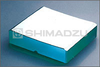
These flat first-surface Aluminum mirrors are useful in reflecting light in the infrared range. Guaranteed at ½, ¼ or 1/8 waveform accuracy with <16nm Ra surface finish. Select from protected Aluminum, protected Gold or untreated coatings combined with your choice of size and... [See More]
- Surface Flatness: λ/2
- Diameter/Width: 50.8
- Mirror Types: Flat Mirror
- Thickness: 12.7
from Shimadzu Corporation
An off-axis parabolic mirror converts plane waves into spherical ones and vice versa with high accuracy. This aspherical mirror is indispensable for spectrometers and astronomical optical instruments which require high resolution. [See More]
- Surface Flatness: λ/2
- Focal Length: 125 to 787
- Mirror Types: Parabolic Mirror
- Second Focal Length: 134 to 789
from Thorlabs, Inc.
At Thorlabs, we constantly reinforce our desire to serve at the pleasure of our customers. From this comes our desire to be connected to our industry in a way that far exceeds what would typically be expected of a vendor. Thorlabs lives this core principle by seeking to enhance, at every turn, the... [See More]
- Surface Flatness: λ/2; λ/4; λ/8; λ/10; λ/20; ?/6
- Wavelength Range: 355 to 2250
- Mirror Types: Laser Mirror
- Diameter/Width: 12.7 to 50.8
from ECOPTIK (CHANGCHUN) LTD
The reflector, as the name suggests, was born to meet people's requirements for light reflection. It is an optical element that uses the law of light reflection. Optical mirrors generally include spherical mirrors/reflectors, flat mirrors and aspheric mirrors. But basically it is through optical... [See More]
- Surface Flatness: λ/2; λ/4; λ/5; λ/8; λ/10
- Diameter/Width: 300
- Mirror Types: Reflector; Dielectric, Metallic
- Mirror Shape: Custom
from Tower Optical Corporation
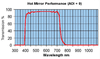
Hot Mirrors are used in applications when there is the requirement to separate visible light from heat. The hot mirror accomplishes this by reflecting the heat. The use of Borosilicate type glass allows operation in high temperatures. Operation at an AOI of 0 º is preferred. The most common... [See More]
- Surface Flatness: λ/2
- Wavelength Range: 420 to 700
- Mirror Types: Flat Mirror
- Diameter/Width: 15 to 300

from Specialty Components, Inc.
These spherical first-surface Aluminum mirrors are useful in reflecting light in the infrared range. Guaranteed at ½, ¼ or 1/8 waveform accuracy with <16nm Ra surface finish. Select from protected Aluminum, protected Gold or untreated coatings combined with your choice of size and... [See More]
- Surface Flatness: λ/2
- Diameter/Width: 50.8
- Mirror Types: Spherical Mirror
- Thickness: 12.7
from ECOPTIK (CHANGCHUN) LTD
A dielectric mirror, also known as a Bragg mirror, is a type of mirror composed of multiple thin layers of dielectric material, typically deposited on a substrate of glass or some other optical material. By careful choice of the type and thickness of the dielectric layers, one can design an optical... [See More]
- Surface Flatness: λ/2; λ/4; λ/5; λ/8; λ/10
- Thickness: 1 to 20
- Mirror Types: Flat Mirror; Spherical Mirror; Cylinder, Customized
- Mirror Materials: BK7 Glass; Fused Silica; Silica