
Zerodur Optical Mirrors
Last Updated: April 1, 2025
Description
Zerodur Optical Mirrors are precision optical components made from a glass-ceramic material known as Zerodur. This material is characterized by its extremely low thermal expansion, which ensures that the mirrors maintain their shape and size even when subjected to temperature fluctuations. Zerodur mirrors are designed to provide high stability and accuracy in optical systems.
Working Principle
Zerodur Optical Mirrors work by reflecting light off a thin metal layer applied to a smooth substrate made from Zerodur. The key to their functionality lies in the material's near-zero coefficient of thermal expansion, which is achieved through a unique microstructure. This structure consists of a crystalline phase with a negative thermal expansion coefficient and a glassy phase with a positive one, balanced to nearly eliminate thermal expansion. This property makes Zerodur mirrors particularly useful in applications where temperature stability is crucial, as it prevents image distortion due to thermal changes.
Applications
Zerodur Optical Mirrors are widely used in high-precision optical applications. Specific examples include:
- Astronomical Telescopes: Zerodur is the material of choice for mirror substrates in large astronomical telescopes due to its ability to maintain shape and volume stability under varying temperatures, which is essential for clear and accurate observations.
- X-ray Telescopes: The material's stability and precision make it suitable for use in X-ray telescopes, where accurate imaging is critical.
- Microlithography: Zerodur mirrors are used in reflective optics for microlithography, a process essential in semiconductor manufacturing.
- Laser Gyroscopes and Resonators: The material's stability is beneficial in laser gyroscopes and as distance-defining parts in laser resonators.
Advantages over other Optical Mirrors
Zerodur Optical Mirrors offer several advantages over other types of optical mirrors:
- Thermal Stability: Unlike other materials, Zerodur's near-zero thermal expansion ensures that the mirrors do not deform with temperature changes, providing consistent performance.
- Machinability: Despite its complex microstructure, Zerodur retains high machinability, allowing for precision shaping and polishing.
- Chemical Resistance: The material's high chemical resistance contributes to its durability and longevity in various environments.
Limitations
While Zerodur Optical Mirrors have many advantages, they also have limitations:
- Cost: The production of Zerodur mirrors can be expensive due to the specialized processes required to achieve their unique properties.
- Weight: Zerodur mirrors can be heavier than those made from other materials, which may be a consideration in applications where weight is a critical factor.
Considerations
When considering Zerodur Optical Mirrors, several factors should be taken into account:
- Initial Costs: The initial investment in Zerodur mirrors can be high due to the material's specialized production requirements.
- Operating Expense: While the operating expenses may be lower due to the material's durability and low maintenance needs, the initial cost can be a barrier.
- Durability and Accuracy: Zerodur's resistance to thermal expansion and chemical degradation ensures long-term durability and high accuracy, reducing the need for frequent replacements.
- Replacement and Maintenance Costs: The stability and durability of Zerodur mirrors can lead to lower replacement and maintenance costs over time, offsetting the initial investment.
from Edmund Optics Inc.
Fused Silica and Zerodur ® Substrates. 1/10 λ Surface Accuracy. Variety of Coating Options Offered. 1/20 λ and 1/4 λ Surface Accuracies Also Offered. TECHSPEC ® 1/10 λ Precision Optical Flat Mirrors are an excellent choice for interferometry, imaging systems,... [See More]
- Mirror Materials: Zerodur®
- Diameter/Width: 12.7
- Mirror Types: Flat Mirror
- Thickness: 3.3
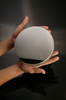
from Advanced Optics, Inc.
Optical mirrors made of ZERODUR ® provide a very low coefficient of thermal expansion making this glass-ceramic material ideal for applications where the optical mirror is exposed to fluctuating and/or extremely cold temperatures. Although ZERODUR ® has an overall yellowish tint, it has good... [See More]
- Mirror Materials: Zerodur®
- Mirror Shape: Round
- Mirror Types: Flat Mirror
- Mirror Coatings: Aluminum (optional feature); Protected Aluminum (optional feature); Gold (optional feature); Protected Gold (optional feature); Silver (optional feature); Aluminum Magnesium Fluoride, and Enhanced Aluminum
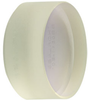
from Thorlabs, Inc.
At Thorlabs, we constantly reinforce our desire to serve at the pleasure of our customers. From this comes our desire to be connected to our industry in a way that far exceeds what would typically be expected of a vendor. Thorlabs lives this core principle by seeking to enhance, at every turn, the... [See More]
- Mirror Materials: Fused Silica; Zerodur®
- Wavelength Range: 350 to 1600
- Mirror Types: Flat Mirror
- Diameter/Width: 12.7 to 102
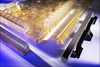
from Zygo Corporation
Applications. ZYGO has a long tradition of manufacturing custom-made optical mirrors for a wide variety of applications, including, but not limited to: EUV mirrors. Lightweighted mirrors. Space mirrors. Stage Components for lithographic steppers. X-ray mirrors. Defense/Aerospace. Medical/Life... [See More]
- Mirror Materials: Zerodur®; CLEARCERAM®, Cordierite, Silicon Carbide, ULE®, Silicon
- Diameter/Width: 305 to 813
- Mirror Types: Flat Mirror; Parabolic Mirror; Reflector; Spherical Mirror; Aspheric, EUV, Light-Weighted, Monolithic
- Surface Flatness: To better than λ/50

from EKSMA OPTICS
Protected Aluminium (Al) Mirrors serve as an economical reflector over entire 300-IR region. Enhanced metallic coatings provide greater reflection across the operating bandwidth. *Laser Induced Damage Threshold results are measured according to ISO 21254-2: 1000-on-1 test procedure. LIDT - 0.25... [See More]
- Mirror Materials: BK7 Glass; Ultra-violet grade Fused Silica; Zerodur®
- Diameter/Width: 12.7 to 76.2
- Mirror Types: Flat Mirror; Spherical Mirror
- Thickness: 3 to 12.7
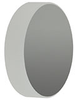
from Thorlabs, Inc.
At Thorlabs, we constantly reinforce our desire to serve at the pleasure of our customers. From this comes our desire to be connected to our industry in a way that far exceeds what would typically be expected of a vendor. Thorlabs lives this core principle by seeking to enhance, at every turn, the... [See More]
- Mirror Materials: Copper; Fused Silica; Ultra-violet grade Fused Silica; Zerodur®
- Wavelength Range: 250 to 20000
- Mirror Types: Flat Mirror
- Diameter/Width: 7 to 102
from EKSMA OPTICS
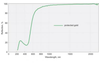
Protected Gold (Au) Mirrors have the highest reflectance in infrared. Enhanced metallic coatings provide greater reflection across the operating bandwidth. *Laser Induced Damage Threshold results are measured according to ISO 21254-2: 1000-on-1 test procedure. LIDT - 1.0 J/cm2 at 1064 nm, 50 Hz, 11... [See More]
- Mirror Materials: BK7 Glass; Ultra-violet grade Fused Silica; Zerodur®
- Diameter/Width: 12.7 to 76.2
- Mirror Types: Flat Mirror; Spherical Mirror
- Thickness: 3 to 12.7
from EKSMA OPTICS
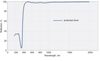
Protected Silver (Ag) Mirrors feature higher reflectance than aluminium throughout the visible and near-infrared spectral region. Our protected silver mirrors has excellent durability. *Laser Induced Damage Threshold results are measured according to ISO 21254-2: 1000-on-1 test procedure. LIDT -... [See More]
- Mirror Materials: BK7 Glass; Ultra-violet grade Fused Silica; Zerodur®
- Diameter/Width: 12.7 to 76.2
- Mirror Types: Flat Mirror; Spherical Mirror
- Thickness: 3 to 12.7