
Mirror Assembly Optical Mirrors
Last Updated: April 1, 2025
Description
Mirror Assembly Optical Mirrors are designed to reflect light in specific directions or to focus or diffuse light based on their shape and orientation. These mirrors are integral components in optical systems, providing precise control over the direction and intensity of light. They are crafted with high-quality materials to ensure optimal performance in various optical applications.
Working Principle
Optical mirrors work by reflecting light waves off their surfaces. The quality of a mirror, including its surface smoothness and reflectivity, significantly impacts the performance of the optical system it is part of. Flat mirrors reflect light at specific angles, while curved mirrors, such as those used in telescopes, focus light to form images. This ability to manipulate light makes optical mirrors essential in achieving precise optical alignment and enhancing the functionality of optical systems.
Applications
Optical mirrors find applications in a wide range of fields. In astronomy, they are used in telescopes to magnify images by concentrating reflected light. In the field of security, one-way mirrors are employed for surveillance purposes. Additionally, optical mirrors are used in laser-based satellite communications, solar cookers to focus sunlight for cooking, and periscopes for observation purposes.
Advantages over other Optical Mirrors
Compared to other optical components, mirrors offer a simpler and more affordable option, especially in laser focusing with multispectral imaging. They provide precise control over light direction and intensity, which is crucial in applications requiring high accuracy and efficiency. Right-angle prism mirrors, for example, offer better stability and strength against mechanical stress, making them easier to install and more reliable in various devices and instruments.
Limitations
One limitation of metallic mirrors is their susceptibility to oxidation, discoloration, or peeling in high humidity environments. To mitigate this, a protective layer, such as silicon dioxide, is often applied to prevent direct contact between the metal film and the air, preserving the mirror's optical performance.
Considerations
When selecting optical mirrors, several factors should be considered. Initial costs and operating expenses can vary based on the materials and coatings used. Durability is a critical factor, especially in environments prone to humidity or mechanical stress. The accuracy of the mirror's reflective surface is essential for precise optical applications. Replacement and maintenance costs should also be considered, as mirrors may require periodic re-coating or replacement to maintain optimal performance.
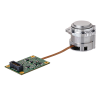
from Micro-Epsilon Group
Fast Steering Mirrors are micro-mechatronic systems that are used for the fast and precise deflection of light or laser beams. These dynamic systems use an extremely flat mirror, which is moved by an actuator using two electromagnetic coils per tilting axis, as well as high-precision eddy current... [See More]
- Mirror Types: Laser Mirror; Mirror Assembly
- Mirror Shape: Round
- Diameter/Width: 20
- Mirror Materials: Aluminum

from OptoSigma Corp.
Frameless mounting is designed to minimize footprint space and allows the maximum front surface area of the mirror to be coated. Our high reflectivity mirrors are produced using a ceramic material. Thermal expansion ratio is equivalent to Zerodur ® for maximum thermal stability. —... [See More]
- Mirror Types: Flat Mirror; Mirror Assembly
- Diameter/Width: 24.4 to 79
- Wavelength Range: 355 to 1064
- Thickness: 7 to 8.5
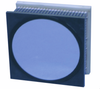
from CILAS
Cilas invented the Stack Array Mirror technology which is the most widely used in adaptive optics systems. An actuators matrix bonded to a thin Reflective Coated Substrate. The actuators are made of PZT stack. If an electric field is applied in the same direction than the polarization axis of the... [See More]
- Mirror Types: Mirror Assembly; Stack Array
- Mirror Materials: PZT
- Mirror Shape: Rectangular / Square

from Chroma Technology Corp.
Microscopes: Filter cube mounting options are available when adding to cart. Listed price applies to sizes up to either 25mm diameter or 26x38mm, in 1mm thickness, to fit standard microscope manufacturer filter cubes. [See More]
- Mirror Types: Reflector; Mirror Assembly
- Wavelength Range: 400 to 900