
Latches Information
Description
Latches are mechanical components that hold doors, drawers, or cabinets closed.
Types
There are several basic types of latches.
-
Cam latches attach to the back of a lock or lock cylinder and rotate to block or restrict the movement of a component or door.
-
Compression latches swing into a latching position and then compress a gasket and/or p
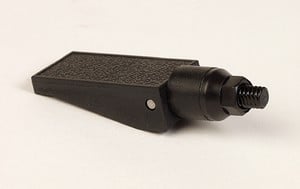 anel against a frame.
 -
Deadbolt latches have a lock bolt that extends into the door jam.
-
Draw latches or tension latches pull surfaces together and hold them closed.
-
Hasps, hinged metal straps that fit over a staple, are usually secured by a padlock or pin.
-
Rotary latches have one or more rotating members and also called rotating catches, hooks, bear claw latches, and two-rotor latches.
-
Slam latches allow doors, drawers, or cabinets to be pushed or slammed closed.
-
Passenger restraint latches are designed and manufactured in accordance with Federal Motor Vehicle Safety Standard No. 206 (FMVSS 206) from the U.S. National Highway Traffic Safety Administration (NHTSA). This standard establishes requirements for side door locks and related components in order to minimize the likelihood that occupants will be thrown from a vehicle because of an impact.
Actuation Methods
There are a variety of actuation methods for latches. Examples include:
-
Finger pulls
-
Handles
-
Keys
-
Knobs
-
Levers
-
Pull rings
-
Pushbuttons
-
Triggers
-
Slide bolts
 Handle-actuated latches use either simple pull handles or adjustable handles. L-handles are sometimes spring-loaded so that they can return to their original position after use. T-handles can be grasped on both sides of the mounting bar with the fingers.
Tool inserts, latches with a slotted or hexagonal insert, are also available. These latches are designed for use with screwdrivers, hex tools, or slot tools.
Some latches are actuated by a squeezing, pinching, or pulling action. Others, such as plunger bolts or slide bolts, are actuating by the closing or slamming of a door.
Rod systems use rods, cables, or connecting linkages to remotely actuate the latch component that provides the unlatch function. Multi-point actuation is used in latches that can be unlatched at multiple points.
Features
Typically, latches do not lock; however, some latches are available with a key-locking mechanism or can be secured with a padlock.
Other features for latches include an inside release, a component on the inside of the latch that allows it to be actuated, and mounting holes or slots for securing latches to doors, drawers, or cabinets. Recessed latches are designed to be mounted in an indentation in the housing.
Latches that contain gaskets prevent the entry of environmental contaminants when used under pressure. Weather resistant latches are also available.
Standards
ANSI A156.2 - Bored and preassembled locks and latches
ANSI A156.13 - Mortise locks and latches series 1000
DIN EN 12209 - Building hardware - locks and latches
References
Image Credit
- Cam Latch
- Compression Latch
- Deadbolt Latch
- Draw Latch / Tension Latch
- Electric / Electronic Actuation
- Finger Pull
- Folding Handle (Drop)
- Gasket
- Handle
- Hasp Latch
- Inside Release
- Iron
- Key
- Key Lock
- Knob
- Lever
- Mounting Holes / Slots
- Multi Point System
- Paddle
- Padlockable
- Passenger Restraint Latch
- Plastic
- Pull Ring
- Pushbutton / Trigger
- Recessed
- Rod System Actuation
- Rotary Latch
- Rubber
- Slam Latch
- Slide Bolts
- Squeeze / Pinch
- Stainless Steel
- Steel
- T-handle
- Tool Insert
- Zinc
- spring loaded latches
- tool box latches
- slam latch
- aircraft door latches
- hardigg parts latch
- watertight door latch
- aircraft cabinet latches
- fmvss 118
- rotary latch aircraft
- stowage bin latch
- aircraft canopy latches
- attic door latches
- overhead crane hook safety latches
- padlockable draw latches
- plastic snap latches
- ramsey cam latches
- rubber hold down latches
- stainless steel draw latches
- whitcomb steel latches