For a decade or two, networks were built using different hardware and software specifications. As a result they were incompatible and it became difficult for networks to communicate with each other. There was thus a need for a standard network communication model which the International Organisation for Standardisation ( ISO) met by approving a network model in 1984 to help manufacturers create interoperable network implementation. That model was called the Open System Interconnection ( OSI) model. It describes how information such as a spreadsheet or a video clip or data makes its way from an application by user A, through a network medium such as a pair of wires, a radio or a satellite link to another user B located on a remote network.
The process is divided into seven stages called layers (Figure A5.1) with each layer specifying a particular function. The upper three layers, layers 7, 6 and 5 (application, presentation and session) are concerned with service to the application used. The lower four layers, layers 1 4 (transport, network, data link and physical) are concerned with the flow of data from one user, through the network to another user.
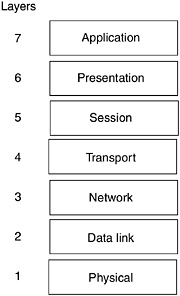 Figure A5.1: The OSI 7-layer reference model
 The information generated at the application layer is divided into blocks of data, known as data units ( DUs). Each DU consists of a header and a payload. The header contains ID, sync and control information. The next layer, presentation, receives the DUs and...
Copyright Elsevier Ltd. 2007 under license agreement with Books24x7


 TABLE OF CONTENTS