Ship Design and Construction, Volume II

Dedicated to the design of individual ship types, this volume provides historical development and and general arrangement plans of tankers, bulk carriers, fishing vessels, dredgers, and more.
 TABLE OF CONTENTS
 As of January 1, 1999, the active U.S. fleet included more than 37 700 cargo and passenger ships, ferries, barges, tugs, towboats and other work vessels. Of this there are 25 698 barges and 2779 towboats carrying cargo on the inland waterways, and 206 ships and barges operating on the great Lakes (1). Therefore, over 75% of the U.S. fleet is composed of lakes and river (inland waterways) vessels.
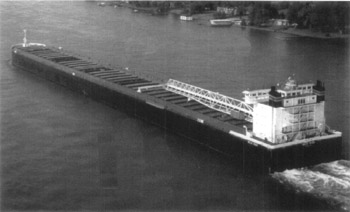
Inland and lake vessels are quite different from their seagoing cousins. Geographically restricted in range, such vessels have developed into highly specialized craft ideally suited to perform a specific task consistent with their geography and environment.
There are oceangoing ships that transit into lakes and up rivers as part of their transportation routes, but these are designed as seagoing ships with special equipment to meet the lakes and rivers needs. They will not be considered in this chapter.
Most vessels are classed by classification societies according to their service. For example, the Classification Agreement used by the American Bureau of Shipping (ABS) lists the following intended service:
Unrestricted
Great Lakes
River and Harbor
Other
The differences between inland and lake vessels and that of unrestricted ocean service will be described in the remainder of this chapter.
The maximum sea state on the Great Lakes is less than that for ocean service primarily due to the limited...