Ship Design and Construction, Volume II

Dedicated to the design of individual ship types, this volume provides historical development and and general arrangement plans of tankers, bulk carriers, fishing vessels, dredgers, and more.
 TABLE OF CONTENTS
 Submarine missions have evolved considerably since the first use of such ships in war over two centuries ago, but all submarine missions continue to exploit one common attribute: stealth. The first military submersibles were used in attempts to sink enemy surface ships. Evolving technology, particularly that which provided the ability to remain submerged for extended periods of time, has dramatically expanded the mission suite for submarines to include the following:
anti surface ship warfare,
anti submarine warfare,
covert strike warfare (land attack),
mine warfare,
indication and warning (surveillance),
special operations,
strategic deterrence,
battle group support,
battlespace preparation, and
deep submergence, search, and rescue
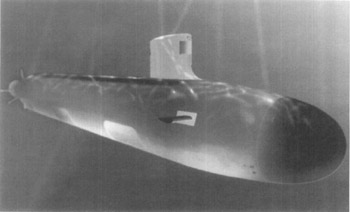
The original mission of submarines was to attack surface ships, and this continues as a major mission today. Virtually all military submarines are capable of attacking surface ships with either torpedoes or submarine-launched cruise missiles. They perform this mission using two general approaches. The first is to go to a specific area, choke point or expected track of the target ship(s), and wait for the opposition to arrive. The second approach is to seek out the opposing fleet, and maneuver for attack at the time of the submarine commander's choosing. Conventionally powered (diesel-electric) submarines can accomplish the first technique, as long as the choke point is within the submarine's operating radius. Nuclear submarines are capable of either method of attack. Their almost unlimited endurance, in a quiet...