
Polycarbonate Optical Lenses
Description
Polycarbonate optical lenses are designed to provide clear vision while being lightweight and highly impact-resistant. These lenses are made from polycarbonate, a type of plastic known for its durability and transparency. They are often used in eyewear to offer a lighter alternative to traditional glass lenses, providing comfort and ease of wear.
Working Principle
Polycarbonate lenses work by utilizing the material's inherent properties of high impact resistance and optical clarity. The lenses are crafted through a process that involves molding polycarbonate into the desired lens shape, allowing for precise control over the optical properties such as refractive index and dispersion. This makes them particularly useful in environments where durability and safety are paramount, as they can withstand significant impact without shattering, unlike glass lenses.
Applications
Polycarbonate optical lenses are widely used in various applications. In eyewear, they are popular for prescription glasses and sunglasses due to their lightweight nature and impact resistance. They are also used in safety goggles and sports eyewear, where protection from high-speed impacts is crucial. Additionally, polycarbonate lenses are employed in optical devices such as cameras and binoculars, where clarity and durability are essential.
Advantages over other Optical Lenses
Polycarbonate lenses offer several advantages over traditional glass lenses. They are significantly lighter, which enhances comfort for the wearer, especially in eyewear applications. Their impact resistance is another major advantage, as they are less likely to break or shatter upon impact, making them safer for use in environments where eye protection is critical. Furthermore, polycarbonate lenses can be easily molded into complex shapes, providing versatility in design and application.
Limitations
Despite their many advantages, polycarbonate lenses have some limitations. They are more prone to scratching compared to glass lenses, which necessitates the application of a scratch-resistant coating to maintain optical clarity. Additionally, while they offer good optical clarity, they may not match the high level of clarity provided by glass lenses in certain high-precision applications.
Considerations
When considering polycarbonate lenses, several factors should be taken into account. Initial costs may be higher than some other plastic lenses due to the material's properties and manufacturing process. However, their durability and impact resistance can lead to lower replacement and maintenance costs over time. Operating expenses are generally low, as the lenses require minimal upkeep beyond occasional cleaning and scratch-resistant coating application. In terms of accuracy, polycarbonate lenses provide sufficient optical performance for most applications, though they may not be suitable for all high-precision optical needs.
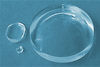
from Artifex Engineering
We deliver a broad range of plastic optics. When the materials are refined into lenses, prisms and mirrors, they serve the purpose of glass optics at lower cost and with significant saving of weight. We can provide spheric and aspheric lenses, they are widely used for laser pointers, VCD/DVD... [See More]
- Materials: Polycarbonate; Polymethylmethacrylate (PMMA)
- Lens Application: Visible
- Lens Type: Aspheric
- Focal Length: 12.5

from ProPhotonix, Ltd.
The optical components department of Helvoet Rubber & Plastic Technologies NV manufactures injection molded lenses, mirrors, polygons, with or without reflective coatings, with extreme accuracy for barcode scanning and sensor module applications. High accuracy off-the-shelf lenses (spherical and... [See More]
- Materials: BK7 Glass; Acrylic; Polycarbonate; CCD
- Lens Application: Infrared; Visible
- Lens Type: Aspheric; Spherical Lens (optional feature)
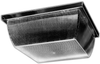
from Lighting Plastics of Minnesota, Inc.
Product Description. Injection molded or pressure formed in clear and white polycarbonate and acrylic. Multi-pattern diffuser with ultra-violet inhibitors to minimize discoloration. Many shapes and styles to accomodate incandescent, fluorescent, PL and HID type lamps. Applications include... [See More]
- Materials: Polycarbonate
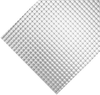
from Lighting Plastics of Minnesota, Inc.
Product Description. Virtually indestructible material, suitable for applications where impact strength is of major concern such as security lighting, vandal fixtures, prisons, sport courts, outdoor lighting, etc. [See More]
- Materials: Polycarbonate
from Lighting Plastics of Minnesota, Inc.
Product Description. Vapor proof lenses provide a seal for fixtures in damp/wet locations. Various styles exist to ensure a proper fit. Available in a variety of materials/patterns. [See More]
- Materials: Polycarbonate