
Acrylic Optical Lenses
Description
Acrylic optical lenses are a type of plastic optical material known for their lightweight and durable properties. These lenses are crafted from acrylic, a transparent thermoplastic, which allows them to be easily molded into complex shapes. This characteristic makes them particularly useful in various optical applications where traditional glass lenses might be too heavy or difficult to shape.
Working Principle
Acrylic optical lenses work by manipulating light through refraction, similar to other optical lenses. The acrylic material bends light rays as they pass through the lens, focusing them to a point or spreading them out, depending on the lens design. This ability to control light paths makes acrylic lenses useful in a wide range of optical systems. Their lightweight nature and ease of processing into complex shapes provide flexibility in design and application, making them a cost-effective choice for many optical needs.
Applications
Acrylic optical lenses are used in a variety of applications due to their versatility and durability. Specific examples include their use in eyewear, where their lightweight nature enhances comfort for the wearer. They are also employed in optical devices such as cameras and projectors, where their ability to be molded into precise shapes allows for high-quality image capture and projection. Additionally, acrylic lenses are used in lighting fixtures and displays, where their clarity and light transmission properties are advantageous.
Advantages over other Optical Lenses
Acrylic lenses offer several advantages over traditional glass lenses. They are significantly lighter, which is beneficial in applications where weight is a critical factor, such as in portable optical devices. Acrylic lenses are also more durable and resistant to shattering, making them a safer option in environments where breakage is a concern. Furthermore, the ease of processing acrylic into complex shapes allows for greater design flexibility and cost-effectiveness in manufacturing.
Limitations
Despite their advantages, acrylic optical lenses have some limitations. They are generally less scratch-resistant than glass lenses, which can affect their longevity and optical clarity over time. Acrylic lenses also have a lower refractive index compared to some other optical materials, which can limit their effectiveness in certain high-precision optical applications. Additionally, they may not perform as well as glass lenses in environments with high temperatures, as acrylic can warp or degrade under extreme heat.
Considerations
When considering acrylic optical lenses, several factors should be taken into account. Initial costs are typically lower than glass lenses due to the ease of manufacturing and material costs. Operating expenses may also be reduced due to their durability and resistance to breakage. However, the potential for scratching means that maintenance and replacement costs could be higher if the lenses are not properly cared for. In terms of durability, while acrylic lenses are robust, their susceptibility to scratches means that protective coatings or careful handling may be necessary to maintain optical clarity. Accuracy in optical performance is generally good, but for applications requiring extremely high precision, other materials might be more suitable.
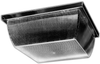
from Lighting Plastics of Minnesota, Inc.
Product Description. Injection molded or pressure formed in clear and white polycarbonate and acrylic. Multi-pattern diffuser with ultra-violet inhibitors to minimize discoloration. Many shapes and styles to accomodate incandescent, fluorescent, PL and HID type lamps. Applications include... [See More]
- Materials: Acrylic

from Thorlabs, Inc.
At Thorlabs, we constantly reinforce our desire to serve at the pleasure of our customers. From this comes our desire to be connected to our industry in a way that far exceeds what would typically be expected of a vendor. Thorlabs lives this core principle by seeking to enhance, at every turn, the... [See More]
- Materials: BK7 Glass; SF11 Glass; Acrylic; Germanium; Zinc Selenide; N-BAF10/N-SF6HT, N-SF2
- Lens Application: Infrared; Visible; Ultraviolet
- Lens Type: Achromats
- Focal Length: -100 to 1000

from ProPhotonix, Ltd.
The optical components department of Helvoet Rubber & Plastic Technologies NV manufactures injection molded lenses, mirrors, polygons, with or without reflective coatings, with extreme accuracy for barcode scanning and sensor module applications. High accuracy off-the-shelf lenses (spherical and... [See More]
- Materials: BK7 Glass; Acrylic; Polycarbonate; CCD
- Lens Application: Infrared; Visible
- Lens Type: Aspheric; Spherical Lens (optional feature)
from Lighting Plastics of Minnesota, Inc.
Product Description. Vapor proof lenses provide a seal for fixtures in damp/wet locations. Various styles exist to ensure a proper fit. Available in a variety of materials/patterns. [See More]
- Materials: Acrylic

from Thorlabs, Inc.
At Thorlabs, we constantly reinforce our desire to serve at the pleasure of our customers. From this comes our desire to be connected to our industry in a way that far exceeds what would typically be expected of a vendor. Thorlabs lives this core principle by seeking to enhance, at every turn, the... [See More]
- Materials: BK7 Glass; Crown Glass; Acrylic; Zinc Selenide; S-LAH 64
- Lens Application: Infrared; Visible; Ultraviolet
- Lens Type: Aspheric
- Focal Length: -100 to 9.65