
Meniscus Optical Lenses
Description
Meniscus optical lenses are specialized lenses that consist of one concave and one convex side. They are categorized into two types: positive meniscus lenses, which have a more curved convex side, and negative meniscus lenses, which have a more curved concave side. These lenses are designed to manipulate light by either converging or diverging it, depending on their configuration.
Working Principle
Meniscus lenses work by altering the path of light that passes through them. A positive meniscus lens converges light, reducing the focal length and increasing the numerical aperture (NA) of optical systems without introducing significant spherical aberration. This makes them particularly useful for enhancing the resolution of imaging instruments and focusing lasers to achieve diffraction-limited performance. Conversely, a negative meniscus lens diverges light, increasing the focal length and reducing the NA, which is beneficial for beam expansion applications. The unique curvature of meniscus lenses allows them to correct spherical aberrations effectively, making them valuable in optical systems requiring high precision.
Applications
Meniscus lenses are employed in a variety of specific applications. Positive meniscus lenses are often used in imaging instruments to increase resolution and in laser systems to focus beams with large incident widths. Negative meniscus lenses are utilized in beam-expanding applications, particularly in high-index infrared materials. Additionally, meniscus lenses serve as corrective lenses and can be used as beam condensers in illumination systems.
Advantages over other Optical Lenses
Meniscus lenses offer several advantages over other types of optical lenses. They can increase the numerical aperture of optical modules without introducing significant spherical aberration, which is crucial for achieving high-resolution imaging and precise laser focusing. Their ability to correct spherical aberrations more effectively than standard lenses makes them ideal for applications requiring high precision and accuracy.
Limitations
Despite their advantages, meniscus lenses have limitations. They are typically more complex to manufacture due to their unique curvature, which can increase production costs. Additionally, their performance is highly dependent on the precise alignment and configuration within an optical system, which can complicate their integration into existing setups.
Considerations
When considering the use of meniscus lenses, several factors should be taken into account. The initial cost of these lenses can be higher due to their specialized design and manufacturing requirements. Operating expenses may also be influenced by the need for precise alignment and potential maintenance to ensure optimal performance. Durability and accuracy are generally high, but regular maintenance may be necessary to maintain these standards. Replacement and maintenance costs should be factored into the overall cost of ownership, especially in applications where high precision is critical.

from CASTECH, Inc.
Other sizes and focal length are available upon request. Also the lens ring mounts are available upon request. [See More]
- Lens Type: Meniscus
- Materials: BK7 Glass
- Diameter / Length: 25.4
- Surface Quality: 40-20 Scratch / Dig

from Gurley Precision Instruments
Used to change the focal length of another lens, The lens shape does not intriduce more spherical aberrations to the system [See More]
- Lens Type: Meniscus; Spherical Lens
- Center Thickness: 4
- Focal Length: 50
- Edge Thickness: 1.4
from Newport MKS
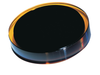
The 61982LA meniscus infrared lens is made of ZnSe material and is Trumpf ® and Amada ® OEM compatible. It has a diameter of 1.5 in. (38.1 mm), edge thickness of 7.4 mm, and a focal length of 5.0 in. Zinc Selenide's low absorption coefficient makes it a perfect candidate for focusing... [See More]
- Lens Type: Meniscus
- Diameter / Length: 38.1
- Edge Thickness: 7.4
- Materials: Zinc Selenide; ZnSe

from CASTECH, Inc.
Other sizes and focal length are available upon request. Also the lens ring mounts are available upon request. [See More]
- Lens Type: Meniscus
- Materials: BK7 Glass
- Diameter / Length: 25.4
- Surface Quality: 40-20 Scratch / Dig
from Newport MKS
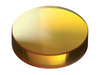
The 631079ULA meniscus infrared lens is made of ZnSe material and is Bystronic ® OEM compatible. It has a diameter of 1.5 in. (38.1 mm), edge thickness of 9 mm, and a focal length of 5.0 in. Zinc Selenide's low absorption coefficient makes it a perfect candidate for focusing applications using... [See More]
- Lens Type: Meniscus
- Diameter / Length: 38.1
- Edge Thickness: 9
- Materials: Zinc Selenide; ZnSe
from Newport MKS
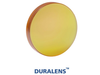
The 61982-117 DURALENS ™ coated Meniscus Infrared Lens is made of ZnSe material and is Trumpf ® / Amada ® OEM compatible. It has a diameter of 1.5 in. (38.1 mm), edge thickness of 7.4 mm, and a focal length of 5.0 in. Zinc Selenide's low absorption coefficient makes it a perfect... [See More]
- Lens Type: Meniscus
- Diameter / Length: 38.1
- Edge Thickness: 7.4
- Materials: Zinc Selenide; ZnSe

from ECOPTIK (CHANGCHUN) LTD
Meniscus Cylindrical Lens can increase the NA of the system while only adding slightly to the total spherical aberrations. The Negative Meniscus Lens is used to increase the focal length of another lens while maintaining the angular resolution of the optical assembly. This lens shape is best used... [See More]
- Lens Type: Cylindrical Lens; Meniscus
- Center Thickness: 2 to 20
- Lens Application: Visible
- Materials: Sapphire; Optical Glass, Fused Silica

from Ross Optical Industries
The Steinheil triplets are made of a low index crown element cemented in between two identical meniscus flint elements. Specially designed for 1:1 conjugation, they perform well for conjugate ratios up to 5. These lenses make good relay optics for both on- and off-axis application and are often used... [See More]
- Lens Type: Achromats; Meniscus; Spherical Lens
- Focal Length: 7.5
- Lens Application: Infrared (optional feature); Visible; Ultraviolet (optional feature)
- Center Thickness: 5.2
from Foctek Photonics, Inc.
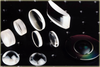
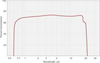
FOCtek provides five kinds of spheric lens forms, or shapes, that determine the imaging Characteristics. of the lenses, they are plano-convex, plano-concave, Double-convex, Double-concave and Meniscus. Plano-convex lens has a positive focal length, which makes it ideal for collecting and focusing... [See More]
- Lens Type: Meniscus; Spherical Lens
- Surface Quality: 10-5 Scratch / Dig; 60-40 Scratch / Dig
- Materials: BK7 Glass; Calcium Fluoride; Sapphire; H-K9, Fused Silica, N-SF10, Silicon
- Surface Flatness: λ/4; <1.5?
from EKSMA OPTICS
Zinc selenide (ZnSe) is the most popular material for infrared applications. Due to a very wide transmission range covering 0.6-22 µm chemical vapor deposition grown ZnSe as a high optical quality material is used to manufacture optical components (windows, mirrors, lenses) for high power IR... [See More]
- Lens Type: Cylindrical Lens; Meniscus
- Diameter / Length: 12.7 to 76.2
- Focal Length: 25.4 to 254
- Surface Quality: 40-20 Scratch / Dig

from MOK Optics Co., Ltd.
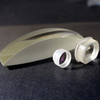
meniscus lenses are used to decrease the focal length of another lens while maintaining the angular resolution of the optical assembly. These lenses are commonly used to achieve tighter beam focusing when paired with another positive lens. [See More]
- Lens Type: Meniscus
- Materials: Germanium; Sapphire; Ultra-violet grade Fused Silica; CDGM, SCHOTT, OHARA, HOYA, MgF2, CaF2, ZnSe, ZnS etc
- Diameter / Length: 3 to 250
- Surface Quality: 10-5 Scratch / Dig
from Changchun Sunday Optics Co., Ltd.
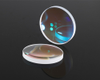
The H-K9L double concave lens has excellent transmittance from visible to near infrared (350-2000nm).H-K9L (N-BK7) is a commonly used optical glass for the preparation of high-quality optical elements. When the additional advantages of UV melting quartz (good transmittance and low thermal expansion... [See More]
- Lens Type: Meniscus; Spherical Lens
- Materials: Germanium; Sapphire; Optical glass, UVFS, Germanium, Silicon, CaF2, MgF2, ZnSe ZnS, Sapphire
- Lens Application: Infrared; Visible
- Surface Quality: 10-5 Scratch / Dig
from Hangzhou Shalom Electro-optics Technology Co., Ltd.
Features: • CNC and MRF polishing techniques. • Excellent for collection of light, illumination, projection, etc. • Compatible with 6000W-30000W continuous laser systems. • Various Lens Types: Plano-convex/concave, biconvex/concave, meniscus, etc. • Standard coating options... [See More]
- Lens Type: Aspheric; Meniscus
- Diameter / Length: 37
- Focal Length: 200
- Materials: Ultra-violet grade Fused Silica; Fused Silica

from Intrinsic Crystal Technology Co., Ltd. (ICC)
A cylindrical lens is typically used to focus, condense or expand incoming light. A cylindrical lens has one cylindrical surface, causing light to be focused in a single dimension or axis. It can also be used to expand the output of a laser diode into a symmetrical beam. ICC supply various kinds... [See More]
- Lens Type: Cylindrical Lens; Meniscus
- Diameter / Length: 1.2 to 350
- Lens Application: Infrared; Visible; Ultraviolet
- Materials: BK7 Glass; Calcium Fluoride; Ultra-violet grade Fused Silica; Silicon, Other

from HG Optronics, Inc.
The Positive Meniscus Lenses are a convex-concave lens, but it is thicker at the center than at the edges. They are felt polished and are used universally in the ophthalmic industry where convention dictates that lens power be specified in Diopters. The Negative Meniscus Lenses are a convex-concave... [See More]
- Lens Type: Meniscus; Spherical Lens
- Focal Length: -600 to 100
- Lens Application: Infrared
- Center Thickness: 3 to 4
from Ophir-Spiricon Inc.
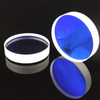
Meniscus lenses provide superior accuracy [See More]
- Lens Type: Meniscus
- Focal Length: 127
- Lens Application: Infrared
- Edge Thickness: 2.5
from ECOPTIK (CHANGCHUN) LTD
BRD Optical provide meniscus lens in both positive and negative focal lengths. These lenses are useful when used with another lenses to increase or decrease the focal length. This lens element configuration does not introduce any additional coma or spherical aberrations [See More]
- Lens Type: Meniscus; Spherical Lens
- Center Thickness: 2 to 20
- Focal Length: -2000 to -50
- Diameter / Length: 2 to 300

from Intrinsic Crystal Technology Co., Ltd. (ICC)
ICC spherical technology includes PITECH, high speed and CNC method, which can meet the requirements of small quantity for precision control, and large quantity for cost. All processes are completed in the factory. Our spherical lenses are widely used in a variety of industrial and detection camera,... [See More]
- Lens Type: Achromats; Meniscus; Spherical Lens
- Materials: BK7 Glass; Calcium Fluoride; Germanium; Zinc Selenide; BAF2, Silicon
- Lens Application: Infrared; Visible