
Vessel / Cylinder Filling Gas Compressors and Gas Compressor Systems
Last Updated: April 1, 2025
Description
Vessel or cylinder filling gas compressors and gas compressor systems are mechanical devices designed to increase the pressure of gases. These systems are essential for compressing gases into storage vessels or cylinders, ensuring that the gas is stored at a higher pressure than its original state. This compression allows for efficient storage and transportation of gases.
Working Principle
Gas compressors operate by reducing the volume of gas, thereby increasing its pressure. There are two main types of compressors: positive displacement and dynamic. Positive displacement compressors, such as reciprocating compressors, work by confining a specific volume of gas in a closed space and then compressing it by mechanical means. In reciprocating compressors, a piston moves within a cylinder to compress the gas. Dynamic compressors, like centrifugal compressors, use rapidly rotating impellers to accelerate the gas, converting kinetic energy into pressure energy. These systems are useful because they enable the storage and transportation of gases at high pressures, which is crucial for various industrial applications.
Applications
Gas compressors are widely used in several industries. In the oil and gas industry, they are essential for processes such as gas lift, reinjection, and gas gathering. They are also used in chemical processing for tasks like hydrogenation and in oil refining for cracking and distillation processes. Additionally, compressors are employed in the recovery of oil or vapor from well sites, where they help in aerating or displacing produced fluids to enhance flow rates.
Advantages over other Gas Compressors and Gas Compressor Systems
Vessel or cylinder filling gas compressors offer specific advantages, such as the ability to handle a wide range of gases, including ammonia and hydrogen, which are crucial for chemical and metallurgical processes. Reciprocating compressors, in particular, are known for their ability to achieve high pressures, making them suitable for applications requiring significant pressure increases.
Limitations
One limitation of gas compressors is the occurrence of pressure pulsations or variations, especially in reciprocating compressors. These pulsations can be minimized by adding more stages to the compression process. Additionally, the choice of compressor type and driver (e.g., electric motor or gas turbine) can be complex due to the numerous variables involved, such as life cycle cost, capital cost, and maintenance expenses.
Considerations
When selecting a gas compressor system, several factors should be considered. Initial costs can vary significantly depending on the type of compressor and its intended application. Operating expenses, including energy consumption and maintenance costs, are crucial for long-term economic feasibility. Durability and accuracy of the compressor system are also important, as they affect the reliability and efficiency of gas compression. Replacement and maintenance costs should be evaluated to ensure that the system remains cost-effective over its operational life.
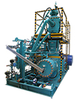
from Howden
Burton Corblin ® H-Series of Hybrid Compressors. The combination of piston and diaphragm technologies allows greater flows and high pressure delivery. Hybrid technology is a compact oil free solution to serve intermediate size units for high pressure needs. Key Benefits. Hybrid compressor is a... [See More]
- Applications: Gas Transmission / Delivery; Process Gas Feeding / Injection; Vessel / Cylinder Filling
- Discharge / Operating Pressure: 14.5 to 6527
- Compressor Technology: Diaphragm; Reciprocating Piston
- Mass Flow Capacity: 412

from Gardner Denver, Inc.
Compressors. Gardner Denver is a global leader in the design, manufacture, installation and service of innovative compressor technologies for a diverse range of industries. From manufacturing to construction, mining to pharmaceuticals, our compressors work hard to increase efficiency, reduce energy... [See More]
- Applications: Gas Transmission / Delivery; Oil Refining / Chemical Processing; Oil / Vapor Recovery ; Process Gas Feeding / Injection; Vessel / Cylinder Filling
- Lubrication Style: Oil-free (optional feature)
- Compressor Technology: Centrifugal; Diaphragm; RotaryLobe; Rotary Screw
- Gases Handled: Air; Hydrocarbon; Natural Gas / Methane
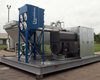
from GENERON
GENERON offers 20hp to 500hp (15kw - 373kw) Industry proven engineered rotary screw compression packages built to any technical specification either engine or electric drive, for moving large volumes at lower suction with discharge pressures up to 155 psig (10.7 barg). At GENERON our engineering,... [See More]
- Applications: Gas Generation / PSA; Vessel / Cylinder Filling; Wine, Medical, Food Processing, Breathing Air, Semi Conductor Manufacturing
- Discharge / Operating Pressure: 155
- Compressor Technology: Rotary Screw
- Mass Flow Capacity: 2000