
Refrigerant Gas Compressors and Gas Compressor Systems
Last Updated: April 1, 2025
Description
Refrigerant gas compressors are mechanical devices designed to increase the pressure of refrigerant gases. They play a crucial role in refrigeration and air conditioning systems by compressing the refrigerant gas, which allows it to circulate through the system and facilitate heat exchange processes.
Working Principle
Refrigerant gas compressors operate by either positive displacement or dynamic compression methods. In positive displacement compressors, such as reciprocating and screw compressors, the gas is compressed by reducing the volume of a chamber. For instance, in a reciprocating compressor, a piston compresses the gas within a cylinder, while in a screw compressor, interlocking screws compress the gas. Dynamic compressors, like centrifugal compressors, increase gas pressure by converting kinetic energy into pressure energy. The gas enters axially and is accelerated by the impeller, achieving high pressure upon discharge. These compressors are essential for maintaining the efficiency of refrigeration cycles by ensuring the refrigerant is at the correct pressure and temperature for optimal heat exchange.
Applications
Refrigerant gas compressors are widely used in various applications, including industrial refrigeration systems, air conditioning units, and heat pumps. Specific examples include their use in large-capacity chemical and process industry plants, where centrifugal compressors are common, and in domestic refrigerators and window-type air conditioners, where hermetically sealed compressors are prevalent. They are also integral to systems using refrigerants like R-123 and R-134a for chilling water in air-conditioning applications.
Advantages over other Gas Compressors and Gas Compressor Systems
Refrigerant gas compressors, particularly rotary compressors, offer several advantages. They are highly efficient due to simultaneous intake and compression of refrigerant, have low initial and maintenance costs, and are durable in dirty environments. Hermetically sealed compressors are advantageous in domestic applications due to their long lifespan and minimal refrigerant leakage.
Limitations
One limitation of rotary compressors is their capacity to handle only smaller volumes of gas and produce less pressure compared to other types of compressors. Open-type compressors, which rely on system lubricant for sealing, can leak operating gases if not used frequently.
Considerations
When selecting refrigerant gas compressors, several factors should be considered. Initial costs and operating expenses vary depending on the type and size of the compressor. Durability is generally high, especially for hermetically sealed units, which are designed to last for decades without leaks. However, open compressors may require more frequent maintenance to prevent gas leaks. The choice of refrigerant also impacts the compressor's performance and environmental footprint, with ideal refrigerants being non-toxic, non-flammable, and environmentally friendly.
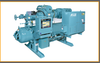
from Johnson Controls / FRICK / YORK PROCESS SYSTEMS
We engineer the world ’s best industrial refrigeration compressors at Johnson Controls, like the Frick ® RWF II Compressor Package, which features rotor designs that provide the strongest, most efficient operation for their applications. These Frick compressors are designed for use with... [See More]
- Gases Handled: Ammonia; Hydrocarbon; Refrigerant; Halocarbons
- Discharge / Operating Pressure: 200 to 500
- Compressor Technology: Rotary Screw
- Mass Flow Capacity: 6402

from Bristol Compressors International, Inc.
Bristol Compressors International, LLC is committed to delivering product excellence in quality and reliability; our people are dedicated to providing world-class customer service, value, delivery and technical support to our global HVACR customers. Our product versatility allows customers to select... [See More]
- Gases Handled: Refrigerant
- Applications: Refrigeration / Gas Drying
- Power Source: AC Single Phase; AC Three Phase
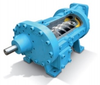
from Howden
Howden M-series oil-injected screw compressors. A new industrial-standard quality built screw compressor, complete with a suite of specification options, to meet the design and build needs of compressor packagers and reduce the operating costs of end users. M127 industrial-standard screw compressor... [See More]
- Gases Handled: Hydrocarbon; Natural Gas / Methane; Refrigerant
- Discharge / Operating Pressure: 319
- Compressor Technology: Rotary Screw
- Mass Flow Capacity: 364

from Dresser-Rand
Dresser-Rand continues a strong tradition of performance in positive displacement compression. Operating over a wide range of pressures and speeds and handling a multitude of gases from air to light hydrocarbons, ammonia, freon, hydrogen and nitrogen. Dresser-Rand AXI compressors offer proven... [See More]
- Gases Handled: Air; Ammonia; Hydrocarbon; Nitrogen; Refrigerant
- Mass Flow Capacity: 200 to 30000
- Compressor Technology: Rotary Screw
- Applications: Gas Transmission / Delivery

from Tecumseh Products Company
Discover the advantages of Tecumseh's broad range of energy efficient and reliable reciprocating compressors for household refrigerators and freezers, air-conditioning and commercial refrigeration applications including foodservice to walk-in coolers. What is a Reciprocating... [See More]
- Gases Handled: Refrigerant
- Inlet Temperature: 40 to 95
- Compressor Technology: Reciprocating Piston
- Horse Power: 0.0 to 29.08