
Spring Pins Information
Last revised: January 8, 2025
Spring pins are hollow dowel pins manufactured from spring steel.
Types of Spring Pins
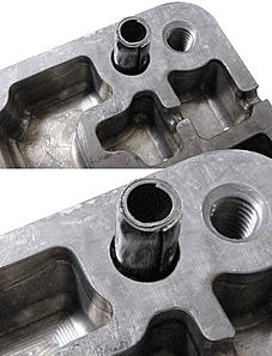
There are two main types of products:
Coiled spring pins are made of spring steel or another metal, and are coiled into a hollow cylindrical shape. Roll pins (slotted steel springs, slotted spring pins) are made of rolled steel or another, similar metal and then rolled into a cylindrical shape. These headless, hollow fasteners have a slot that runs longitudinally down the length of the pin. Various types of specialty and proprietary spring pins are also available. Often, these spring pin fasteners are rated for specific applications.
Specifications
Spring pins are available in English and metric sizes, and carry specifications such as:
- size
- length
- material of construction
English pins are specified in inches or fractions of an inch. Metric pins are measured in units such as millimeters (mm) or centimeters (cm). Typically, the size of spring pins is expressed as the nominal diameter.
Materials
With regard to materials of construction, choices include plastic, hardened and ground steel, unhardened steel, and stainless steel. Plastic spring pins are made of thermoplastic or thermosetting polymers of high molecular weight. Hardened and ground carbon-steel spring pins are extremely hard, but cannot absorb much shock or impact without braking. Stainless steel spring pins are used in applications that require chemical and corrosion resistance, as well as relatively high pressure ratings.
Applications
Spring pins and spring pin fasteners are cost-effective industrial fasteners that require little preparation. Often, the user needs only to drill a hole prior to installation. With both coiled spring pins and slotted spring pins, there are a variety of applications. For example, electrical spring pins are sometimes used as electrical connectors. Spring pin fasteners are suitable for casting, stamping, and other production operations. Slotted spring pins are better able to withstand the effects of shock and vibration than other products. Spring loaded pins may feature a quick-release mechanism, and are well-suited for applications where space is limited. For all types of spring pins and spring fasteners, bulk pricing is often available. Spring pin suppliers are located across North America and around the world.
Spring Pins FAQs
How do different materials used in spring pins affect their performance in various applications?
The performance of spring pins in various applications is significantly influenced by the materials used in their construction.
Plastic Spring Pins
- Made from thermoplastic or thermosetting polymers.
- Suitable for applications where lightweight and non-conductive properties are needed.
- Typically used in environments where corrosion resistance is not a primary concern Spring Pins.
Hardened and Ground Steel Spring Pins
- Extremely hard, providing high strength.
- Not suitable for applications involving high shock or impact, as they can break under such conditions Spring Pins.
Stainless Steel Spring Pins
- Offer chemical and corrosion resistance, making them ideal for applications exposed to harsh environments.
- Type 302/304 stainless steel is widely used due to its availability and cost-effectiveness, though it may not provide the highest corrosion resistance.
- Type 316 stainless steel offers better corrosion resistance, especially in marine environments or where exposure to harsh chemicals is expected.
420 Chrome Stainless Steel Coiled Spring Pins
- Provide high strength, moderate corrosion protection, and superior fatigue life.
- Suitable for applications requiring high wear resistance and good tensile strength at moderately elevated temperatures.
Carbon Steel with Protective Plating or Coating
- Offers excellent initial corrosion resistance, but the protection diminishes as the coating wears off.
- Once the coating is depleted, the underlying carbon steel is prone to rapid corrosion.
Dynamic Loading Considerations
Coiled pins, particularly those made from austenitic stainless steel, are designed to handle dynamic loading better than slotted pins.
They provide superior fatigue life when installed according to recommended guidelines.
These material characteristics help engineers select the appropriate spring pin for specific applications, balancing factors like cost, corrosion resistance, strength, and fatigue life.
What are the advantages of using coiled pins over slotted pins?
Coiled pins offer several advantages over slotted pins, particularly in terms of performance and application suitability. Here are some key benefits:
Superior Fatigue Life
Coiled pins are designed to provide superior fatigue life, especially when installed according to recommended guidelines. This makes them more suitable for applications involving dynamic loading, where fatigue resistance is crucial.
Vibration and Shock Absorption
The flexibility of coiled pins after installation helps dampen vibration and shock loading, protecting host holes and assemblies. This characteristic is particularly beneficial in applications where components are subject to frequent or intense vibrations.
Material Versatility
Coiled pins can be manufactured from a variety of materials, including high carbon steel, 420 chrome stainless steel, and 300 series austenitic stainless steel. This allows for a wide range of applications, each benefiting from the specific properties of the chosen material, such as corrosion resistance or high strength.
Corrosion Resistance
Coiled pins made from stainless steel alloys provide inherent corrosion resistance, offering a lifetime of protection as long as free oxygen is available to maintain the protective chromium oxide layer. This is advantageous over slotted pins, which may rely on coatings that can wear off over time.
Cost-Effectiveness
Coiled pins offer an excellent cost/benefit relationship in performance applications. They provide high wear resistance and good tensile strength at moderately elevated temperatures, making them a cost-effective choice for many engineering applications.
These advantages make coiled pins a preferred choice in many engineering applications, especially where dynamic loading and environmental factors are significant considerations.
What are the applications of coiled spring pins?
Coiled spring pins are versatile components used in a variety of applications due to their unique properties and advantages.
Coiled spring pins are particularly well-suited for applications involving dynamic loading. Their design provides superior fatigue life, making them ideal for situations where components are subject to repeated stress or movement.
These pins are effective in dampening vibration and shock loading, which helps protect host holes and assemblies. This makes them suitable for applications in environments with frequent or intense vibrations.
Coiled spring pins made from stainless steel alloys, such as 316 stainless steel, are used in applications requiring high corrosion resistance. They are particularly beneficial in marine environments or where exposure to harsh chemicals is expected/
Applications that demand high wear resistance and good tensile strength at moderately elevated temperatures can benefit from coiled spring pins, especially those made from 420 chrome stainless steel.
Coiled spring pins offer an excellent cost/benefit relationship in performance applications, making them a cost-effective choice for many engineering needs.
How do coiled pins compare to other types of spring pins in terms of performance?
Coiled pins offer several performance advantages over other types of spring pins, such as slotted pins.
Coiled pins are designed to provide superior fatigue life, especially when installed according to recommended guidelines. This makes them more suitable for applications involving dynamic loading, where fatigue resistance is crucial.
The flexibility of coiled pins after installation helps dampen vibration and shock loading, protecting host holes and assemblies. This characteristic is particularly beneficial in applications where components are subject to frequent or intense vibrations.
Coiled pins can be manufactured from a variety of materials, including high carbon steel, 420 chrome stainless steel, and 300 series austenitic stainless steel. This allows for a wide range of applications, each benefiting from the specific properties of the chosen material, such as corrosion resistance or high strength.
Coiled pins made from stainless steel alloys provide inherent corrosion resistance, offering a lifetime of protection as long as free oxygen is available to maintain the protective chromium oxide layer. This is advantageous over slotted pins, which may rely on coatings that can wear off over time.
Coiled pins offer an excellent cost/benefit relationship in performance applications. They provide high wear resistance and good tensile strength at moderately elevated temperatures, making them a cost-effective choice for many engineering applications.
What are the specific guidelines for installing coiled pins to ensure optimal performance?
Material and Duty Selection
Coiled pins are available in different materials and duties (light, standard, and heavy). The selection should be based on the host material and the application's load requirements.
Hole Preparation
Coiled spring pins are designed to be installed in common drilled holes. It is not critical that the holes are perfectly straight or round, and these pins are successful in as-cast, as-molded, or stamped holes.
Insertion Forces
Coiled pins have lower insertion forces compared to other press-fit fasteners, which allows for easier installation and greater hole tolerances.
Flexibility and Shock Absorption
The flexibility of coiled pins helps absorb shock and vibration, extending the life of the assembly. This characteristic is beneficial in applications with dynamic loading.
Spring Pins Media Gallery
Resources
Electronics360—New 4mm Pitch Spring-Loaded Connector Targets Rugged Applications
Image credit:
Luish73 / CC BY 3.0
- spring loaded connector
- coiled spring pins
- expansion pin
- slotted spring pins
- 316 stainless spring pins
- beryllium copper spring pins
- detent spring pins
- DIN 1481 spring pins
- double roll spring pins
- electrical contact spring pins
- hardened steel spring pins
- PCB spring pins
- press fit spring pins
- steel slotted spring pins
- tapered spring pins