
LED Drivers Information
Last revised: September 16, 2024
Reviewed by: Scott Orlosky, consulting engineer
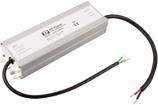 LED drivers control the amount of current and voltage supplied to light emitting diodes (LEDs). An LED driver IC is an integrated circuit (IC) that provides brightness control and backlighting color control. They are usually found in an LED driver circuit, which can be used to test an LED in order to maintain brightness and increase LED life.
Types of LED Drivers
- White LED drivers provide white light for backlighting and offers very low noise with efficiencies as high as 90%.
- LED PWM (Pulse Width Modulated) drivers can be programmed through an I2C compatible interface for applications which require color, pattern and intensity programmability control.
- RGB LED drivers — all of the functions for color and luminosity are controlled by software through the SPI interface and internal registers.
- Constant current LED drivers feature internal circuitry that monitors the loop current of each LED and automatically adjusts the generated output DC voltage to the minimum value required to produce highest forward voltage.
- 7 segment LED drivers are LED display drivers that use a combinational logic circuit which accepts a 4-bit BCD (Binary Coded Decimal) input and generates seven output signals to control seven individual display segments.
Performance Specifications
 Supply voltage
- Adjustable output current
- Efficiency
An LED PWM driver can have a drive current per channel of 42 mA and shut down current of 1.5 µA.
An RGB LED driver may include a PWM dimmer that controls each color LED.
A constant current LED driver has a charge pump. Charge pumps are a form of DC/DC converter that uses a pair of capacitors to maintain a precise voltage. This allows LED drivers to generate a regulated output current from a battery when the input voltage is between 2.4 V and 5.5 V.
Constant Current Driver Specifications
- Precise brightness control
- Current source
- Switching frequency
A 7 segment led driver often includes an input latch which can display and hold digits at the time a new count accumulates in the background.
Special Features
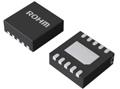 LED drivers are designed and manufactured to meet most industry specifications. Specialized products are commonly available. For example, an LED display driver has one pin that provides continuous brightness control by setting a reference current through a variable resistor.
The first LED display drivers were TTL compatible, provided wide power supply operation, and could handle 15 mA current. As they have evolved this is not always the case. TTL is an acronym for transistor-transistor logic. In terms of applications, some TTL LED drivers are used in portable devices such as cell phones, digital cameras, digital clocks, and counters. However as the use of LEDs has grown, different driver types have evolved to be used in a variety of applications. Here are some examples:
Here are some of the most common types of LED drivers and their applications:
- Constant Current Drivers
Characteristics: Maintain a fixed current while voltage varies.
Applications: Used in street lighting, display panels, and high-power LEDs for stable brightness. - Constant Voltage Drivers
Characteristics: Provide a stable voltage while current varies.
Applications: Ideal for LED strips, signage, and low-power decorative lighting. - Dimmable Drivers
Characteristics: Enable brightness adjustment through various dimming controls (e.g., TRIAC, 0-10 V, PWM).
Applications: Used in residential, commercial, and stage lighting systems. - AC LED Drivers
Characteristics: Directly convert AC to power LEDs without external converters.
Applications: Common in retrofit LED bulbs and simple lighting setups. - Programmable Drivers
Characteristics: Allow customization of output parameters like current and voltage.
Applications: Used in smart lighting and industrial applications for flexibility in LED performance. - Wireless LED Drivers
Characteristics: Integrate wireless communication (e.g., Bluetooth, Zigbee).
Applications: Used in smart home lighting systems and IoT-connected lighting solutions.
Standards
NEMA SSL 1 — Electronic drivers for LED devices, arrays, or systems.
LED Drivers FAQs
What are the key differences between constant current and constant voltage LED drivers?
Constant Current LED Drivers
Current Regulation: These drivers maintain a consistent current through the LEDs, which is crucial for ensuring uniform brightness and color consistency. The current is kept constant regardless of changes in voltage, which helps in eliminating light flickering and electrical stress due to voltage fluctuations.
Brightness and Color Consistency: By providing a constant current, these drivers ensure that the LED brightness and color remain stable, even as the LED ages or as the temperature changes.
Temperature Effects: When using constant current drivers, the voltage applied to the LED backlight will drop as the temperature rises, but the brightness remains even because the current is constant.
Constant Voltage LED Drivers
Voltage Regulation: These drivers supply a fixed voltage to the LEDs. However, due to the unique volt-ampere characteristics of LEDs, this can lead to variations in current, especially as temperature changes.
Potential for Uneven Brightness: Since each LED may have slightly different electrical properties, constant voltage driving can result in uneven brightness across LEDs. Higher temperatures can increase the current, leading to more heat, which can accelerate LED degradation and shorten lifespan.
Sensitivity to Temperature: With constant voltage drivers, as the temperature rises, the forward current increases, potentially leading to higher heat generation and uneven brightness.
These differences highlight the importance of selecting the appropriate type of LED driver based on the specific application requirements, such as the need for consistent brightness and color or the ability to handle temperature variations.
What are the advantages of using LED driver ICs?
LED driver ICs are designed to provide lower power consumption compared to traditional resistor circuits. They achieve this by efficiently controlling the LED current, even when the battery voltage fluctuates.
LED driver ICs enhance reliability by reducing the number of components needed on the control board, which minimizes the likelihood of component failure. They also have the capability to detect errors such as LED open/short failures and provide external notifications.
Although initially more expensive than resistor circuits, LED driver ICs can lead to cost savings over time. They require fewer components, which can reduce overall costs, especially when paired with external resistors.
LED driver ICs often incorporate advanced control methods, such as Energy Sharing, which distribute power consumption efficiently. This makes them suitable for applications like automotive lighting, where precise control and efficiency are crucial.
These advantages make LED driver ICs a compelling choice for applications requiring efficient, reliable, and cost-effective LED lighting solutions.
How do LED driver ICs detect and notify about LED failures?
LED driver ICs are equipped with protection circuits that can detect errors such as LED open or short failures. This capability enhances the reliability of the LED system by identifying when an LED is not functioning correctly, either due to a break in the circuit (open failure) or a short circuit (short failure).
Once an error is detected, LED driver ICs can provide external notifications. This means that the IC can signal to an external system or user interface that there is a failure in the LED circuit, allowing for timely maintenance or replacement of the faulty LED.
These features are part of the advanced control methods incorporated into LED driver ICs, which contribute to their reliability and efficiency in various applications, including automotive lighting systems.
What is the role of PWM in LED drivers?
Pulse Width Modulation (PWM) is used to adjust the average light output of an LED by controlling the duty cycle of a square wave voltage source. The duty cycle, which is the percentage of one period in which a signal is active, can be varied from 0% to 100% to change the brightness of the LED. A higher duty cycle results in brighter light output, while a lower duty cycle dims the light.
PWM allows for efficient control of LED brightness without changing the drive voltage or current. This method is stable and ensures that the light output is proportional to the duty cycle percentage, maintaining consistent performance across different operating conditions.
LED driver ICs often incorporate PWM dimming circuits, which can be programmed for specific duty cycles and frequencies. This feature enables precise control over the LED's light output, allowing for smooth transitions between different brightness levels.
By using PWM to control the LED current, the stress on the LED is minimized, which can help extend its operational lifetime. This is because PWM reduces the thermal and electrical stress that can occur with continuous current driving methods.
PWM is particularly useful in applications requiring variable lighting conditions, such as automotive lighting systems, where LEDs may need to switch between full and dim modes for different functions like stop/tail lights or daytime running lights.
These aspects highlight the importance of PWM in enhancing the functionality and efficiency of LED drivers, making it a preferred method for controlling LED lighting systems.
How does PWM contribute to the longevity of LED systems?
PWM controls the LED brightness by adjusting the duty cycle of the current flowing through the LED. This method reduces the continuous thermal and electrical stress on the LED, which can occur with constant current driving methods. By minimizing these stresses, PWM helps in extending the operational lifetime of the LED
PWM allows for efficient control of LED brightness without altering the drive voltage or current. This stable approach ensures that the light output is proportional to the duty cycle percentage, maintaining consistent performance and reducing the risk of overheating, which can degrade the LED over time.
By using PWM, the LED system can maintain consistent light output across different operating conditions. This consistency helps in preventing the LED from being overdriven, which can lead to premature failure.
What is the role of LED driver ICs in automotive lighting systems?
LED driver ICs play a significant role in automotive lighting systems by providing efficient, reliable, and cost-effective solutions for controlling LED lights.
LED driver ICs are designed to offer lower power consumption compared to traditional resistor circuits. They achieve this by efficiently controlling the LED current, even when the battery voltage fluctuates, which is crucial in automotive applications where power efficiency is a priority.
These ICs enhance reliability by reducing the number of components needed on the control board, minimizing the likelihood of component failure. They are equipped with protection circuits that can detect errors such as LED open or short failures and provide external notifications, ensuring timely maintenance and reducing downtime.
Although initially more expensive than resistor circuits, LED driver ICs can lead to cost savings over time. They require fewer components, which can reduce overall costs, especially when paired with external resistors.
LED driver ICs often incorporate advanced control methods, such as Energy Sharing, which distribute power consumption efficiently. This makes them suitable for applications like automotive lighting, where precise control and efficiency are crucial.
LED Drivers Media Gallery
References
Electronics360—Linear Current Regulators and Controllers Control Automotive LED Lights
- 1.8 V
- 2.5 V
- 2.7 V
- 3 V
- 3.3 V
- 3.6V
- 5 V
- CDIP
- Constant Current
- Constant Voltage
- DIP
- Dimmable
- ESD Protected
- Enclosed
- FLGA
- HSOP
- Integrated Circuit (IC)
- LGA
- LQFP
- MSOP
- Module
- Outdoor Rated
- Over-Voltage Protection
- Over-Voltage Protection
- PDIP
- PLCC
- PQFP
- Programmable
- QFN
- QSOP
- RGB
- RoHS Compliant
- RoHS Compliant
- SC-70
- SDIP
- SIP
- SOIC
- SOP
- SOT23
- SSOP
- TDFN
- TQFP
- TSOP Type I, Type II
- TSSOP
- VSSOP
- WLCSP