
Digital Signal Processors (DSP) Information
Last revised: October 28, 2024
Reviewed by: Scott Orlosky, consulting engineer
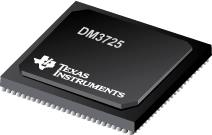 Digital signal processors (DSP) are special microprocessors designed for handling digital data efficiently, usually in real-time. DSPs can also be used to perform general-purpose computations; however, they are not optimized for this function. Instead, DSPs use an instruction set architecture (ISA) that is optimized for rapid signal processing.
Important ISA features include deep pipelining (building a set of instructions or calculations to be executed repeatedly) to enhance microprocessor performance and the ability to act as a direct memory access device (DMA) for the host environment. Digital signal processors also use Harvard architecture with separate program and data memory which reduces the time to access both programs and memory. In addition, DSPs use saturation arithmetic so that overflow operations accumulate at the maximum or minimum values that the register can hold instead of wrapping around.
With DSPs, the maximum remains the maximum. By contrast, with many general-purpose CPUs, the sum of the maximum plus one equals the minimum. Most digital signal processors are fixed-point devices because in real-world signal processing, extra precision is not required and there is a large speed benefit. Floating-point DSPs are common in scientific and other applications that require precision. Digital signal processors feature specialized instructions, modulo-addressing in ring buffers, and bit-reversed addressing mode for Fortran function tree (FFT) cross-referencing.
Generally, DSPs are dedicated integrated circuits (ICs); however, DSP functionality can also be realized using field programmable gate array (FPGA) chips. DSPs are used in several classes of computer hardware, including sound cards, modems, telephony boards that handle sound and modem functions, and hardware that handles audio and video compression in real time.
Specifications
Selecting digital signal processors requires an analysis of performance specifications. DSPs operate with a variety of supply voltages and include data buses that range from 8-bit to 256-bit devices. DSPs also vary in terms of clock speed, which is typically expressed in megahertz (MHz) and gigahertz (GHz). Often, integrated on-chip phase-locked loops (PLLs) with clock frequency synthesis capabilities are used to design high-speed internal clocks for data sampling in DSP applications.
Measurements of DSP processing power include million instructions per second (MIPS) and million multiply / accumulates per second (MMACS). For floating-point devices, an additional measurement is million floating-point operations per second (MFLOPS). For all DSPs, the operating current, operating temperature, and power dissipation are also important specifications.
Features and Options
Digital signal processors are available with multiple DMA channels and a variety of I/O ports and interfaces. Some devices also feature an external memory interface that determines the amount of memory a chip can handle. Parallel interfaces include:
- Universal asynchronous receiver transmitter (UART)
- Universal synchronous asynchronous receiver transmitter (USART) technology
Serial interfaces include:
- Peripheral component interconnect (PCI)
- Universal serial bus (USB)
- Enhanced synchronous serial interface (ESSI)
- Serial communications interface (SCI)
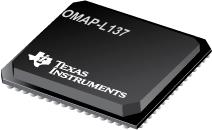 The Joint Test Actions Group (JTAG), a standards organization, has developed a test access port (TAP) that allows access to the inner workings of ICs. Inter-IC (I²C) is used to control and monitor applications in communications, computer, and industrial settings.
Packaging Options
Common package types for digital signal processors include:
- Ball grid array (BGA)
- Quad flat package (QFP)
- Single in-line package (SIP)
- Dual in-line package (DIP)
Many packaging variants are available. In terms of additional features, some DSPs include an internal memory interface, embedded timers, or flash memory. Other devices include on-chip A/D converters that convert analog inputs into digital signal.
Standards
- SMD 5962-00510—Microcircuit, Digital, Fixed-point digital signal processor, Monolithic silicon
- SMD 5962-99539—Microcircuit, Digital Signal PROCESSOR, 32 Bits, Monolithic silicon
- SMD 5962-03245—Microcircuit, Digital, CMOS, Fixed-point digital signal processor, Monolithic silicon
Digital Signal Processors (DSP) FAQs
How do different packaging options for DSPs impact their performance and integration in electronic systems?
The impact of different packaging options for Digital Signal Processors (DSPs) on their performance and integration in electronic systems can be understood through several key aspects:
Advanced packaging techniques can increase interconnect density, which accelerates signal speed and reduces energy requirements. This results in lower latency, increased bandwidth, better efficiency, and higher input/output density.
Packaging options like System-on-Chip (SoC) and System-in-Package (SiP) allow for the integration of diverse features into single packages. This can include application-specific accelerator blocks on general-purpose chips, such as FPGA slices or AI accelerator modules alongside a standard MCU architecture.
Packaging provides robust mechanical properties and isolates the semiconductor die from the immediate environment. This is crucial for power dissipation and supporting a significant number of interconnection nodes in complex designs.
Some packaging options, like SiP, involve complex design processes due to the need to interconnect multiple dice on the same plane. This complexity can increase costs and design time.
How does the choice of packaging affect the thermal management of DSPs?
Here are some key aspects to consider:
Packaging plays a critical role in dissipating heat generated by DSPs. As electronic devices become more compact and powerful, managing the heat output becomes increasingly important to prevent performance drops and ensure longevity.
Advanced packaging techniques, such as those involving thermal bridge technology, are employed to enhance heat dissipation and manage the thermal load effectively.
Smaller packaging with higher component density can lead to increased heat generation. This necessitates efficient thermal management solutions to handle the concentrated power flux and maintain the DSP's junction temperatures within safe limits.
Different packaging options may require specific cooling methods. For instance, forced-air convection cooling is often preferred for its cost-effectiveness and simplicity, but it must be optimized to handle the increased power requirements and smaller packaging sizes.
Techniques such as liquid cooling or enhanced air cooling might be necessary for high-power DSP applications, especially in rugged or military environments where thermal management is critical.
The materials used in packaging can influence thermal conductivity and heat dissipation capabilities. Selecting materials with high thermal conductivity can improve the efficiency of heat transfer away from the DSP.
What are the specific cooling techniques for DSPs?
Here are some specific cooling techniques:
Forced-air convection cooling is a common and cost-effective method where air is forced over the DSP to dissipate heat. Enhancements in this method include wider slot pitches that allow for taller heatsinks and heat spreaders, improving the efficiency of air cooling.
In high-power DSP applications, especially in rugged or military environments, liquid cooling might be necessary. This method involves circulating a liquid coolant through a system to absorb and remove heat from the DSP
Thermal bridge technology involves using thermal bridges to enhance heat dissipation. It is particularly useful in applications with high heat generation, such as data communications and high-performance computing, where managing the thermal load is critical.
The choice of materials in packaging can significantly influence thermal management. Materials with high thermal conductivity are preferred as they improve the efficiency of heat transfer away from the DSP.
What are the challenges of implementing liquid cooling in DSP systems?
Here are some key challenges:
Liquid cooling systems are inherently more complex than air cooling systems. They require additional components such as pumps, reservoirs, and heat exchangers, which can complicate the design and integration of DSP systems
The additional components required for liquid cooling can increase the size and weight of the system. This can be a significant drawback in applications where space and weight are critical factors, such as in portable or aerospace systems.
Liquid cooling systems introduce potential points of failure, such as leaks or pump failures. Ensuring the reliability of these systems is critical, especially in environments where maintenance opportunities are limited.
The implementation of liquid cooling can be more expensive than traditional air cooling methods. This includes the cost of additional components and the potential need for more robust materials to handle the liquid coolant.
Liquid cooling must effectively manage the thermal load across all components, not just the DSP itself. This requires careful design to ensure that all heat-generating components are adequately cooled.
What are the benefits of liquid cooling compared to air cooling in DSP systems?
Several benefits of liquid cooling can be highlighted:
Liquid cooling systems are generally more effective at dissipating heat compared to air cooling. This is because liquids have a higher thermal conductivity than air, allowing them to absorb and transfer heat away from the DSP more efficiently.
By maintaining lower operating temperatures, liquid cooling can help DSPs operate at higher performance levels without the risk of overheating. This is particularly beneficial in high-power applications.
Liquid cooling systems often operate more quietly than air cooling systems, as they do not rely on fans that can generate noise. This can be advantageous in environments where noise reduction is important.
Liquid cooling can provide a more uniform temperature distribution across the DSP and other components, reducing the risk of hot spots that can lead to thermal stress and potential failure.
Liquid cooling is more scalable for high-power applications, such as those found in rugged or military environments, where air cooling might not be sufficient to manage the thermal load.
Digital Signal Processors (DSP) Media Gallery
References
Electronics360—Advanced semiconductor packaging and the future of chip design
Electronics360—Small Systems with Big Functionality for the IoT
GlobalSpec—A VITA-Based Framework for Ruggedized COTS Electronics with Emphasis on Liquid Cooling – VITA 48 (REDI)
GlobalSpec—Thermal bridge technology crosses a gap in electronic device heat dissipation
GlobalSpec—Electronic Materials and Processes Handbook, Third Edition
GlobalSpec—White Paper: Advanced ATP Maximizes System Performance While Alleviating Production Bottlenecks
Images credit: