
Microprocessor Chips (MPU) Information
Last revised: October 4, 2024
Reviewed by: Scott Orlosky, consulting engineer
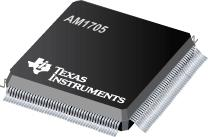 Microprocessor units (MPUs) are silicon devices that serve as the central processing unit (CPU) in computers. They contain thousands of electronic components and machine instructions to perform mathematical operations and move data from one memory location to another. Microprocessors contain an address bus that sends addresses to memory, read and write lines, and a data bus that can send data to memory or receive data from memory. They also include a clock line that enables a clock pulse to sequence the processor and a reset line that resets the program counter and restarts execution.
System Architectures
Basic microprocessor chip components include one or more arithmetic logic units (ALU) and shift registers. There are two system architectures for microprocessor chips.
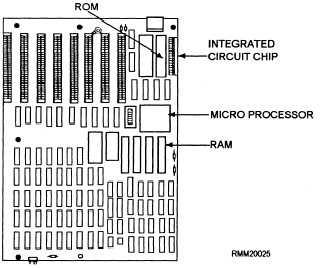
Image Credit: informationtechniciantraining.tpub.com
Devices that use a reduced instruction set computer (RISC) design process a few simple instructions instead of many complex ones in order to speed operations.
By contrast, devices that use a complex instruction set computer (CISC) design provide variable length instructions, multiple addressing forms, and contain only a small number of general-purpose registers.
Input/output (I/O) ports and interfaces are connections that provide a data path between microprocessors (MPU) and external devices such as keyboards, displays, and readers. The number of I/O ports is equal to the number of input, output, and general-purpose ports (lines) combined. Communication controllers manage data inputs and outputs. They also convert data outputs for transmission over communication lines and perform all of the necessary control functions, error checking, and synchronization.
Interfaces
Interfaces for microprocessor chips include:
- Transport control protocol/internet protocol (TCP/IP)
- Serial peripheral interface (SPI)
- Inter-IC (I2C) bus, infrared data association (IrDA)
- Synchronous data link control (SDLC)
- High-level data link control (HDLC)
- Pulse width modulation (PWM)
- Microprocessors (MPU) that use system management bus (SMBus)
- Control area network bus (CANbus)
- Universal serial bus (USB) ports
Specifications
Important specifications to consider when selecting microprocessors (MPU) include:
- Data bus — Most microprocessor chips are available with an 8-bit, 16-bit, 24-bit, 32-bit, 64-bit, 128-bit, or 256-bit data bus.
- Microprocessor family — Products from many proprietary microprocessor families are commonly available.
- Supply voltage — Supply voltages range from -5 V to 5 V and include intermediate voltages such as -4.5 V, -3.3 V, -3 V, 1.2 V, 1.5 V, 1.8 V, 2.5 V, 3 V, 3.3 V, and 3.6 V.
- Clock speed — Clock speed, the frequency that determines how fast devices connected to the system bus operate, is generally expressed in megahertz (MHz).
- Random access memory (RAM) — RAM is usually expressed in even numbers of Giga Bytes (GB), with 4, 8, 16, 32, and 64 GB being fairly common.
- Power dissipation — Power dissipation, the device's total power consumption, is generally expressed in watts (W) or milliwatts (mW).
- Operating temperature — Operating temperature range for an office laptop will likely be in the range of 45° C to 70° C. Refer to the manufacturer’s technical documentation for a safe operating range.
Package Types
Basic IC package types include:
- Ball grid array (BGA)
- Quad flat package (QFP)
- Single in-line package (SIP)
- Dual in-line package (DIP)
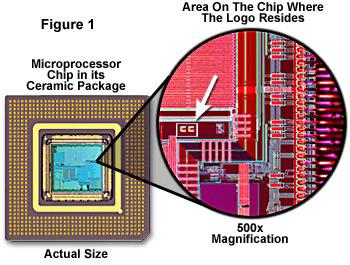
Image credit: micro.magnet.fsu.edu
Many packaging variants are available. However, due to increasing density of connections there has been a steady increase in BGA variations.
- BGA variants include plastic-ball grid array (PBGA) and tape-ball grid array (TBGA).
- Fine-pitch land grid array (FLGA) packages are also common.
- QFP variants include low-profile quad flat package (LQFP) and thin quad flat package (TQFP).
- DIPs are available in either ceramic (CDIP) or plastic (PDIP).
Other IC package types for microprocessor chips include:
- Small outline package (SOP)
- Thin small outline package (TSOP)
- Shrink small outline package (SSOP)
- Shrink zigzag inline package (SZIP)
- Thin very small outline package (TVSOP)
- Small outline J-lead (SOJ)
- Plastic leaded chip carrier (PLCC)
- Leadless ceramic chip carrier (LCCC)
Standards
BS 7238 — Glossary for terminology related to microprocessors
BS IEC 796-3 — The specification is used as an interface to connect microprocessor system components by means of the pin and socket (indirect) connector type backplane.
BS EN 60821 — A high performance backplane bus for use in microcomputer systems that employs single or multiple microprocessors.
Microprocessor Chips (MPU) FAQs
What are the main types of microprocessor chips?
Microprocessor chips can be categorized into several types, including general purpose microprocessors, which are used for general system programming and control; dedicated microprocessors, such as video decoders or RF processors; microcontrollers, which incorporate processor, memory, and I/O units onto a single chip; and system-on-a-chip, which integrates all components of a computer or other electronic system into a single chip.
What are the common system architectures for microprocessor chips?
Microprocessor systems are usually assembled on a single PCB comprising a microprocessor CPU together with a number of specialized support chips. These very large scale integrated (VLSI) devices provide input and output to the system, control and timing, as well as storage for programs and data.
What is the difference between a microprocessor unit (MPU) and a microcontroller unit (MCU)?
MCUs are all-in-one packages, while MPUs require external support chips to create a complete system. An MCU has on-chip memory, while an MPU requires off-chip memory in the board design. MPUs typically have more processing power compared to MCUs. This means that MCU are favored for low-power devices.
What are some typical applications of microprocessor (MPU) systems?
Typical applications include the control of complex industrial processes, consumer electronics, and embedded systems in various devices such as robots, washing machines, and TV receivers, among others.
What are some historical milestones in the development of microprocessor chips?
The original Intel microprocessor was the 8086 chip, announced in 1978.
The 8087 floating point coprocessor was announced in 1980, providing a floating point unit (FPU) on a separate chip from the 8088.
Later microprocessors like the Sun Sparc, DEC Alpha, and IBM RS/6000 followed the IEEE standard.
What are the fabrication technologies used in microprocessor chips?
Three main technologies historically have been employed in the fabrication of integrated circuits:
- Transistor-Transistor Logic (TTL)
- Complementary Metal-Oxide-Semiconductor (CMOS)
- N-type Metal-Oxide-Semiconductor (NMOS)
Advancements in fabrication favor the use of CMOS technology for MPUs in modern computers. So this has become the dominant technology.
What are the latest advancements in microprocessor technology?
Like most technology products MPU developments are driven by technology advancements and market demand.
Customizable Processors
Recent trends in processor architecture design have expanded the use of customizable processors. These processor cores are highly configurable, allowing system designers to define new instructions and registers to match specific application performance requirements and flexible-length instructions to create optimized processor configurations.
Advances in Semiconductor Technology
Semiconductor advances, driven by Moore's Law, have significantly influenced microprocessor technology. The minimum feature size of microprocessors has decreased dramatically, with the development currently in the range of a couple of nanometers. Lab designs based on a one nanometer size are being developed.
Enhanced Compute and DSP Performance
Microcontrollers, such as ARM's 32-bit Cortex-M7, have significantly increased compute and DSP performance. The Cortex-M7 can perform audio and voice recognition, motor control, digital power, artificial intelligence and sensor fusion. This makes it more powerful than previous real-time processor families.
Evolution of Processor Architectures
Advances in both CISC (Complex Instruction Set Computing) and RISC (Reduced Instruction Set Computing) processors have been driven by technological progress in manufacturing and new processor architecture features. These advancements have enabled more complex and efficient processing capabilities.
Microprocessor Chips (MPU) Media Gallery
References
GlobalSpec—Circuit Design: Know It All
GlobalSpec—Designing SOCs with Configured Cores: Unleashing the Tensilica Xtensa and Diamond Cores
GlobalSpec—Newnes Guide to Television and Video Technology
Electronics360—Engineers Develop Open-Source Microprocessor for Wearables and IoT
Electronics360—8-bit Microprocessor Opens Path to Organic IoT
Image credit: