Dictionary of Energy

Covering all aspects of energy and its role in society, this unique text provides a comprehensive and organized body of knowledge on what is certain to become an increasingly vital area of scientific study in the 21st century.
 TABLE OF CONTENTS
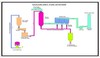
 Envir onment. a process installed downstream of a boiler, involving a catalytic reactor through which the flue gas passes. A reducing agent, typically ammonia, is introduced into the flue gas upstream of the reactor and reacts with the nitric oxide (NO x) in the flue gas to form nitrogen and water, thus reducing harmful NO x emissions from power-generating equipment.
Solar. a solar-absorbing surface that has high absorbance of radiation of one wavelength (e.g., sunlight) but little emission of radiation of another wavelength (e.g., infrared); used as a coating for a variety of solar collection devices. Also, selective absorber.
Chemistry. a nonmetallic element having the symbol Se, the atomic number 34, and the atomic weight 78.96; an essential mineral resembling sulfur, being a constituent of the enzyme glutathione peroxidase and believed to be closely associated with vitamin E and its functions.
Transportation. 1. a process in which an engine (especially a diesel engine) heats and compresses the fuel mixture to the point where it ignites itself, rather than relying on a separate energy source such as a spark plug. 2. see SPONATANEOUS COMBUSTION.
Storage. a battery s natural loss of charge over time, as opposed to charge lost through a power demand being placed upon it.
Wind. self-regulating; describing...