Practical Process Control for Engineers and Technicians
As a result of studying this chapter, and after having completed the relevant exercises, the student should be able to:
Demonstrate the correct use of a process simulation for process variable prediction
Show how control loops with long deadtimes are dealt with correctly
List the procedures for tuning of control loops with long deadtimes.
Overcoming the deadtime in a feedback control loop can present one of the most difficult problems to the designer of a control system. This is especially true if the deadtime is >20% of the total time taken for the PV to settle to its new value after a change to the SP value of a system.
We have seen that little or no deadtime in a control system presents us with a simple and easy set of algorithms that when applied correctly give us extremely stable loop characteristics.
Unfortunately, if the time from a change in the manipulated variable (controller output) and a detected change in the PV is excessive, any attempt to manipulate the process variable before the deadtime has elapsed will inevitably cause unstable operation of the control loop.
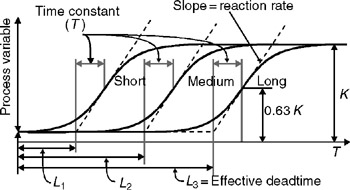
Figure 12.1 illustrates various deadtimes and their relationship to the PV reaction time.
Process deadtime occurs in virtually all types of process, as a result of the PV measurement being some distance away, both physically and in time, from the actuator that is driven...