Practical Process Control for Engineers and Technicians
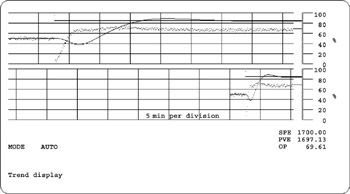
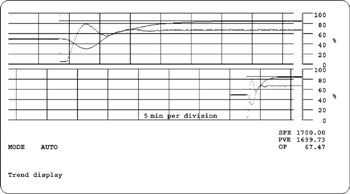
This exercise will introduce the non-interactive form of the PID algorithm ( Ideal PID). The ideal PID algorithm makes use of a mathematically true derivative calculation ( sT) Figure Ex. 10.1. Generally, ideal PID control is combined with non-saturation OP-limit handling. Ideal PID is used for high level control concepts only (e.g. PID-X in Honeywell equipment). The algorithms reside mainly in supervising computers (as opposed to PLCs, loop controllers or the RTUs of a DCS system). The same SP change can cause a very different (and very confusing) looking derivative control action for either the ideal or real PID controller. Compare the derivative control of a non-interactive PID controller with real OP-limit calculation (Figure Ex. 10.2), to that of an interactive PID controller with real OP-limit calculation (Figure Ex. 10.3). Detailed knowledge about the practical application is required to make optimum use of this kind of control at the right place. Note that if you are in doubt as to which algorithm to choose, select real PID control.
Call up the training application General single loop with non-interactive PID (ideal form). Ensure the control loop settles down. The difference in derivative control between ideal-PID and real-PID is most noticeable if large values of T DER are required.