Oil Well Testing Handbook

Providing real-life examples and cases, this resource contains the basics of well testing methods as well as all of the latest developments in the field, including testing for horizontal wells.
 TABLE OF CONTENTS
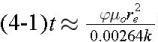
 A pressure drawdown test is simply a series of bottom-hole pressure measurements made during a period of flow at constant production rate. Usually the well is closed prior to the flow test for a period of time sufficient to allow the pressure to stabilize throughout the formation, i.e., to reach static pressure. As discussed by Odeh and Nabor, [1] transient flow condition prevails to a value of real time approximately equal to
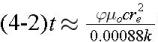
Semi-steady-state conditions are established at a time value of
In this section, we will discuss drawdown tests in infinite-acting reservoirs and developed reservoirs including two-rate, variable, multiphase, multi-rate drawdown tests. An analysis technique applicable to pressure drawdown tests during each of these periods including other types of tests is presented in the following sections.
[1]Odeh, A. S., and Nabor, G. W., "The Effect of Production History on Determination of Formation Characteristics From Flow Tests," J. Pet. Tech. (Oct. 1966) 1343-1350.
Figure 4-1 shows the flow history of an oil well and can be classified into three periods for analysis:
Transient or early flow period is usually used to analyze flow characteristics;
Late transient period is more completed; and
Semi-steady-state flow period is used in reservoir limit tests.

An ideal constant-rate drawdown test in an infinite-acting reservoir is modeled by the logarithmic...