Rational quadratics may be "pieced together", so as to form composite curves that can be much more complex than single conies conics can be. Such curves are called conic splines. Where two pieces, or segments,, of a conic spline meet, the curve will be of a certain smoothness: it could be analytically differentiable: C 1, , C 2,, or it could be geometrically smooth: G 1, G 2. The different cases are discussed in this chapter.
6.1 C 1 Conditions
Conies Conics may be pieced together to form a more complicated curve, whose shape is too complex to be captured by a single conic. Such composite curves are called conic splines. When projected into affine space, it will be an instance of NURB curves.
Fig. 6.1 shows two coniesconics: one with control polygon b 0, b 1, b 2 and one with control polygon b 2, b 3, b 4. At b 2, they share a common tangent, i.e. det [ b 1, b 2, b 3] = 0.
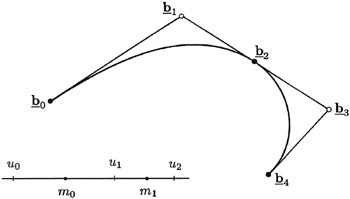 Figure 6.1: Piecewise conics : two conies conics form a smooth composite curve.
 Does this mean that they are C 1? In other words, do both conies conics share the same first derivative at b 2? Recall that the tangent to a curve is a line, whereas the derivative is a point, so it is not obvious that tangent continuity implies derivative...
Copyright A K Peters, Ltd. 1999 under license agreement with Books24x7


 TABLE OF CONTENTS