
Cyanides Inorganic Chemicals and Compounds
Last Updated: April 1, 2025
Description
Cyanides are inorganic compounds that contain the cyano group, CN. These compounds are highly reactive and are used in various industrial processes. They are known for their ability to form complexes with metals, which can vary in stability and toxicity. Cyanides are produced industrially in large quantities, with millions of tons manufactured each year.
Working Principle
Cyanides work by forming complexes with metals, which can be either stable or unstable. This property is particularly useful in processes like ore processing, where cyanides are used to dissolve metals such as gold and silver from ores. The cyanide ions react with the metal ions to form soluble complexes, allowing for the extraction of the metal. The reactivity of cyanides also makes them useful in other chemical processes, where they can be used to synthesize various organic compounds.
Applications
Cyanides are used in a wide range of industrial applications. They are crucial in the production of organic chemicals such as nitrile, nylon, acrylic plastics, and synthetic rubber. In the metal industry, cyanides are employed in electroplating, metal processing, and steel hardening. They are also used in the photographic industry and in the mining sector for the extraction of gold and silver from ores using sodium cyanide solutions.
Advantages over other Inorganic Chemicals and Compounds
One of the main advantages of cyanides over other inorganic chemicals is their ability to form strong complexes with metals, which is essential in metal extraction processes. This property allows for efficient extraction of metals like gold and silver, which might not be possible with other compounds. Additionally, the high reactivity of cyanides makes them versatile in various chemical syntheses.
Limitations
Cyanides have significant limitations due to their toxicity. They can form hydrogen cyanide gas, which is highly toxic, especially at lower pH levels. This requires careful handling and control of pH levels in processes using cyanides to prevent the release of toxic gases. The presence of cyanide in industrial waste also poses environmental and health risks, necessitating proper waste management and detoxification processes.
Considerations
When considering the use of cyanides, it is important to account for the initial costs and operating expenses associated with their use. The cost of sodium cyanide, for example, was $1.75 per kilogram in 2003. The durability and accuracy of cyanide-based processes depend on maintaining specific conditions, such as pH levels, to prevent the formation of toxic byproducts. Replacement and maintenance costs can be significant, especially in systems where cyanide solutions attack equipment, such as pH sensors. Proper monitoring and control systems are essential to ensure safety and compliance with environmental regulations.

from Chemical Strategies, Inc.
Chemical Strategies offers over 3,000 products by Chempax. If you are unable to locate a chemical you need, our sales department can custom source any needed materials for you directly. [See More]
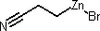
from Rieke Metals, Inc.
2-Cyanoethylzinc bromide. !ORGANOZINC REAGENTS ARE NOW AVAILABLE ON COMMERCIAL SCALE!. Please contact us at sales@riekemetals.com for ordering and bulk pricing. Our products are available in an electronic database in either .db or .sd formats. If you need a Halide converted into an Organozinc... [See More]
- Type: OrganoMetallics
- Chemical Formula: C3H4BrNZn
- Chemical Name: 2-Cyanoethylzinc Bromide
- CAS Number: 312624-26-3

from Poly Scientific
Borax Ferricyanide Solution [See More]
- Chemical Name: Borax Ferricyanide Solution
- State of Matter: Liquids

from GFS Chemicals, Inc.
ITEM#:1982. K3Fe(CN)6. CAS#:13746-66-2. F.W.:329.25. NFPA#: Specific Gravity: 0.000. DOT:NR. Descriptions: Specification. TEST. 1. Assay 97% min. 2. Insoluble 0.05%. 3. Ferro compounds 0.2%. 4. Chloride 0.3%. 5. Sulfate 0.1%. Properties. No properties. [See More]
- Chemical Formula: K3Fe(CN)6
- State of Matter: Powders
- CAS Number: 13746-66-2

from Chemical Strategies, Inc.
Chemical Strategies offers over 3,000 products by JT Baker. If you are unable to locate a chemical you need, our sales department can custom source any needed materials for you directly. [See More]
- State of Matter: Bulk Solids or Granules
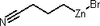
from Rieke Metals, Inc.
3-Cyanopropylzinc bromide. !ORGANOZINC REAGENTS ARE NOW AVAILABLE ON COMMERCIAL SCALE!. Please contact us at sales@riekemetals.com for ordering and bulk pricing. Our products are available in an electronic database in either .db or .sd formats. If you need a Halide converted into an Organozinc... [See More]
- Type: OrganoMetallics
- Chemical Formula: C4H6BrNZn
- Chemical Name: 3-Cyanopropylzinc Bromide
- CAS Number: 135579-85-0
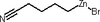
from Rieke Metals, Inc.
4-Cyanobutylzinc bromide. !ORGANOZINC REAGENTS ARE NOW AVAILABLE ON COMMERCIAL SCALE!. Please contact us at sales@riekemetals.com for ordering and bulk pricing. Our products are available in an electronic database in either .db or .sd formats. If you need a Halide converted into an Organozinc... [See More]
- Type: OrganoMetallics
- Chemical Formula: C5H8BrNZn
- Chemical Name: 4-Cyanobutylzinc Bromide
- CAS Number: 226570-68-9

from Rieke Metals, Inc.
6-Cyanohexylzinc bromide. !ORGANOZINC REAGENTS ARE NOW AVAILABLE ON COMMERCIAL SCALE!. Please contact us at sales@riekemetals.com for ordering and bulk pricing. Our products are available in an electronic database in either .db or .sd formats. If you need a Halide converted into an Organozinc... [See More]
- Type: OrganoMetallics
- Chemical Formula: C7H12BrNZn
- Chemical Name: 6-Cyanohexylzinc Bromide
- CAS Number: 312624-28-5