
Sulfides Inorganic Chemicals and Compounds
Last Updated: April 1, 2025
Description
Sulfides are inorganic compounds that consist of sulfur combined with one or more elements. These compounds are known for their ability to form strong bonds with metals, which is a key characteristic that defines their chemical behavior.
Working Principle
Sulfides work by forming strong chemical bonds with metals, which can result in the precipitation of metal sulfides. This property is particularly useful in processes such as wastewater treatment, where sulfides react with metals to form insoluble compounds that can be removed from the water. The strong and fast reaction of sulfides with metals like mercury can lead to the formation of small particles, which are sometimes challenging to filter out .
Applications
Sulfides are used in a variety of applications. For example, they are employed in the production of inorganic pigments, which are used in electroplating, dye and precision casting, and papermaking . Additionally, sulfides like copper sulfide and iron sulfide are handled in large quantities by metals producers, although their semiconducting properties are not always fully utilized .
Advantages over other Inorganic Chemicals and Compounds
One advantage of sulfides over other inorganic compounds is their relatively low toxicity compared to compounds such as tellurium and thallium or lead and sulfur. This makes them safer to handle in certain industrial processes .
Limitations
A significant limitation of inorganic sulfides is their toxicity, which necessitates special handling procedures to ensure safety. Additionally, the rapid reaction of sulfides with metals can create small particles that are difficult to remove through standard clarification and filtration methods .
Considerations
When considering the use of sulfides, it is important to account for the initial costs associated with their handling and the potential need for specialized equipment to manage their toxicity. Operating expenses may also be influenced by the need for additional filtration or clarification processes to effectively remove metal sulfide particles from solutions. Durability and maintenance costs should be evaluated in the context of the specific application and the materials involved.

from Chemical Strategies, Inc.
Chemical Strategies offers over 3,000 products by Chempax. If you are unable to locate a chemical you need, our sales department can custom source any needed materials for you directly. [See More]
from Aremco Products, Inc.
Aremco offers a wide range of high purity metals and ceramics that are applicable to scientists and engineers involved in basic research and applied product development. [See More]
- Type: Other; Transition Metal Compound
- State of Matter: Powders
- Chemical Name: Antimony Sulfide
from Indium Corporation
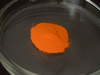
Indium sulfide (In2S3) is an orange-red to red colored powder with the sulfuric odor that is characteristic to all sulfides. It is insoluble in water and most organic solvents but decomposes in common mineral acids, releasing hydrogen sulfide gas. Indium sulfide is primarily used as a buffer layer... [See More]
- Chemical Name: Indium Sulfide
- State of Matter: Powders
- Chemical Formula: In2S3
- Purity: 99.99

from GFS Chemicals, Inc.
ITEM#:5256. Sb2S3. CAS#:1345-04-6. F.W.:339.68. NFPA#: Specific Gravity: DOT: Descriptions: Specification. TEST. 1. Assay (metals basis) 99.98%. Properties. No properties. [See More]
- Chemical Formula: Sb2S3
- State of Matter: Powders
- CAS Number: 1345-04-6

from Chemical Strategies, Inc.
Chemical Strategies offers over 3,000 products by JT Baker. If you are unable to locate a chemical you need, our sales department can custom source any needed materials for you directly. [See More]
- State of Matter: Crystal