
Hollow Stock Ferrous Metals and Iron Alloys
Last Updated: April 1, 2025
Description
Hollow stock ferrous metals and iron alloys are materials characterized by their hollow, tubular structure. These materials are typically used as starting stock or near net shape blanks, which means they are pre-formed into a shape that closely resembles the final product, reducing the need for extensive machining or processing. The hollow nature of these materials allows for reduced weight while maintaining structural integrity.
Working Principle
The hollow structure of these ferrous metals and iron alloys is achieved through various manufacturing processes such as roll forming, extrusion, or casting. This design is particularly useful because it provides a balance between strength and weight, making the materials ideal for applications where weight reduction is crucial without compromising on durability. The hollow design also allows for efficient material usage, reducing waste and cost.
Applications
Hollow stock ferrous metals and iron alloys are used in a variety of specific applications. They serve as components in high-pressure piping systems, where their strength and reduced weight are advantageous. They are also used in the manufacturing of missile housings and reactor or pressure vessel parts, where their structural integrity is critical. Additionally, these materials are employed in the production of gears, bearings, and valve seats, where precision and durability are required.
Advantages over other Ferrous Metals and Iron Alloys
One of the primary advantages of hollow stock ferrous metals and iron alloys is their reduced weight compared to solid counterparts, which can lead to improved efficiency in applications such as aerospace and automotive industries. The hollow design also allows for better heat dissipation, which can be beneficial in high-temperature environments. Furthermore, the near net shape of these materials reduces the need for extensive machining, leading to cost savings in manufacturing.
Limitations
Despite their advantages, hollow stock ferrous metals and iron alloys have limitations. The hollow structure may not be suitable for applications requiring maximum strength and rigidity, as the absence of material in the center can reduce overall strength compared to solid metals. Additionally, the manufacturing processes required to produce hollow stock can be more complex and costly than those for solid materials.
Considerations
When considering the use of hollow stock ferrous metals and iron alloys, it is important to evaluate the initial costs, which may be higher due to the specialized manufacturing processes involved. However, these costs can be offset by the reduced material usage and machining requirements. Operating expenses may also be lower due to the material's efficiency and durability. Maintenance and replacement costs should be considered, as the hollow design may require specific inspection and maintenance procedures to ensure structural integrity over time.

from Eagle Stainless Tube & Fabrication, Inc.
Eagle stocks both Types 304 & 316 alloy tubing in a variety of gauge sizes from 3 STD to 33 STD. 316 is a medical grade tubing that has good strength and corrosion. 316 surgical steel is also used in the manufacture and handling of food and pharmaceutical products where it is often required in... [See More]
- Type: Stainless; T304, T316
- Shape / Form: Semi-finished, Mill Stock or Near Net Shapes; Hollow Stock (Tube, Pipe, Column)
- Specifications & Grades: ASTM / ASME; T304: ASTM –A908
- Width / OD: 0.0080 to 0.2600
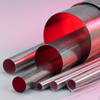
from Eagle Stainless Tube & Fabrication, Inc.
Eagle stocks seamless steel tubing for a variety of applications requiring strength, corrosion resistance and/or heat resistance. It is ordered to specifications that make the products versatile for general use and capable of ready certification to more stringent requirements. Stand seamless tube... [See More]
- Type: Stainless
- Shape / Form: Semi-finished, Mill Stock or Near Net Shapes; Hollow Stock (Tube, Pipe, Column)
- Specifications & Grades: ASTM / ASME; ASTM-A269/A213
- Width / OD: 8

from Eagle Stainless Tube & Fabrication, Inc.
Eagle stocks welded tubing for a variety applications requiring strength, corrosion resistance, and/or heat resistance. Typical welded tube sizes are certified to ASTM-A269 / A249 (average wall) which ensures that the tubing meets the required mechanical property testing such as tensile, yield and... [See More]
- Type: Stainless
- Shape / Form: Semi-finished, Mill Stock or Near Net Shapes; Hollow Stock (Tube, Pipe, Column)
- Specifications & Grades: ASTM / ASME; ASTM-A269/A249
- Width / OD: 8