
Strip Ferrous Metals and Iron Alloys
Last Updated: April 1, 2025
Description
Strip ferrous metals and iron alloys are materials that consist of iron as the base metal, often combined with other elements to enhance certain properties. These strips are typically produced in long, thin, and flat forms, which can be further processed or used in various industrial applications. Stainless steel is one of the most common ferrous metals made into strips, known for its durability and resistance to corrosion.
Working Principle
The working principle of strip ferrous metals and iron alloys involves the manipulation of their magnetic properties and structural characteristics. Ferrous metals are inherently magnetic due to the presence of iron, which allows them to be used in applications requiring magnetic properties. The process of creating strips involves rolling the metal into thin sheets, which can then be cut or shaped as needed. This form factor is particularly useful because it allows for easy handling, transportation, and further processing, such as cutting or welding.
Applications
Strip ferrous metals and iron alloys are used in a wide range of applications. In the construction industry, they are utilized as structural components due to their strength and durability. In the medical field, these strips can be found in devices and tools that require precision and reliability. Additionally, they are used in the aerospace and military sectors for components that demand high performance under stress. Specific examples include the use of stainless steel strips in surgical instruments and the production of magnetic cores for electrical transformers.
Advantages over other Ferrous Metals and Iron Alloys
One of the primary advantages of strip ferrous metals and iron alloys is their versatility. The strip form allows for easy customization and adaptation to various applications, which is not always possible with bulkier forms of metal. Additionally, the magnetic properties of ferrous metals make them ideal for applications that require magnetic separation or lifting, as seen in the use of electromagnets for handling scrap metal . The ability to produce thin, flexible strips also means that these materials can be used in applications where weight and space are critical factors, such as in aerospace engineering.
Limitations
Despite their advantages, strip ferrous metals and iron alloys have limitations. They can be susceptible to corrosion if not properly treated or if exposed to harsh environments, although stainless steel offers some resistance. The magnetic properties, while beneficial in many applications, can also pose challenges in environments where magnetism is undesirable. Additionally, the production of these strips can be energy-intensive, which may impact their overall cost-effectiveness.
Considerations
When considering the use of strip ferrous metals and iron alloys, several factors should be taken into account. Initial costs can vary depending on the type of alloy and the processing required to produce the strips. Operating expenses may include maintenance and replacement costs, particularly if the strips are used in environments that accelerate wear and tear. Durability is generally high, especially for stainless steel, but regular inspections and maintenance are necessary to ensure longevity and performance. Accuracy in dimensions and properties is crucial, particularly in applications requiring precise specifications, which may increase production costs.

from Arnold Magnetic Technologies
Arnold Magnetic Technologies Non Grain Oriented (NGOES) Electrical Steel is optimized by thickness and finish to meet your most demanding needs for high speed, high efficiency motors and high efficiency transformer applications. When optimally applied, NGOES offers reduced eddy currents which... [See More]
- Shape / Form: Semi-finished, Mill Stock or Near Net Shapes; Foil; Strip; Sheet
- Thickness: 0.0040 to 0.0070
- Type: Miscellaneous Ferrous Alloy
- Width / OD: 0.2000 to 17

from High Performance Alloys, Inc.
Nitronic 60 is truly an all purpose metal. This fully austenitic alloy was originally designed as a temperature alloy, and subsequently has good high temperature properties for temperatures around 1800 ºF. The oxidation resistance of Nitronic 60 is similar to Type 309 S.S., and far superior to... [See More]
- Shape / Form: Semi-finished, Mill Stock or Near Net Shapes; Strip; Profile or Structural Shape
- Specifications & Grades: ASTM / ASME; UNS
- Type: Stainless
- Features: Austenitic; Wrought; Corrosion Resistant; Forged; Heat Resistant; Superalloy; Wear Resistant

from Arnold Magnetic Technologies
Arnold ’s Precision Thin Metal business provides many types of high quality stainless steel, rolled to precise tolerances for thinness and flatness. Its excellent corrosion resistance and good workability make stainless steel the obvious choice in numerous applications across many markets. [See More]
- Shape / Form: Semi-finished, Mill Stock or Near Net Shapes; Foil; Strip; Sheet
- Thickness: 8.00E-5 to 0.0100
- Type: Stainless
- Width / OD: 4.25 to 17.5

from Ulbrich Stainless Steels & Special Metals, Inc.
Strip, Coil, Foil & Wire, ASTM F-15. APPLICATIONS. Alloy 29-17 (Kovar ®) has been used for making hermetic seals with the harder Pyrex glasses and ceramic materials. This alloy has found wide use in application where high reliability is a necessity. In power tubes, microwave tubes,... [See More]
- Shape / Form: Semi-finished, Mill Stock or Near Net Shapes; Coil Stock; Foil; Wire; Sheet, Strip, Plate; Wire – Profile, Round, Flat, Square; Plate; Strip; Sheet
- Specifications & Grades: ASTM / ASME; UNS
- Type: Miscellaneous Ferrous Alloy; Controlled / Low Expansion Alloy
- Features: Wrought; Corrosion Resistant; Cold Finished, Rolled or Cold Drawn; Die / Cold Work; Hot Rolled (optional feature)

from Trinity Brand Industries
Stainless - 304 Full Hard. Type 304 stainless steels are variations of 18% chromium and 8% nickel austenitic alloy. They are the most familiar and used alloy in the stainless steel family and represent nearly half of the total U.S. stainless steel production. These alloys are used in a wide variety... [See More]
- Shape / Form: Semi-finished, Mill Stock or Near Net Shapes; Coil Stock; Strip
- Thickness: 0.0310
- Type: Stainless

from United Performance Metals
301-1/4 hard differs from other forms of 301 offered by United Performance Metals in that it has been hard cold rolled to its 1/4 hard condition. This increases the metal's attractiveness for mild drawing, stretching and forming operations. At 1/4 hard, type 301 stainless steel has a tensile... [See More]
- Shape / Form: Semi-finished, Mill Stock or Near Net Shapes; Plate; Strip; Sheet
- Specifications & Grades: AMS; UNS
- Type: Stainless
- Thickness: 0.0150 to 0.1300

from Raymond Machinery Co., Ltd.
Material: Carbon Steel; Alloy Steel; Stainless Steel; Manganese Steel; Tool Steel; Heat Resistant Steel;. Gray Iron; Ductile Iron; High chrome cast iron; White Iron; Malleable Cast Iron. Cast Process: Precision Casting; Silica sol Casting; Lost Foam Casting;. Sand Casting; Compound Foundry Process;... [See More]
- Shape / Form: Fabricated Parts or Shapes (Castings, Forgings, Machined Parts, etc.); Strip
- Features: Austenitic; Continuous, Centrifugal or Other Casting Process; Powder Metal Parts or Stock; Wrought; Coated / Painted; Cold Finished, Rolled or Cold Drawn; Duplex; Ductile Iron (Nodular); White Iron; Gray Iron; Vacuum Arc Melted / Remelted (VAR); Extruded; Forged; L / ELI; Oil; Water
- Type: AlloySteel; CarbonSteel; CastSteel; CastIron; Stainless; ToolSteel
- Processing, Temper & Finish: Galvanized; Ground / Machined; Hardened / Heat Treated; Polished; Normalizing; Tempering, Q+T; Quenching; Carburizing; Nitriding
from Trinity Brand Industries
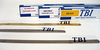
Steel - HI Carbon 1095 RC 48/52. 1/2" X 12" Strips. Decimal - 0.0005 Thru 0.035. Feeler gage 12" strips and Thickness gage 25 ft coils are used in a variety of industries including aerospace, automotive and electronics as a close tolerance shim or to more accurately measure the spacing and clearance... [See More]
- Shape / Form: Semi-finished, Mill Stock or Near Net Shapes; Strip
- Thickness: 1.00E-3
- Type: CarbonSteel

from United Performance Metals
301-1/2 hard differs from other forms of 301 offered by United Performance Metals in that it has been hard cold rolled to its 1/2 hard condition. This makes it ideal for applications requiring both formability and tensile strength of 150,000 PSI and yield strength of 110,000 PSI. Common Applications... [See More]
- Shape / Form: Semi-finished, Mill Stock or Near Net Shapes; Plate; Strip; Sheet
- Specifications & Grades: AMS; UNS
- Type: Stainless
- Thickness: 0.0090 to 0.1300

from Trinity Brand Industries
17-4 Precipitation Hardening Alloy (S17400), Type 630, is a chromium-nickel-copper precipitation hardening stainless steel used for applications requiring high strength and moderate level of corrosion resistance. High strength is maintained to approximately 600 ºF (316 ºC). The corrosion... [See More]
- Shape / Form: Semi-finished, Mill Stock or Near Net Shapes; Strip
- Thickness: 0.0100
- Type: Stainless

from United Performance Metals
Type 410 stainless steel is a general purpose hardenable stainless steel. Its strength, good ductility and resistance to corrosion in mild atmospheres, steam and mild chemical environments make it well suited for highly stressed parts. Common Applications of 410 Stainless Steel. Automotive exhausts,... [See More]
- Shape / Form: Semi-finished, Mill Stock or Near Net Shapes; Plate; Strip; Sheet
- Specifications & Grades: AMS; UNS
- Type: Stainless
- Thickness: 0.0180 to 0.3000

from United Performance Metals
321 stainless steel is most similar to 304 stainless steel, however it contains the addition of Titanium making it an excellent choice for prolonged high temperature applications. The addition of Titanium stabilizes this grade of stainless steel against the formation of Chromium Carbide in heat... [See More]
- Shape / Form: Semi-finished, Mill Stock or Near Net Shapes; Plate; Strip; Sheet
- Specifications & Grades: AMS; UNS
- Type: Stainless
- Thickness: 0.0080 to 0.2400

from United Performance Metals
347 stainless steel has a high resistance to prolonged heat and corrosion making it well suited for engine, power generation, welded fabrications and other high heat applications. 347 stainless steel offers good mechanical properties with higher creep and stress rupture characteristics than other... [See More]
- Shape / Form: Semi-finished, Mill Stock or Near Net Shapes; Plate; Strip; Sheet
- Specifications & Grades: AMS; UNS
- Type: Stainless
- Thickness: 0.0180 to 0.1300

from United Performance Metals
304 stainless steel has a high resistance to corrosion and lends itself to many types of fabrication, making it one of the most widely used forms of stainless steel used today. [See More]
- Shape / Form: Semi-finished, Mill Stock or Near Net Shapes; Foil; Plate; Strip; Sheet
- Specifications & Grades: AMS; UNS
- Type: Stainless
- Thickness: 0.0080 to 0.3000
from United Performance Metals
316/316L stainless steel has a high resistance to many chemical corrodents and marine atmospheres. 316/316L stainless steels are more resistant to general corrosion and pitting/crevices than conventional austenitic stainless steels. 316/316L stainless steels also offer higher creep,... [See More]
- Shape / Form: Semi-finished, Mill Stock or Near Net Shapes; Plate; Strip; Sheet
- Specifications & Grades: AMS; UNS
- Type: Stainless
- Thickness: 0.0100 to 0.1300

from United Performance Metals
Type A-286 is an iron-based super alloy useful for applications requiring high strength and corrosion resistance up to 1300 degrees Fahrenheit and for lower stress applications at higher temperatures. A-286 can be hardened to a strength level. The alloy is also useful for low temperature... [See More]
- Shape / Form: Semi-finished, Mill Stock or Near Net Shapes; Plate; Strip; Sheet
- Specifications & Grades: AMS; UNS
- Type: Stainless
- Thickness: 0.0200 to 0.0830

from United Performance Metals
17-7 stainless steel develops its strength and hardness through heat treating. This makes it well suited for applications that require good formability, high strength/hardness and minimum distortion upon heat treating. Common Applications of 17-7 Stainless Steel. Aerospace applications. Chemical... [See More]
- Shape / Form: Semi-finished, Mill Stock or Near Net Shapes; Strip; Sheet
- Specifications & Grades: AMS; UNS
- Type: Stainless
- Thickness: 0.0180 to 0.2400

from United Performance Metals
17-4 stainless steel develops its strength and hardness through heat treating. This makes it well suited to applications that require ease of fabrication and then the addition of strength/hardness for improved reliability. 17-4 stainless steels provide an outstanding combination of high strength and... [See More]
- Shape / Form: Semi-finished, Mill Stock or Near Net Shapes; Bar Stock; Wire; Plate; Strip; Sheet
- Specifications & Grades: AMS; UNS
- Type: Stainless
- Thickness: 0.0290 to 0.3000