
Pressure Vessel (PVQ) Ferrous Metals and Iron Alloys
Last Updated: April 1, 2025
Description
Pressure Vessel Quality (PVQ) ferrous metals and iron alloys are specialized materials designed to withstand high pressure and temperature conditions. These materials are engineered to maintain structural integrity under stress, making them ideal for use in environments where safety and durability are critical.
Working Principle
Pressure vessels operate by containing gases or liquids at a pressure substantially different from the ambient pressure. The materials used, such as carbon steel and stainless steel, are selected for their ability to distribute pressure evenly across the vessel's surface, ensuring that the vessel can withstand internal forces without deforming or failing. This uniform pressure distribution is crucial for maintaining the vessel's integrity and preventing leaks or ruptures.
Applications
Pressure vessels are used in a variety of industries. In the private sector, they serve as hot water storage tanks and compressed air receivers. Industrial applications include their use as diving cylinders, distillation towers, recompression chambers, and pressure reactors. In the oil and petrochemical industries, pressure vessels are essential for processes that require the storage and handling of volatile substances under high pressure.
Advantages over other Ferrous Metals and Iron Alloys
PVQ ferrous metals and iron alloys offer superior tensile strength and structural integrity compared to other materials. For example, stainless steel is known for its high corrosion resistance, making it suitable for environments where exposure to corrosive substances is a concern. Carbon steel, on the other hand, can withstand very high temperatures without sustaining damage, making it ideal for high-temperature applications.
Limitations
One limitation of using PVQ ferrous metals and iron alloys is their susceptibility to corrosion if not properly maintained, especially in environments with high moisture or chemical exposure. Additionally, these materials can be more expensive than other options, which may impact the overall cost of a project.
Considerations
When selecting materials for pressure vessels, it is important to consider initial costs, as PVQ ferrous metals and iron alloys can be more expensive upfront. However, their durability and resistance to high pressure and temperature can lead to lower operating expenses over time. Maintenance and replacement costs should also be considered, as regular inspections and treatments may be necessary to prevent corrosion and ensure the vessel's longevity.

from High Performance Alloys, Inc.
NITRONIC 50 Stainless Steel provides a combination of corrosion resistance and strength not found in any other commercial material available in its price range. This austenitic stainless has corrosion resistance greater than that provided by Types 316 and 316L, plus approximately twice the yield... [See More]
- Applications: Aerospace or Aircraft Quality; Chemical or material processing; Marine; Nuclear; Oil & Gas Wells; Pressure Vessel (PVQ); Wear resistant parts or tooling
- Specifications & Grades: AMS; ASTM / ASME; UNS
- Type: Stainless
- Shape / Form: Semi-finished, Mill Stock or Near Net Shapes; Bar Stock; Hex; Profile or Structural Shape; Round Bar or Rod Stock

from High Performance Alloys, Inc.
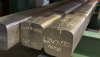
Nitronic 60 is truly an all purpose metal. This fully austenitic alloy was originally designed as a temperature alloy, and subsequently has good high temperature properties for temperatures around 1800 ºF. The oxidation resistance of Nitronic 60 is similar to Type 309 S.S., and far superior to... [See More]
- Applications: Abrasion Resistant; Aerospace or Aircraft Quality; Automotive or Vehicular; Bearings or Bearing Quality; Biomaterial; Chemical or material processing; Marine; Pressure Vessel (PVQ); Resistance Alloy / Heating; Wear resistant parts or tooling
- Specifications & Grades: AMS; ASTM / ASME; UNS
- Type: Stainless
- Shape / Form: Semi-finished, Mill Stock or Near Net Shapes; Squares; Bar Stock; Flats / Rectangular Bar; Profile or Structural Shape; Round Bar or Rod Stock
from High Performance Alloys, Inc.
Alloy 2507, also known as UNS S32750, is a super-duplex stainless steel alloy that offers exceptional corrosion resistance and high mechanical strength. This alloy's excellent mechanical properties, including high tensile and yield strength, make it well-suited for applications in demanding... [See More]
- Applications: Chemical or material processing; Marine; Oil & Gas Wells; Pressure Vessel (PVQ); Resistance Alloy / Heating
- Specifications & Grades: ASTM / ASME; UNS
- Type: Stainless
- Shape / Form: Semi-finished, Mill Stock or Near Net Shapes; Profile or Structural Shape; Round Bar or Rod Stock
from Qnnect, formerly Hermetic Solutions Group
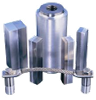
Materials may exhibit good corrosive resistance, electrical conductivity, or thermal conductivity, yet lack in the areas of strength, hardness, weld-ability, or wear resistance characteristics required in the final design. Qnnect, formerly Hermetic Solutions Group has helped customers to achieve the... [See More]
- Applications: Bearings or Bearing Quality; Electronics or semiconductors; Marine; Nuclear; Pressure Vessel (PVQ); Wear resistant parts or tooling
- Shape / Form: Fabricated Parts or Shapes (Castings, Forgings, Machined Parts, etc.); Billet / Bloom
- Type: CladBimetal
- Features: Corrosion Resistant

from Ulbrich Stainless Steels & Special Metals, Inc.
Strip, Coil, Foil, Wire, ASTM A240. APPLICATIONS. Pulp and paper industry, caustic solutions, organic acids, food industry, pressure vessels. DESCRIPTION. Duplex Alloy 2304 is a two-phase, ferritic, austenitic 23% chromium, 4% nickel, molybdenum-free duplex stainless steel. It has similar corrosion... [See More]
- Applications: Chemical or material processing; Pressure Vessel (PVQ); Pulp and Paper Industry, Caustic Solutions, Organic Acids, Food Industry, Pressure Vessels
- Specifications & Grades: ASTM / ASME; UNS
- Type: Stainless
- Shape / Form: Semi-finished, Mill Stock or Near Net Shapes; Coil Stock; Foil; Wire; Coil - Strip, Foil, Ribbon; Wire - Profile, Round, Flat, Square; Strip

from United Performance Metals
Type 302 stainless steel is an extremely tough, ductile grade that demonstrates superior corrosion resistance to type 301 stainless steel. It is a non-magnetic grade that is not hardenable by heat treating. It is generally used in the annealed condition and is noted for its ease of fabrication and... [See More]
- Applications: Pressure Vessel (PVQ)
- Specifications & Grades: AMS; UNS
- Type: Stainless
- Shape / Form: Semi-finished, Mill Stock or Near Net Shapes; Plate; Strip; Sheet

from Universal Wire Works Inc.
Universal 90SB-3 and 90SB-3L are 2 1/4 chromium 1 molybdenum alloys for welding on steel of similar composition. These alloys are designed for joints in process piping steam piping systems, boilers or pressure vessels. The 90SB-3L is the same as the 90SB-3 with the exception of the carbon content... [See More]
- Applications: Pressure Vessel (PVQ); Joints In Piping And Boilers
- Specifications & Grades: AWS
- Type: AlloySteel
- Shape / Form: Wire

from Qnnect, formerly Hermetic Solutions Group
Design engineers are often faced with the dilemma of material selection, and frequently, they find that a combination of materials provides the optimal properties required by the design. Qnnect, formerly Hermetic Solutions Group ’s explosively bonded metals can join otherwise incompatible... [See More]
- Applications: Bearings or Bearing Quality; Electronics or semiconductors; Marine; Nuclear; Pressure Vessel (PVQ); Wear resistant parts or tooling
- Shape / Form: Fabricated Parts or Shapes (Castings, Forgings, Machined Parts, etc.); Billet / Bloom
- Type: CladBimetal
- Features: Corrosion Resistant