
Leveling fixture Weather Instruments
Last Updated: April 1, 2025
Description
Leveling fixture weather instruments are specialized tools designed to ensure that weather measurement devices, such as rain gauges, are perfectly level. This is crucial for the accurate operation of these instruments, as even slight deviations from level can lead to incorrect data collection.
Working Principle
The working principle of leveling fixture weather instruments involves providing a stable and level platform for weather measurement devices. For example, tipping bucket rain gauges incorporate a small level to ensure they are perfectly horizontal. This is essential because the accuracy of the measurements depends on the device being level. By maintaining a level position, these fixtures help in obtaining precise and reliable weather data, which is critical for accurate weather forecasting and analysis.
Applications
Leveling fixture weather instruments are primarily used in weather stations where precise data collection is necessary. A specific example includes their use in mounting tipping bucket rain gauges, which are sensitive to being out of level due to wind or other environmental factors. By ensuring these instruments remain level, the fixtures help in maintaining the integrity of the data collected, which is vital for meteorological studies and weather prediction models.
Limitations
One limitation of leveling fixture weather instruments is their susceptibility to environmental disturbances, such as strong winds, which can potentially knock them out of level. This necessitates robust mounting solutions to ensure they remain stable and accurate over time.
Considerations
When considering leveling fixture weather instruments, it is important to evaluate factors such as initial costs, operating expenses, and durability. The initial cost may vary depending on the complexity and material of the fixture. Operating expenses are generally low, but regular maintenance is required to ensure accuracy and longevity. Durability is a key consideration, as these instruments must withstand various weather conditions. Additionally, the accuracy of the leveling mechanism is crucial for reliable data collection, and replacement or maintenance costs should be factored into the overall investment.
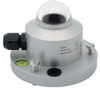
from Campbell Scientific, Inc.
This ISO-second-class pyranometer measures solar radiation with a high-quality blackened thermopile protected by a dome. The blackened thermopile provides a flat spectral response for the full solar spectrum range, which allows the LP02 to be used under plant canopies or lamps, when the sky is... [See More]
- Device Classification: Sensor Only
- Wavelength Range Measured: 305 to 2800
- Weather Component Sensed: Measures solar Radiation
- Min. Wavelength Sensitivity: 15

from RainWise, Inc.
The RainWise Pyranometer is designed for measurements in solar, agricultural, meteorological and hydrological studies. The sensor features a PIN silicon photo diode mounted in a fully cosine corrected miniature head. Product Features. The sensor output is integrated over the wavelength interval of... [See More]
- Device Classification: Sensor Only
- Wavelength Range Measured: 400 to 1200
- Weather Component Sensed: Measures solar Radiation
- Wavelength Accuracy: 3
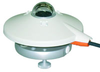
from Campbell Scientific, Inc.
This ISO-second-class pyranometer measures solar radiation with a high-quality blackened thermopile protected by a dome. The blackened thermopile provides a flat spectral response for the full solar-spectrum range, which allows the CMP3 to be used under plant canopies or lamps, when the sky is... [See More]
- Device Classification: Sensor Only
- Wavelength Range Measured: 310 to 2800
- Weather Component Sensed: Measures solar Radiation
- Min. Wavelength Sensitivity: 5
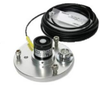
from RainWise, Inc.
Solar Radiation Luminosity Sensor. The RainWise Luminosity Sensor is a photometric sensor designed for measurements of lighting conditions when the eye is the primary receiver. Applications include measurement of light in work areas, and from television screens. Product Features. The sensor uses a... [See More]
- Device Classification: Sensor Only
- Wavelength Range Measured: 400 to 700
- Weather Component Sensed: Measures solar Radiation
- Wavelength Accuracy: 5
from Campbell Scientific, Inc.
The NR-LITE is a rugged net radiometer manufactured by Kipp & Zonen. Net radiometers measure the energy balance between incoming short-wave and long-wave IR radiation relative to surface reflected short-wave and outgoing long-wave IR radiation. This net radiometer includes two black conical... [See More]
- Device Classification: Sensor Only
- Wavelength Range Measured: 0.0 to 100000
- Weather Component Sensed: Measures solar Radiation
- Min. Wavelength Sensitivity: 10
from RainWise, Inc.
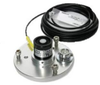
Solar Radiation Sensor-Quantum PAR. The RainWise Quantum Solar Sensor is designed for measurements in solar, agricultural, meteorological, ecological and other environmental fields. It measures photosynthetically active radiation (PAR). Accurate measurements in the range of 400 to 700 nm are... [See More]
- Device Classification: Sensor Only
- Wavelength Range Measured: 400 to 700
- Weather Component Sensed: Measures solar Radiation
- Wavelength Accuracy: 5