
Programmable Weather Instruments
Last Updated: April 1, 2025
Description
Programmable weather instruments are devices designed to measure various atmospheric conditions such as temperature, relative humidity, atmospheric pressure, wind speed, and rainfall. These instruments are equipped with sensors that collect data, which can be stored and analyzed for various purposes. They are often part of automated weather stations (AWS) and can include additional sensors for solar flux, UV index, air quality, and lightning detection.
Working Principle
Programmable weather instruments operate by utilizing a variety of sensors to capture environmental data. For instance, temperature is measured using thermocouples, resistance temperature detectors (RTDs), or thermistors, which convert temperature changes into electrical signals. Humidity sensors may use capacitive, chilled mirror, or electrolytic technologies to determine moisture levels. The collected data is often stored in external EEPROMs or similar storage devices for later retrieval and analysis. These instruments are useful because they provide accurate and continuous monitoring of weather conditions, which is essential for weather forecasting and climate studies.
Applications
Programmable weather instruments are used in a wide range of applications. For example, they are crucial in meteorological stations for weather forecasting and climate research. They are also used in agriculture to monitor conditions that affect crop growth, such as temperature and humidity. In aviation, these instruments provide critical data for flight safety by monitoring weather conditions at airports. Additionally, they are used in environmental monitoring to assess air quality and detect changes in atmospheric conditions.
Limitations
One limitation of programmable weather instruments is their dependency on the accuracy and calibration of sensors. Variations in sensor quality can lead to discrepancies in data, which can affect the reliability of weather predictions. Additionally, these instruments may require regular maintenance and calibration to ensure accurate readings. Environmental factors such as extreme weather conditions can also impact the durability and functionality of the sensors.
Considerations
When considering programmable weather instruments, it is important to evaluate initial costs, which can vary depending on the complexity and number of sensors included. Operating expenses may include power consumption and data storage costs. Durability is a key factor, as instruments exposed to harsh weather conditions need to be robust and weather-resistant. Accuracy is paramount, so regular calibration and maintenance are necessary to ensure reliable data. Replacement and maintenance costs should also be considered, as sensors may need to be replaced periodically to maintain performance.
from RainWise, Inc.
The HM-1 HAZMAT weather station is designed for first responders to hazardous material incidents. The weather station provides important real-time information for monitoring and responding to incidents. The station works in conjunction with CAMEO/ALOHA software that enables responders to monitor... [See More]
- Device Classification: Sensor System
- Velocity Range Measured: 0.0 to 150
- Weather Component Sensed: Senses Wind Speed; Senses Wind Direction; Measures Temperature; Measures Barometric Pressure; Measures % Relative Humidity; Measures Dew Point
- Resolution of Velocity: 1
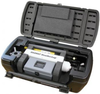
from KANOMAX USA, INC.
Optional windows ® software, lightweight and robust [See More]
- Device Classification: Sensor System
- Pressure Range Measured: 0.0 to 2000
- Weather Component Sensed: Measures Barometric Pressure
- Output Options: Outputs an analog voltage signal
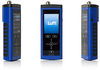
from LufftUSA
Description: The most precice and flexible all-rounder instrument for professional applications-easy to handle and robust. Allows various intelligent sensors to be connected with automatic recognition, saves measuring campaignes, allows all climate data to be calculated and archieved on a computer... [See More]
- Device Classification: Sensor System
- Pressure Range Measured: 800 to 1100
- Weather Component Sensed: Measures Temperature; Measures Barometric Pressure; Measures % Relative Humidity
- Pressure Accuracy: 0.5000 to 0.6000
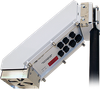
from Campbell Scientific, Inc.
The CS110 is used for lightning warning applications and in research applications for measuring the local electric field. It measures the vertical component of the atmospheric electric field at the earth's surface. The CS110 sensor is typically part of a larger electric-field system. It includes an... [See More]
- Device Classification: Sensor Only
- Weight: 9
- Height: 17
- Mounting Type: Pole-mounted (Typically via clamps)

from Load Systems International
Two way radio technology, user settable wind speed limit [See More]
- Device Classification: Sensor Only
- Velocity Range Measured: 4 to 100
- Weather Component Sensed: Senses Wind Speed
- Accuracy of Velocity: 3

from StellarNet, Inc.
StellarNet Dual-DSR spectrometer systems combine two instruments to cover the ultra violet, visible and near infrared portions of the electromagnetic spectrum. The two instruments work as one creating a unified spectral graph over the entire wavelength region, 200-2300nm. The two instruments employ... [See More]
- Device Classification: Sensor System
- Wavelength Range Measured: 200 to 1700
- Weather Component Sensed: Measures solar Radiation
- Solar Detector Instrument Type: Radiometer

from Setra Systems
Has the same functionality as the Model 370, but does not include the LCD display or numeric keypad. Used as the barometric standard in Automated Surface Observation Systems (worldwide) where accuracy, stability and versatility are essential. Features: +/-0.02% Full Scaleb Accuracy. Bidirectional... [See More]
- Device Classification: Sensor Only
- Pressure Range Measured: 600 to 1100
- Weather Component Sensed: Measures Barometric Pressure
- Pressure Instrument Type: Capacitive

from RainWise, Inc.
MK-III Weather Station with Integrated Rain Gauge. The MK-III sensor assembly has been designed to offer improved durability and serviceability. This sleek new design is 33 inches high and weighs just over 7 pounds. It is the most accurate, durable and easiest to install weather station available. [See More]
- Device Classification: Sensor System
- Velocity Range Measured: 0.0 to 150
- Weather Component Sensed: Senses Wind Speed; Senses Wind Direction; Measures Temperature; Measures Barometric Pressure; Measures % Relative Humidity; Measures Dew Point
- Resolution of Velocity: 1

from Campbell Scientific, Inc.
The DOT600 Roadbed Water-Content Meter is used in construction applications to measure volumetric and gravimetric water content of samples of earthen material in roadbeds and foundations. Portability, along with quick and accurate measurements, make the DOT600 a valuable tool for evaluating roadbed... [See More]
- Device Classification: Sensor System
- Humidity Accuracy: 2
- Weather Component Sensed: Measures %Water or %Moisture Content
- Height: 22

from StellarNet, Inc.
The newly released StellarNet BLUE-Wave Spectrometers are fiber optic coupled instruments with a wide selection of models for  measurements in 190-1150nm wavelength ranges. Each unit contains a USB interface with a snap shot memory to provide instantaneous spectral image from the highly... [See More]
- Device Classification: Sensor System
- Wavelength Range Measured: 350 to 1150
- Weather Component Sensed: Measures solar Radiation; Measures Temperature; Measures Barometric Pressure
- Solar Detector Instrument Type: Radiometer