
Vented Caps, Grips, and Closures
Description
Vented caps, grips, and closures are designed to provide a secure seal while allowing for the controlled release of pressure or gases. These components are essential in maintaining the integrity of the container's contents by preventing leaks and contamination while ensuring that pressure does not build up to dangerous levels.
Working Principle
Vented caps work by incorporating a venting mechanism that allows gases or vapors to escape from the container while preventing external contaminants from entering. This is typically achieved through a small opening or a specialized membrane that permits gas exchange but blocks liquids and solids. The venting feature is crucial for applications where pressure changes occur, such as in chemical reactions or temperature fluctuations, as it helps to maintain a stable internal environment and prevent container rupture.
Applications
Vented caps are commonly used in industries where pressure build-up is a concern. For example, in the chemical industry, they are used on containers holding volatile substances to prevent pressure accumulation. In the food and beverage industry, vented caps are employed on bottles of carbonated drinks to allow excess carbon dioxide to escape, maintaining the drink's quality and safety. Additionally, they are used in pharmaceutical packaging to ensure the stability of sensitive compounds by allowing gas exchange without compromising sterility.
Advantages over other Caps, Grips, and Closures
Vented caps offer significant advantages over non-vented alternatives by providing a means to manage internal pressure effectively. This capability reduces the risk of container failure due to pressure build-up, which is a common issue with standard caps. For instance, in applications involving temperature changes, vented caps can prevent the deformation or bursting of containers, which is a risk with non-vented caps.
Limitations
One limitation of vented caps is that they may not be suitable for all types of liquids, especially those that can evaporate or degrade when exposed to air. The venting mechanism, while effective for gases, might not provide a complete barrier against liquid leakage if the container is tipped or inverted. Additionally, the venting feature can sometimes be a point of failure if not properly maintained or if the vent becomes clogged.
Considerations
When selecting vented caps, it is important to consider the initial cost and the specific requirements of the application. Vented caps may have a higher initial cost compared to standard caps due to their specialized design. Operating expenses can also be influenced by the need for regular maintenance to ensure the venting mechanism remains functional. Durability is another factor, as the materials used must withstand the chemical and physical conditions of the application. Replacement and maintenance costs should be factored into the overall cost of ownership, as the venting components may require periodic inspection and replacement to maintain performance.
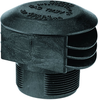
from U.S. Plastic Corporation
Made of glass reinforced polypropylene, these Vents Caps prevent swirl in the bottom of your tank. Vent Caps have male NPT. Bore size: 2". Bore area: 3.1 sq. in. Vent area: 3.9 sq. in. [See More]
- Features: Vented

from diaago
CELLTREAT's Large Erlenmeyer and Fernbach Flasks (Polycarbonate) are designed for mammalian suspension culture applications as well as bacterial and yeast culture. Features. Packaged sterile in individual bags for easy storage and handling. 70mm opening for easy filling and dispensing. Over-sized... [See More]
- Features: Vented

from Daemar Inc.
The Vent-A-Cap Series consists of several styles of caps used to protect the ends of tubing connectors and instrument tips. Vented for air release and easy removal, these products are commonly used in the medical industry. The venting also allows for air flow during ETO gas sterilization and assures... [See More]
- Features: Vented
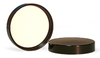
from SKS Science Products
The smooth black phenolic PV lined caps are offered in a variety of sizes. Match the cap code of the container with the cap code of the closure for proper fit. The PV liner is a polyvinyl film adhered to a white pulp paper backing. It makes an ideal liner for chemical resistance against mild acids,... [See More]
- Features: Vented
- Material: Phenolic
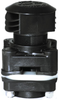
from U.S. Plastic Corporation
Made of glass reinforced polypropylene, these Vents Caps prevent swirl in the bottom of your tank. Vent Caps have male NPT and come with a 304 stainless steel screen. Bore size: 2". Bore area: 3.1 square feet. Vent area: 3.9 square inch. [See More]
- Features: Vented

from diaago
Flask Caps from CELLTREAT, can be used as replacements for Tissue Culture Flasks, or just to change the top of flasks to something that would better with your experiments. Features. Vent caps feature 0.22 µm hydrophobic membrane [See More]
- Features: Vented
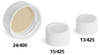
from SKS Science Products
These white polypropylene screw caps have bonded Teflon-faced silicone liners, making them ideal for storage and containment of volatile solvents, sensitive compounds and corrosive chemicals. The liners consist of 0.055 " of Silicone and 0.005 " of Teflon. They are available in convenient... [See More]
- Shape / Application: Screw Cap or Plug
- Material: Polypropylene (PP)
- Features: Vented
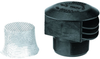
from U.S. Plastic Corporation
Made of glass reinforced polypropylene, these Vents Caps prevent swirl in the bottom of your tank. Vent Caps have male NPT and come with a 304 stainless steel screen. Bore size: 3". Bore area: 7 sq. in. Vent area: 9 sq. in. [See More]
- Features: Vented
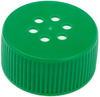
from diaago
This Vented Roller Bottle Cap from CELLTREAT's is a good alternative to the default Non-Vented Cap. They are manufactured from medical grade virgin polystyrene. Features. CAP ONLY. Large knurled cap for easy grip. Easy-to-read black printed graduations. Packaged sterile in individual bags. Fits all... [See More]
- Features: Vented
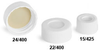
from SKS Science Products
These polypropylene open-top screw caps have a bonded Teflon-faced silicone liner, making them ideal for storage and retrieval of volatile solvents, sensitive compounds and corrosive chemicals. The liners consist of 0.055 " of Silicone and 0.005 " of Teflon. They are available in... [See More]
- Shape / Application: Screw Cap or Plug
- Material: Polypropylene (PP)
- Features: Vented
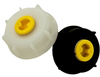
from U.S. Plastic Corporation
Caps are natural in color. Available in 51mm and 61mm. Made of High density polyethylene with a PVC membrane. [See More]
- Features: Vented
- Material: Vinyl
from U.S. Plastic Corporation
High density polyethylene tanks are suitable in following applications: windshield washer tanks, coolant recovery tanks, hydrostatic tanks, oil tanks, overflow bottles, soap tanks, solvent tanks, and hydraulic tanks. Caps sold separately. Some models are available with rugged mounting tab with slots... [See More]
- Features: Vented
from U.S. Plastic Corporation
High density polyethylene tanks are suitable in following applications: windshield washer tanks, coolant recovery tanks, hydrostatic tanks, oil tanks, overflow bottles, soap tanks, solvent tanks, and hydraulic tanks. Caps sold separately. Some models are available with rugged mounting tab with slots... [See More]
- Features: Vented
from U.S. Plastic Corporation
Dimensions: 2-3/4"Diameter x 2-5/8" Height [See More]
- Features: Vented