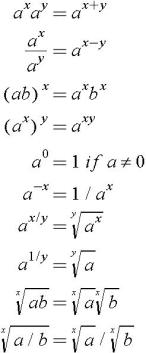
McGraw-Hill's Engineering Companion

Commutative law:
Associative law:
Distributive law:
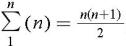
The sum of the first n numbers:
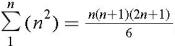
The sum of the squares of the first n numbers:
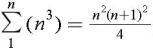
The sum of the cubes of the first n numbers:
Arithmetic Progression
where
| a | = | first term |
| d | = | common difference |
| n | = | number of terms |
| S | = | sum of n terms |
| l | = | last term |
| l | = | a + ( n ? 1) d |
| S | = | ( n/2)( a + l) |
| ( a + b)/2 | = | arithmetic mean of a and b |
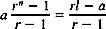
Geometric Progression
where
| a | = | first term |
| r | = | common ratio |
| n | = | number of terms |
| S | = | sum of n terms |
| l | = | last term |
| l | = | ar n ?1 |
| S | = | |
| S | = | |
| | = | geometric mean of a and b |
where m ! = 1 2 3 ( m ? 1) m
The series is finite if n is a positive integer. If n is negative or fractional, the series is infinite and will converge for b < a only.
The numerical or absolute value of a number n is denoted by n and represents the magnitude of the number without regard to algebraic sign. For example, ?3 = +3...