
Alarms Ovens (industrial)
Description
Alarms ovens in an industrial setting are equipped with audible tones that signal when the oven has reached operational conditions requiring operator attention. These alarms are crucial for ensuring that the oven is functioning correctly and safely, alerting personnel to any issues that may arise during operation.
Working Principle
The working principle of alarms in industrial ovens involves the integration of sensors and control systems that monitor various parameters such as temperature, pressure, and time. When these parameters deviate from the set thresholds, the alarm system is triggered, producing an audible signal. This system is useful because it enhances safety by preventing potential hazards and ensures the quality of the process by alerting operators to take corrective actions promptly.
Applications
Industrial ovens with alarm systems are used in various applications across different industries. For example, in the chemical processing industry, alarms can alert operators to temperature deviations during the curing process. In semiconductor manufacturing, alarms ensure that precise temperature conditions are maintained during annealing processes. These applications highlight the critical role of alarms in maintaining process integrity and safety.
Advantages over other Ovens (industrial)
One significant advantage of industrial ovens with alarms over those without is the enhanced safety and process control they provide. Alarms help prevent accidents by alerting operators to potential issues before they escalate. This feature is particularly beneficial in environments where precise temperature control is crucial, such as in the production of sensitive electronic components or in chemical processing.
Limitations
A limitation of industrial ovens with alarms is that the alarms can sometimes be too similar to those used on other machines, leading to confusion or alarm fatigue among operators. If the alarms are not distinct or are too frequent, they may be ignored, reducing their effectiveness in ensuring safety and process control.
Considerations
When considering the purchase and operation of industrial ovens with alarms, several factors should be taken into account. Initial costs may be higher due to the integration of advanced alarm systems and sensors. Operating expenses can also increase if the alarms require regular maintenance or calibration to ensure accuracy. Durability and accuracy of the alarm system are crucial for long-term reliability, and replacement and maintenance costs should be factored into the overall cost of ownership. Regular maintenance, including checking sensors and controls, is essential to ensure the alarm system functions correctly and continues to provide the intended safety benefits.
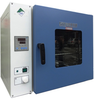
from Haida International Equipment Co., Ltd.
Aging Oven are used to dry for shoes, bake and preheat various materials or specimen. By means of hot air circulation method to uniform the temperature distribution. 1.Multiple centrifugal fan with air circulation system for uniform temperature distribution. 2.Intelligent temperature control system... [See More]
- Features: Alarms
- Application: Aging
- Temperature Range: 482
- External: Bench / Cabinet
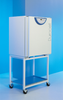
from BMT USA, LLC
The Durocell comes equipped with a highly resistant coating of EPOLON that protects the inner stainless steel chamber and surfaces from aggressive agents such as acids and solvents. The ovens are ideal for basic hydrolysis, extraction through incombustible substances, and decomposition of substances... [See More]
- Features: Shelves, Racks or Carts; Timer; Alarms
- Capacity: 3.9
- Temperature Range: 41 to 572
- Application: Sterilizing

from Despatch - ITW EAE
Meets your testing requirements. The Qmax High Performance Benchtop oven is specifically designed to meet the frequent air changes and tight temperature uniformity required of the ASTM 5423 Type I & Type II oven specification. A high-volume fan circulates air through perforated, stainless steel... [See More]
- Features: Shelves, Racks or Carts; Alarms; Data Logger or Recorder
- Capacity: 4.2
- Temperature Range: ? to 649
- Application: Aging; Curing; Drying; Testing, Sterilizing
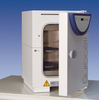
from BMT USA, LLC
The Durocell comes equipped with a highly resistant coating of EPOLON that protects the inner stainless steel chamber and surfaces from aggressive agents such as acids and solvents. The ovens are ideal for basic hydrolysis, extraction through incombustible substances, and decomposition of substances... [See More]
- Features: Shelves, Racks or Carts; Timer; Alarms
- Capacity: 0.8
- Temperature Range: 41 to 572
- Application: Sterilizing

from Despatch - ITW EAE
PCO2-14 ™ Polyimide Curing Oven. A clean process oven designed for polyimide baking and curing applications. The Despatch PCO2-14 ™ electrically heated oven was designed to meet the specific process requirements for hard baking polyimide coatings in an inert atmosphere. This... [See More]
- Features: Cooling; Shelves, Racks or Carts; AirFilter; Alarms
- Capacity: 14.0
- Temperature Range: 95 to 662
- Application: Baking; Curing; Cleanroom
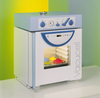
from BMT USA, LLC
The Vacucell vacuum drying oven is ideal for safe heating of oxygen-sensitive materials, quick drying of complicated parts, drying or heating of powders, heating in inert gas atmosphere and gentle drying at lower temperatures. The innovative, patented SERVOTHERM shelf system allows effective heat... [See More]
- Features: Shelves, Racks or Carts; Timer; Alarms
- Capacity: 0.8
- Temperature Range: 41 to 572
- Vacuum / Pressure Range: Low or Roughing Vacuum (> 1 torr)