
Biotech / Medical (Biomaterial) Industrial Ceramic Materials
Last Updated: April 1, 2025
Description
Biotech and medical biomaterial industrial ceramic materials are specialized ceramics designed for use in medical applications. These materials are characterized by their high strength, biocompatibility, and wear resistance, making them suitable for integration into the human body. They are used in the production of implants and bone replacement materials, providing structural support and durability.
Working Principle
The working principle of biomaterial industrial ceramic materials lies in their unique composition and structure. These ceramics are composed of metallic or semi-metallic elements combined with oxygen, nitrogen, silicon, or carbon, forming solids held together by covalent and ionic bonds. This dense atomic structure provides ceramics with their characteristic hardness, durability, and chemical resistance. In medical applications, these properties ensure that the materials can withstand the body's hostile environment without degrading, maintaining their functionality over time.
Applications
Biomaterial industrial ceramic materials are used in a variety of medical applications. They are integral in orthopedic and dental applications, which represent a significant portion of the biomaterials market. Specific examples include their use in joint replacements such as knees, hips, and finger joints, as well as in dental implants and vertebrae replacements. Additionally, ceramics like sapphire are used in medical devices such as endoscopes, where their transparency and wear resistance are crucial.
Advantages over other Industrial Ceramic Materials
Compared to other industrial ceramic materials, biomaterial ceramics offer superior biocompatibility and wear resistance, which are essential for medical applications. For instance, zirconia alumina and alumina oxide have been approved for medical and in-body applications due to their precision fabrication capabilities and material traceability, making them preferable choices for designers of medical devices.
Limitations
Despite their advantages, biomaterial industrial ceramic materials have limitations. The body's chemistry can be hostile to foreign materials, including ceramics, which may lead to degradation over time. Additionally, the initial cost of these materials can be high due to the precision required in their fabrication and the need for full quality control documentation and material traceability.
Considerations
When considering the use of biomaterial industrial ceramic materials, several factors should be taken into account. Initial costs can be significant due to the precision fabrication and quality control required. However, their durability and resistance to wear can lead to lower operating expenses over time. The materials' ability to withstand sterilization processes also contributes to their longevity and reduces replacement and maintenance costs. Design engineers should weigh these factors against the specific requirements of their medical applications to determine the most suitable material choice.

from Suntech Applied Materials (Hefei) Co.,Ltd
Ceramic hip Joint ball Head & Liner Material:· Ball Head: Made from high-strength Zirconia- Toughened alumina (ZTA) ceramics, offering excellent wear resistance, reduced friction, and long-term stability.· Liner: Made from high-strength Zirconia- Toughened alumina (ZTA) It act as the interface... [See More]
- Applications: Biomaterial
- Material Type: SpecialtyMaterial
from Robuster Quartz
Robuster Quartz Fused Silica Ceramics features excellent thermal reliability under high temperature (up to 1350 ˚C), resistivity to chemical corrosion and thermal shock; Our Silica ceramic products are widely used in chemical, medical and biology industries for chemical... [See More]
- Applications: Biomaterial; Chemical or material processing; Corrosion resistant; Thermal Insulation or Fire Proofing Material; Medicine, Industrial Metallurgy and Calcinations
- Shape / Form: Custom Shape
- Material Type: Silicate / Clay; Porcelain; Quartz
- Length: 0.9843 to 1.46
from Xiamen Unipretec Ceramic Technology Co., Ltd.
Aluminum oxide ceramic is a high-performance ceramic material, also known as alumina ceramic material. Composed of high-purity alumina powder, this non-metallic material is manufactured via pressing, molding, sintering, and other processes. According to the alumina content, it is classified as 92... [See More]
- Applications: Biomaterial; Chemical or material processing; Corrosion resistant; Electronics or semiconductors; HV / Electrical; Refractory or High Temperature Insulation
- Max Use Temperature: 1200 to 1650
- Material Type: Alumina; Silicon Carbide; Tungsten Carbide; Silicon Nitride; SpecialtyMaterial
- Density: 3.6 to 3.95

from CoorsTek
Technical ceramics are the ideal material for orthopedic reconstruction and other bioimplantable devices, combining high-strength and low-weight with inherent biocompatibility. In combination with numerous material properties that can be manipulated and leveraged to meet the needs of the individual... [See More]
- Applications: Biomaterial
- Material Type: SpecialtyMaterial

from Matexcel
Storage: Store at room temperature and keep dry. Application: Bone grafting biomaterials, repair of periodontal defects, cranial and maxillofacial repair, wound care, blood loss control, stimulation of vascular regeneration, nerve repair. Components: SiO2: 50-56%; CaO: 17-32%; P2O5: 3-5%; Na2O:... [See More]
- Applications: Biomaterial
- Shape / Form: Powder, Grain or Grog

from Robuster Quartz
Robuster Quartz Fused Silica Ceramics features excellent thermal reliability under high temperature (up to 1350 ˚C), resistivity to chemical corrosion and thermal shock; Our Silica ceramic products are widely used in chemical, medical and biology industries for chemical... [See More]
- Applications: Biomaterial; Chemical or material processing; Corrosion resistant; Thermal Insulation or Fire Proofing Material; Medicine, Industrial Metallurgy and Calcinations
- Shape / Form: Custom Shape
- Material Type: Silicate / Clay; Silica or fused silica
- Length: 1.14 to 2.28
from Xiamen Unipretec Ceramic Technology Co., Ltd.
Ceramic blades are typically manufactured from zirconium oxide (also spelt zirconia). They are the preferred option in environments needing chemical resistance or non-magnetic features because of their benefits such as outstanding sharpness, long-lasting edge retention, and resistance to rust or... [See More]
- Applications: Abrasion Resistant; Biomaterial; Chemical or material processing; Corrosion resistant; Electronics or semiconductors; HV / Electrical; Wear resistant parts or tooling
- Density: 5.95 to 6
- Material Type: Zirconia; SpecialtyMaterial
- Performance Features: Hard

from CoorsTek
CoorsTek CeraSurf ®-p is a state of the art material used for ceramic bearing surfaces in total hip arthroplasty. Comprised of an alumina matrix composite, CeraSurf ®-p incorporates advanced toughening mechanisms to improve the performance of the material. CeraSurf ®-p is proven to... [See More]
- Applications: Biomaterial
- Composition: Alumina Matrix Composite
- Material Type: Alumina-Zirconia; SpecialtyMaterial
- Shape / Form: Custom Shape
from Robuster Quartz
Robuster Quartz Fused Silica Ceramics features excellent thermal reliability under high temperature (up to 1350 ˚C), resistivity to chemical corrosion and thermal shock; Our Silica ceramic products are widely used in chemical, medical and biology industries for chemical... [See More]
- Applications: Biomaterial; Chemical or material processing; Corrosion resistant; Thermal Insulation or Fire Proofing Material; Medicine, Industrial Metallurgy and Calcinations
- Shape / Form: Custom Shape
- Material Type: Silicate / Clay; Silica or fused silica
- Width / Diameter: 1.06 to 2.99
from Xiamen Unipretec Ceramic Technology Co., Ltd.
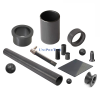
Ceramic components are manufactured of ceramic materials, which are an extensive family of inorganic, non-metallic compounds typically consisting of metal, non-metal, and metalloid elements. The exceptional properties exhibited by ceramics, such as their high hardness, low electrical conductivity,... [See More]
- Applications: Abrasion Resistant; Armor / Ballistic Protection; Biomaterial; Corrosion resistant; Electronics or semiconductors; HV / Electrical; Thermal Insulation or Fire Proofing Material; Wear resistant parts or tooling; Battery / Fuel Cell; Refractory or High Temperature Insulation
- Performance Features: Hard
- Material Type: Alumina; Silicon Carbide; Tungsten Carbide; Cordierite; Glass Ceramics; Porcelain; Steatite; Aluminum Nitride; Silicon Nitride; Zirconia; SpecialtyMaterial
- Bond & Processing: Sintered / Fired
from CoorsTek
Technical ceramics are the ideal material for orthopedic reconstruction and other bioimplantable devices, combining high-strength and low-weight with inherent biocompatibility. In combination with numerous material properties that can be manipulated and leveraged to meet the needs of the individual... [See More]
- Applications: Biomaterial

from Xiamen Unipretec Ceramic Technology Co., Ltd.
Ceramic washers are components designed specifically for applications requiring electrical insulation, corrosion resistance, and high-temperature resistance. They are classified as flat washers, shoulder washers, hat washers, etc. and generally have a central hole. Their shape can be square, round,... [See More]
- Applications: Biomaterial; Chemical or material processing; Corrosion resistant; Electronics or semiconductors; HV / Electrical; Wear resistant parts or tooling; Refractory or High Temperature Insulation
- Performance Features: Hard
- Material Type: Alumina; Silicon Carbide; Tungsten Carbide; Silicon Nitride; Zirconia; SpecialtyMaterial
- Bond & Processing: Sintered / Fired
from CoorsTek
CoorsTek uses its deep ceramics expertise and process capabilities to manufacture ceramics with precisely controlled porosity. Porous ceramics are often used for chemical filtration and fluid separation. Combining tightly toleranced pores with unique ceramic material properties enables applications... [See More]
- Applications: Biomaterial; Chemical or material processing; Electronics or semiconductors; Labware, Oil & Gas Production, Pharmaceutical Production, Waste Water Treatment, Food & Beverage Production
- Performance Features: Porous material
from Xiamen Unipretec Ceramic Technology Co., Ltd.
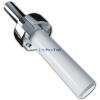
Zirconium oxide, also spelt zirconia (ZrO2), is a type of versatile and high-performance ceramic material. It exhibits outstanding mechanical, thermal, and chemical properties, making it suitable for a vast variety of applications. [See More]
- Applications: Biomaterial; Chemical or material processing; Corrosion resistant; Electronics or semiconductors; HV / Electrical; Wear resistant parts or tooling; Refractory or High Temperature Insulation
- Density: 5.95 to 6
- Material Type: Zirconia; SpecialtyMaterial
- Performance Features: Hard