
Beryllia / Beryllium Oxide Industrial Ceramic Materials
Last Updated: April 1, 2025
Description
Beryllium Oxide (BeO), also known as Beryllia, is a ceramic material that is primarily used for its exceptional thermal conductivity and electrical resistivity. It is a compound consisting of beryllium, metal, and oxygen, and is known for being a toxic material. Beryllia is available in the form of ceramic powders and precursors, which are used to fabricate substrates and insulators in various applications.
Working Principle
Beryllium Oxide works by leveraging its unique combination of high thermal conductivity and electrical insulation properties. This makes it particularly useful in applications where heat dissipation is critical, such as in electronic substrates. The thermal conductivity of BeO is second only to diamond, allowing it to efficiently transfer heat away from sensitive components. Its electrical resistivity ensures that it acts as an effective insulator, preventing electrical currents from passing through.
Applications
Beryllium Oxide ceramics are used in a variety of high-performance applications. They serve as heat sinks for high-power transistors and high-frequency semiconductor devices. BeO is also utilized in emission tubes, traveling wave tubes, laser tubes, and klystrons. Additionally, due to its high thermal conductivity and favorable high-frequency characteristics, BeO ceramic substrates are employed in avionics and satellite communications. In microwave communication systems and industrial microwave ovens, BeO ceramics are used for components such as windows, radomes, and antennas due to their transparency to microwaves.
Advantages over other Industrial Ceramic Materials
Beryllium Oxide ceramics offer several advantages over other industrial ceramic materials. One of the most significant benefits is their superior thermal conductivity, which is the highest among oxide ceramics. This property makes BeO an ideal choice for applications requiring efficient heat dissipation. Additionally, its combination of thermal conductivity and electrical insulation is unmatched, making it a preferred material for electronic substrates where both properties are essential.
Limitations
Despite its advantages, Beryllium Oxide has some limitations. The most notable is its toxicity, which poses health risks during handling and processing. This limits its use in commercial applications and necessitates stringent safety measures. Additionally, the brittleness of BeO can be a drawback in applications where mechanical strength is required.
Considerations
When considering the use of Beryllium Oxide ceramics, several factors should be taken into account. The initial costs can be high due to the material's specialized properties and the safety precautions required during manufacturing and handling. Operating expenses may also be elevated due to the need for protective equipment and procedures to mitigate the risks associated with its toxicity. In terms of durability, BeO is stable under high temperatures, but its brittleness may affect its longevity in certain applications. Maintenance and replacement costs can be significant, particularly if damage occurs due to its brittle nature. Therefore, careful consideration of the specific application requirements and safety protocols is essential when selecting Beryllium Oxide ceramics.
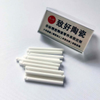
from Shenzhen Great Precision Ceramic CO., LTD.
What is beryllium oxide ceramic rod?. Beryllium oxide (BeO) ceramic rods are made from beryllium oxide ceramics, a compound with the chemical formula BeO, known for its high melting point, low thermal expansion, and excellent electrical and thermal conductivity. Properties of beryllium oxide. The... [See More]
- Material Type: Beryllia / Beryllium Oxide; SpecialtyMaterial
- Thermal Conductivity: 240
- Shape / Form: Rod
- Applications: HV / Electrical
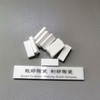
from Shenzhen Great Precision Ceramic CO., LTD.
What is Beryllium Oxide Ceramic Blocks?. Beryllium oxide (BeO) ceramic blocks stand as the undisputed champions of thermal management in the world of advanced materials. Boasting the second highest thermal conductivity of all electrically insulating materials, surpassed only by diamonds, these... [See More]
- Material Type: Beryllia / Beryllium Oxide; SpecialtyMaterial
- Thermal Conductivity: 240
- Shape / Form: Block
- CTE: 7.5
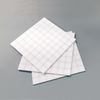
from Shenzhen Great Precision Ceramic CO., LTD.
Advantages Of Beryllium Oxide Ceramic Substrate. Beryllium oxide ceramic substrate has the characteristics of high thermal conductivity, high melting, strength, high insulation, low dielectric constant, low dielectric loss and good packaging process adaptability. It is used in microwave technology,... [See More]
- Material Type: Beryllia / Beryllium Oxide; SpecialtyMaterial
- Density: 3.02
- Thermal Conductivity: 200 to 250
- Applications: HV / Electrical
from Materion Corporation
Materion Ceramics has the capabilities to manufacture complex and custom designs by the addition of a variety of machining functions. Input material used for customized products can be dry pressed, isopressed or extruded in form and consist of Materion Ceramics' BW1000 "high strength" material. [See More]
- Material Type: Beryllia / Beryllium Oxide; SpecialtyMaterial
- Thermal Conductivity: 275 to ?
- Shape / Form: Custom Shape
- CTE: 16.2

from San Jose Delta Associates, Inc.
San Jose Delta maintains an extensive in-house inventory of certified Materion beryllia ceramic machining stock, including BW-1000, a higher strength and finer grain berylia,. While the grinding of beryllium oxide requires stringent dust control during the grinding process it otherwise machines like... [See More]
- Material Type: Beryllia / Beryllium Oxide; SpecialtyMaterial
- Max Use Temperature: 1800
- Shape / Form: Tube; Custom Shape
- Thermal Conductivity: 293 to 377