
Ceramics / Glass Manufacturing Industrial Ceramic Materials
Last Updated: April 1, 2025
Description
Industrial ceramic materials are inorganic, non-metallic materials that are typically composed of oxides, carbides, nitrides, and other compounds with high melting points. These materials are known for their hardness, brittleness, and resistance to heat and chemical attack. They are used in a variety of forms, including machinable ceramics, porous ceramics, and refractory ceramics, each offering unique properties suitable for different industrial applications.
Working Principle
Ceramic materials work by leveraging their inherent physical and chemical properties. They are formed through processes such as sintering, firing, hot pressing, or casting, which bond individual grains or crystals together without the use of binders. This results in materials that are hard, stable, and resistant to extreme heat and chemical reactions. Their usefulness is derived from their ability to maintain structural integrity under high temperatures and their electrical and thermal insulation properties, making them ideal for demanding industrial environments.
Applications
Industrial ceramics are used in a wide range of applications. They are essential in chemical and materials processing, where their resistance to corrosion and high temperatures is crucial. In the electrical industry, ceramics are used in high voltage power applications and radio frequency and microwave applications due to their excellent insulating properties. They are also employed in the fabrication of optical components such as lenses, windows, prisms, and optical fibers, as well as in the manufacture of semiconductors and tooling parts.
Advantages over other Industrial Ceramic Materials
Advanced ceramics offer several advantages over traditional materials like metals, plastics, and glass. They provide superior resistance to melting, bending, stretching, corrosion, and wear. Their exceptional thermal stability and chemical inertness make them suitable for high-temperature applications where other materials would fail. Additionally, advanced ceramics are biocompatible and have better electrical properties, making them ideal for specialized applications in medical and electronic industries.
Limitations
Despite their advantages, industrial ceramics have limitations. They are inherently brittle, which can lead to fracture under mechanical stress. This brittleness can limit their use in applications where flexibility or impact resistance is required. Additionally, the manufacturing processes for ceramics can be complex and costly, which may affect their economic viability for certain applications.
Considerations
When considering the use of industrial ceramics, several factors should be taken into account. Initial costs can be high due to the complexity of the manufacturing processes and the need for specialized equipment. Operating expenses may also be significant, particularly in applications requiring precise temperature control. However, the durability and longevity of ceramics can offset these costs over time. Maintenance and replacement costs are generally low, as ceramics are resistant to wear and corrosion. However, their brittleness means that any damage can require complete replacement rather than repair.

from Xiamen Innovacera Advanced Materials Co., Ltd.
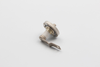
The ceramic orifice plate is a crucial interface component between the ion source and the mass analyzer in a triple quadrupole mass spectrometer, and it is also the main location where the de-clustering potential (DP) is applied. By precisely controlling ion entry, electric field strength, and... [See More]
- Applications: Abrasives, ceramics or glass manufacturing; Ion source and the mass analyzer in a triple quadrupole mass spectrometer
- Shape / Form: Custom Shape
- Material Type: Alumina; SpecialtyMaterial
from Xiamen Innovacera Advanced Materials Co., Ltd.
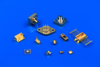
This high-current ceramic feedthrough is designed for CO ₂ laser power systems,where stable current transmission, electrical insulation, and mechanical reliability are essential for continuous laser operation. Typical Applications. – CO ₂ laser power supplies. – Industrial... [See More]
- Applications: Abrasives, ceramics or glass manufacturing; HV / Electrical; For continuous laser operation
- Shape / Form: Custom Shape
- Material Type: Alumina; SpecialtyMaterial
- Performance Features: Metallized or electrode film
from Xiamen Innovacera Advanced Materials Co., Ltd.
Optoelectronic packages serve as the critical interface for photonic components. We deliver end-to-end precision packaging solutions from design to mass production. Leveraging advanced materials and automated processes, our products ensure superior optical signal integrity and long-term reliability,... [See More]
- Applications: Abrasives, ceramics or glass manufacturing; Electronics or semiconductors; High-power laser TO packages,Automotive relay sealing,Discrete semiconductor devices,Multilayer Ceramic Substrates,Surface-Mount Power Packages
- Performance Features: Hard; Insulation resistance 500V DC

from Xiamen Innovacera Advanced Materials Co., Ltd.
Innovacera offers a complete line of kiln furniture, kiln components and accessories, everything from dense to low mass products to meet every application need. Our complete line of kiln components will provide a solution for every rebuild project along with applications engineering assistance for... [See More]
- Applications: Abrasives, ceramics or glass manufacturing; Refractory or High Temperature Insulation
- Shape / Form: KilnFurniture; Custom Shape
- Material Type: Alumina; Zirconia; SpecialtyMaterial
from Aremco Products, Inc.
High fired strength, dense ceramics [See More]
- Applications: Abrasives, ceramics or glass manufacturing; Chemical or material processing; Corrosion resistant; HV / Electrical; Fiberoptics, Radiant Heaters, Temp Probe; Refractory or High Temperature Insulation
- Max Use Temperature: 1649
- Material Type: Alumina
- CTE: 7.20E6

from CeramSource Inc.
High temperature insulating fire bricks offers a unique combination of insulating properties along with load bearing ability. The temperature ranges are from 2000 º F to 3000 º F, is where IFBs really shine. It ™s low thermal conductivity are as low as ceramic fiber based... [See More]
- Applications: Foundry / Metal Processing; Abrasives, ceramics or glass manufacturing; Refractory or High Temperature Insulation
- Shape / Form: Block
- Material Type: Alumina; Silicate / Clay; Silica or fused silica
- Max Use Temperature: 1260 to 1649