
Porous / Foam Industrial Ceramic Materials
Last Updated: April 1, 2025
Description
Porous or foam industrial ceramic materials are specialized ceramics characterized by their lightweight structure and the presence of numerous micro-pores. These materials are designed to have a high strength-to-weight ratio and are typically made through high-temperature sintering processes involving metal oxides, silicon dioxide, or silicon carbide. The resulting ceramics are lightweight, with a specific gravity ranging from about 1.1 to 2.5 g/cm³, and possess insulating properties.
Working Principle
Porous ceramic materials function by utilizing their interconnected pore structure, which allows fluids to pass through while trapping particles and contaminants. This network of pores is created during the sintering process, where the boundary portions of raw material particles melt and bond, forming a high-strength ceramic. The materials are also chemically stable, offering resistance to wear and erosion in acidic and alkaline conditions, and can withstand high temperatures up to 1000 degrees Celsius. These properties make them useful for filtration, adsorption, and as catalyst carriers, among other applications.
Applications
Porous ceramics are used in a variety of industries due to their unique properties. Specific applications include:
- Gas-Liquid Filtration and Purification: Used in chemical and environmental industries to filter and purify gases and liquids.
- Sound and Shock Absorption: Employed in construction and automotive industries for noise reduction and vibration control.
- Heat Exchanger Materials: Utilized in energy and aerospace sectors for efficient heat transfer.
- Bioceramics and Biological Implants: Applied in the medical field for implants and artificial organs due to their biocompatibility.
- Catalyst Carriers and Adsorbents: Used in chemical processing for enhancing reaction rates and adsorption processes.
Advantages over other Industrial Ceramic Materials
Porous ceramics offer several advantages over traditional dense ceramics:
- Lightweight: Their low specific gravity makes them easier to handle and integrate into systems where weight is a critical factor.
- High Strength: Despite being lightweight, they maintain high structural integrity due to the sintering process.
- Insulation and Anti-Static Properties: They can be tailored to provide electrical insulation or dissipate static electricity, depending on the additives used.
Limitations
Porous ceramics have some limitations that need to be considered:
- Mechanical Fragility: While strong, they can be more brittle compared to dense ceramics, making them susceptible to cracking under mechanical stress.
- Complex Manufacturing Process: The production of porous ceramics can be more complex and costly due to the precise control needed during the sintering process.
Considerations
When considering the use of porous ceramics, several factors should be taken into account:
- Initial Costs: The manufacturing process can be expensive, impacting the initial cost of the materials.
- Operating Expenses: While they offer long-term benefits in terms of durability and efficiency, the initial investment can be significant.
- Durability and Maintenance: Porous ceramics are durable and require minimal maintenance, but any damage can be costly to repair due to their brittleness.
- Replacement Costs: The need for replacement depends on the application and the environment in which they are used, but generally, they offer a long service life.

from Xiamen Innovacera Advanced Materials Co., Ltd.
The range of Innovcera porous ceramic filters are made from aluminum oxide and silicon carbide. The strong, uniform porous ceramic has 40-50% open porosity with a tortuous pore structure and is available in pore sizes ranging from 6 to 90 microns. Maximum Temperature. Up to 1000C for porous ceramic,... [See More]
- Performance Features: Porous material
- Shape / Form: Custom Shape
- Material Type: Alumina; Carbide Material; Silicon Carbide
- Max Use Temperature: 1000

from Xiamen Unipretec Ceramic Technology Co., Ltd.
Alumina ceramic furnace tubes are used to contain and protect heating elements and samples processed in the furnace. In addition, they are used to control the atmosphere within the furnace by preventing air from entering or leaving the furnace. [See More]
- Performance Features: Porous material; Hard
- Shape / Form: Tube
- Material Type: Alumina
- Max Use Temperature: 1500 to 1650

from Saint-Gobain Innovative Materials
Saint-Gobain NorPro provides a range of formed, higher surface area catalyst carrier. Surface areas from 10 m2/g to 400 m2g are typically based on high-purity raw materials. When needed, Saint-Gobain NorPro can incorporate unusual pore size distributions, including a high proportion of... [See More]
- Performance Features: Porous material
- Shape / Form: Hollow Stock (Tube, Pipe, Column) (optional feature); Custom Shape; Ferrule / Eyelet (optional feature)
- Material Type: Alumina; Silicate / Clay; Al Silicate or Mica Based
- Width / Diameter: 0.1181 to 19.69

from Saint-Gobain NorPro
Denstone ® deltaP ™ 99 technology utilizes the revolutionary, patent pending Saint-Gobain NorPro Denstone deltaP bed support technology and combines it with a high alumina, low silica composition to produce a media that is engineered to withstand the most severe environments while... [See More]
- Performance Features: Porous material
- Composition: Al2O3 >99%
- Material Type: Alumina
- Shape / Form: Hollow Stock (Tube, Pipe, Column); Custom Shape
from Morgan Advanced Materials
A porous alumina ceramic of 99.85% Al2O3 content, especially developed as a ‘lossy ’ material for microwave attenuation as typically needed in vacuum tubes. [See More]
- Performance Features: Porous material
- Density: 3.10E-9
- Material Type: Alumina
- MOR / Flexural Strength: 22916
from CoorsTek
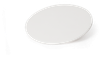
CoorsTek uses its deep ceramics expertise and process capabilities to manufacture ceramics with precisely controlled porosity. Porous ceramics are often used for chemical filtration and fluid separation. Combining tightly toleranced pores with unique ceramic material properties enables applications... [See More]
- Performance Features: Porous material
- Applications: Biomaterial; Chemical or material processing; Electronics or semiconductors; Labware, Oil & Gas Production, Pharmaceutical Production, Waste Water Treatment, Food & Beverage Production
from Xiamen Unipretec Ceramic Technology Co., Ltd.
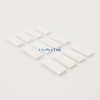
Alumina ceramic plates are well-known for their hardness, wear resistance, and electrical insulation. These plates have numerous applications across various sectors, including the electronics, metallurgy, medical, semiconductor, and armor systems. Unipretec offers ceramic plates with different... [See More]
- Performance Features: Porous material; Hard
- Shape / Form: Plate / Board
- Material Type: Alumina
- Max Use Temperature: 1500 to 1650

from Saint-Gobain Innovative Materials
High Surface Area Rings and Extrudates. Saint-Gobain NorPro has a long-standing tradition of supplying top bed solutions to its customers. We can customize a solution based on your plant's performance needs. One of our top bed solutions is the NorPro ® HSA alumina catalyst carrier rings. An HSA... [See More]
- Performance Features: Porous material
- Shape / Form: Hollow Stock (Tube, Pipe, Column); Custom Shape; Ferrule / Eyelet (optional feature)
- Material Type: Alumina
- Applications: Chemical or material processing; Refining, Natural Gas, Hydrocracking

from Saint-Gobain NorPro
Some catalyst carriers in this series are available in monomodal or bi-modal or pore options. For many years, Saint-Gobain NorPro has been known for its range of very low surface area macroporous alpha-alumina-based carrier materials. Inert to their environment in most circumstances, the carriers... [See More]
- Performance Features: Porous material
- Shape / Form: Hollow Stock (Tube, Pipe, Column) (optional feature); Grannular Fill; Custom Shape; Ferrule / Eyelet (optional feature)
- Material Type: Alumina; Silicate / Clay; Al Silicate or Mica Based; SpecialtyMaterial; alpha/ Glassy Silica, Bauxite
- Width / Diameter: 0.1181 to 19.69

from Xiamen Unipretec Ceramic Technology Co., Ltd.
Unipretec manufactures alumina rod with aluminium oxide purity of 95%, 99%, and 99.8%. Due to their remarkable characteristics, such as their high-temperature resistance, mechanical strength, electrical insulation, and chemical inertness, alumina rods are an essential component in a variety of... [See More]
- Performance Features: Porous material; Hard
- Shape / Form: Immersion Tube or Sheath
- Material Type: Alumina
- Max Use Temperature: 1500 to 1650

from Xiamen Unipretec Ceramic Technology Co., Ltd.
Alumina sheet is manufactured of 95%, 96%, 99%, or 99.8% high-purity alumina. It has a wide range of advantageous properties, making it a versatile ceramic material for a variety of industrial applications. Due to their resistance to high temperatures, superior mechanical strength, electrical... [See More]
- Performance Features: Porous material; Hard
- Shape / Form: Plate / Board
- Material Type: Alumina
- Max Use Temperature: 1500 to 1650
from Xiamen Unipretec Ceramic Technology Co., Ltd.
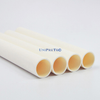
Alumina tube is a non-porous ceramic tube that is formed of 95%, 99%, or 99.8% alumna material. As a result of its remarkable thermal, mechanical, and chemical characteristics, it is a preferred option in various sectors. Its resistance to high temperatures, abrasion, and corrosion, as well as its... [See More]
- Performance Features: Porous material; Hard
- Shape / Form: Tube
- Material Type: Alumina
- Max Use Temperature: 1500 to 1650
from Xiamen Unipretec Ceramic Technology Co., Ltd.
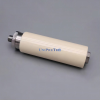
Aluminum oxide ceramic is a high-performance ceramic material, also known as alumina ceramic material. Composed of high-purity alumina powder, this non-metallic material is manufactured via pressing, molding, sintering, and other processes. According to the alumina content, it is classified as 92... [See More]
- Performance Features: Porous material; Hard
- Max Use Temperature: 1200 to 1650
- Material Type: Alumina; Silicon Carbide; Tungsten Carbide; Silicon Nitride; SpecialtyMaterial
- Density: 3.6 to 3.95