
Glass Ceramic Industrial Ceramic Materials
Last Updated: April 1, 2025
Description
Glass ceramic materials are engineered to combine the properties of both glass and ceramics. They exhibit characteristics such as high mechanical strength, low or negative thermal expansion coefficients, and high abrasion resistance. These materials can range in appearance from transparent to opaque and are known for their high homogeneity and low porosity .
Working Principle
Glass ceramics are created through a controlled crystallization process of glass. This process involves heating the glass to a temperature where crystals begin to form, resulting in a material that retains the amorphous structure of glass while incorporating the crystalline structure of ceramics. This unique combination allows glass ceramics to maintain high mechanical strength and thermal stability, making them useful in environments where these properties are critical .
Applications
Glass ceramics are used in a variety of specialized applications. For example, they are employed in the production of bioactive glass-ceramic teeth and other implant applications due to their chemical durability and biocompatibility . Additionally, they are utilized in the fabrication of optical components such as lenses and windows, as well as in high-temperature environments where thermal stability is essential .
Advantages over other Industrial Ceramic Materials
One of the primary advantages of glass ceramics over other industrial ceramic materials is their tailored microstructure or nanostructure, which can be adjusted to meet specific application needs. This adaptability allows for enhanced performance in terms of mechanical strength and thermal expansion properties. Furthermore, glass ceramics can offer a high degree of chemical durability and biocompatibility, which is particularly beneficial in medical applications .
Limitations
Despite their advantages, glass ceramics have limitations. The controlled crystallization process can be complex and may require precise conditions to achieve the desired properties. Additionally, while they offer high mechanical strength, they may not match the extreme hardness or wear resistance of some other ceramic materials, such as those used in abrasive applications .
Considerations
When considering the use of glass ceramics, several factors should be taken into account. Initial costs can be high due to the specialized manufacturing processes involved. However, their durability and low maintenance requirements can offset these costs over time. Operating expenses may vary depending on the specific application and environmental conditions. Additionally, the accuracy of the crystallization process is crucial to ensure the desired properties are achieved, which may impact replacement and maintenance costs if not properly managed .
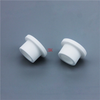
from 3X Ceramic Parts Company Limited
Machinable Ceramic Bushing. Macor Machinable Ceramic Bushing is a kind of ceramic material with properties of highly electrical insulating, heat insulating, vacuum tight composite material of glass and ceramics. It is machinable with common tungsten carbide or high speed steel cutting tools by... [See More]
- Material Type: Silicate / Clay; Glass Ceramics
- Density: 2.48
- Thermal Conductivity: 1.71
- MOR / Flexural Strength: 15664
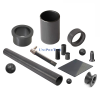
from Xiamen Unipretec Ceramic Technology Co., Ltd.
Ceramic components are manufactured of ceramic materials, which are an extensive family of inorganic, non-metallic compounds typically consisting of metal, non-metal, and metalloid elements. The exceptional properties exhibited by ceramics, such as their high hardness, low electrical conductivity,... [See More]
- Material Type: Alumina; Silicon Carbide; Tungsten Carbide; Cordierite; Glass Ceramics; Porcelain; Steatite; Aluminum Nitride; Silicon Nitride; Zirconia; SpecialtyMaterial
- Performance Features: Hard
- Applications: Abrasion Resistant; Armor / Ballistic Protection; Biomaterial; Corrosion resistant; Electronics or semiconductors; HV / Electrical; Thermal Insulation or Fire Proofing Material; Wear resistant parts or tooling; Battery / Fuel Cell; Refractory or High Temperature Insulation
- Bond & Processing: Sintered / Fired
from Morgan Advanced Materials
Macor ® is the machinable glass ceramic made by Corning Glass and widely used for critically exacting electrical duties. It is a composite of oxides of Si, Mg, Al, K, B and F. [See More]
- Material Type: Glass Ceramics
- Density: 2.52E-9
- Thermal Conductivity: 1.46
- MOR / Flexural Strength: 12908

from San Jose Delta Associates, Inc.
Macor is a relatively easy material to machine using ordinary carbide drills, end mills, taps, etc. and doesn ’t require post machining firing. Macor-Machinable Glass Ceramic is also unique in that it can withstand 1000 °C, has low thermal conductivity and is a good electrical insulator. [See More]
- Material Type: Silicate / Clay; Glass Ceramics; SpecialtyMaterial
- Length: 3
- Shape / Form: BarStock
- Width / Diameter: 0.2500 to 2

from Accuratus Corporation
Macor is cast as a two phase glass. After casting, it is heat treated causing crystallization of one phase giving rise to its glass-like and ceramic-like characteristics. Macor exhibits good thermal shock resistance and mechanical toughness when compared to conventional glasses with similar thermal... [See More]
- Material Type: Silicate / Clay; Glass Ceramics
- Shape / Form: Custom Shape

from Abrisa Technologies
SCHOTT Pyran ® is a transparent glass ceramic that is fire-protection rated. It works with fire rated frames of the same rating. Pyran ® fits applications with non-impact, safety rated requirements of up to 90 minutes. [See More]
- Material Type: Silicate / Clay; Glass Ceramics
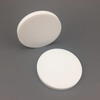
from 3X Ceramic Parts Company Limited
Machinable Glass Ceramic Characteristics: The most outstanding characteristic of Machinable Glass Ceramic Disc is that it can be processed by turning, milling, planing, grinding, drilling, sawing and tapping with standard metal processing tools and equipment. It can be processed into products with... [See More]
- Material Type: Silicate / Clay; Glass Ceramics
- Density: 2.48
- Thermal Conductivity: 1.71
- MOR / Flexural Strength: 15664

from Xiamen Unipretec Ceramic Technology Co., Ltd.
Machinable ceramics are a type of polycrystalline composite phase material, which is a glass-ceramic with synthetic mica crystallites as the principal crystal phase. Machinable glass ceramics, commonly known as Macor, are a multifunctional material that combines the features of glass and ceramics. [See More]
- Material Type: Silicate / Clay; Glass Ceramics; SpecialtyMaterial
- Density: 2.4 to 2.5
- Max Use Temperature: 800 to 1000
- Applications: Chemical or material processing; Corrosion resistant; HV / Electrical; Structural; Thermal Insulation or Fire Proofing Material; Optical Grade; Refractory or High Temperature Insulation

from Accuratus Corporation
High use temperature. Non-flammable. Excellent electrical insulator. Excellent thermal insulator. Dimensionally stable. MACOR machinable glass ceramic gives you the characteristics you need from a ceramic with the added benefit of easy fabrication using ordinary machine tools. No longer is it... [See More]
- Material Type: Silicate / Clay; Glass Ceramics
- Length: 2.99 to 12.01
- Shape / Form: BarStock
- Width / Diameter: 0.2480 to 2

from 3X Ceramic Parts Company Limited
Machinable Glass Ceramic Macor Rod. Machinable ceramic materials have excellent electrical insulation performance (electric breakdown reaches 40kv/a per millimeter), high mechanical strength, and resistance to quenching and heating (resistance to freezing and heating from minus 200 degrees to 800... [See More]
- Material Type: Silicate / Clay; Glass Ceramics
- Thermal Conductivity: 1.71
- Shape / Form: Rod
- Density: 2.6
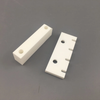
from 3X Ceramic Parts Company Limited
Machinable Glass Ceramic Parts Machining Instruction: Machinable ceramics is a new kind of ceramic material, the material the use of metal processing tools and equipment can usually work out precision tolerance of the products, here is a brief introduction of its processing technology and methods. [See More]
- Material Type: Silicate / Clay; Glass Ceramics
- Density: 2.48
- Thermal Conductivity: 1.71
- MOR / Flexural Strength: 15664